Sparkling Diversions- Fall on the Chesapeake

The Sooty progress has been nil of late. The food and shelter thing keeps pressing its demands. However, I was able to steal away a week to journey on my favorite bay and thought I’d share some photos and a last day video as some recompense for build regression.

Reaching homeward.

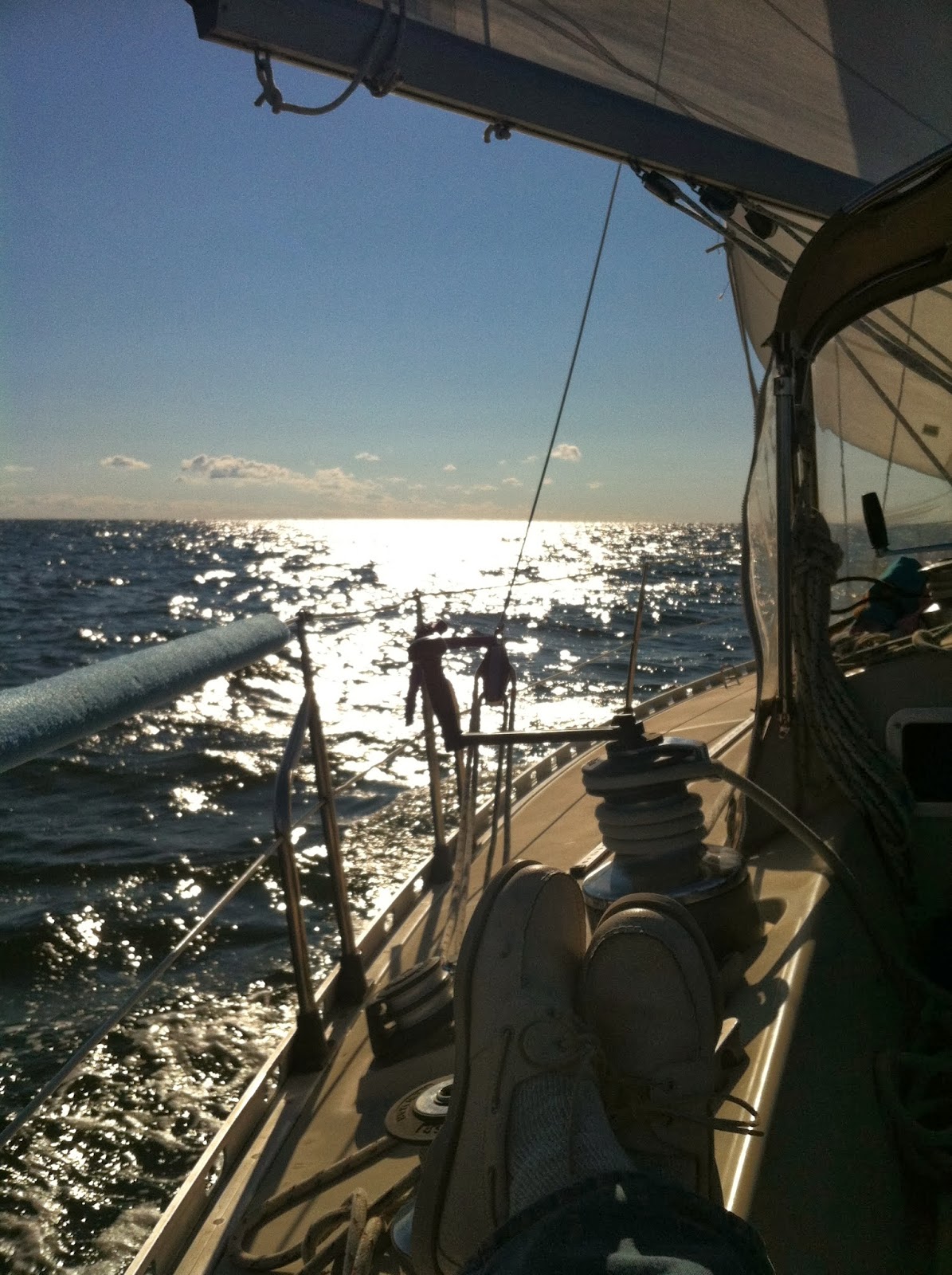
I do believe this is my favorite time of the year for boating. The air is crisp. The light quality is brilliant. The wind generally fair and, of course, there are those colors. Add to that the passing of Labor Day turns off the traffic of other boaters and quaint towns along coast can once again hint at a long ago charm. Without brash tourists at every turn, the less frequent sailor is now welcomed.

Sunday afternoon.
Sunday evening.
Monday morning.

My father once said power boating is about points “A” and “B”. Sailing is about the journey in between. While I heartedly agree, there were a couple “points” where we lingered and just enjoyed the world. One was the town of Onancock on the Eastern Shore and the other, Reedville on the western shore’s Great Wicomico. Both seem to be hanging in limbo. Steamboat ferries and oyster boom days are long gone. Far too many outsiders have moved in, but thankfully the boutique rabble had gone with the summer. What is left is a genuine charm and proud history for any who’d slow down to take notice.

The replica “Godspeed” at Onancock’s wharf.


Some late afternoon essentials on the Occohannock Creek.


A Reedville Captains home. Classic form.


Lovely skiff details.
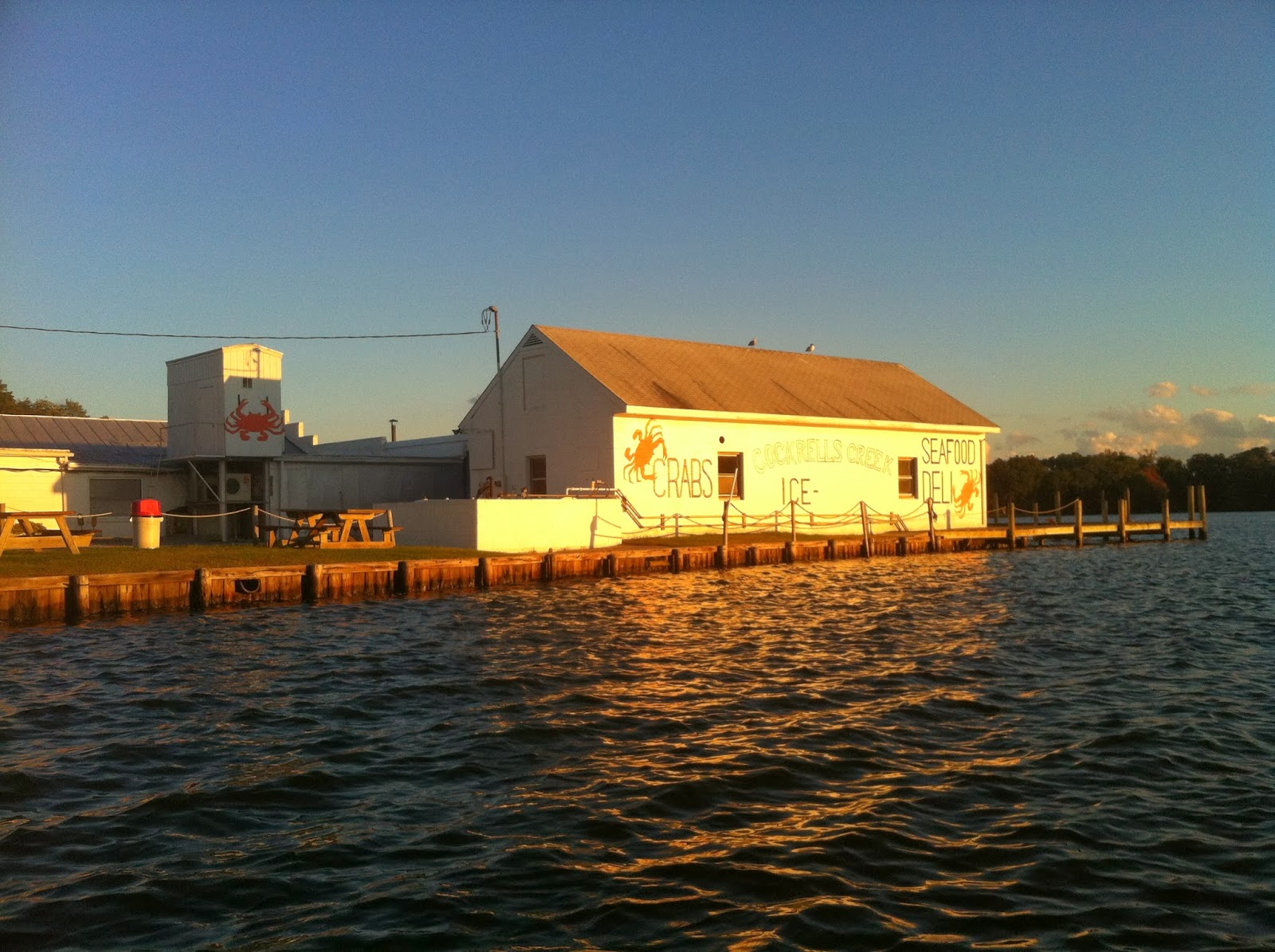
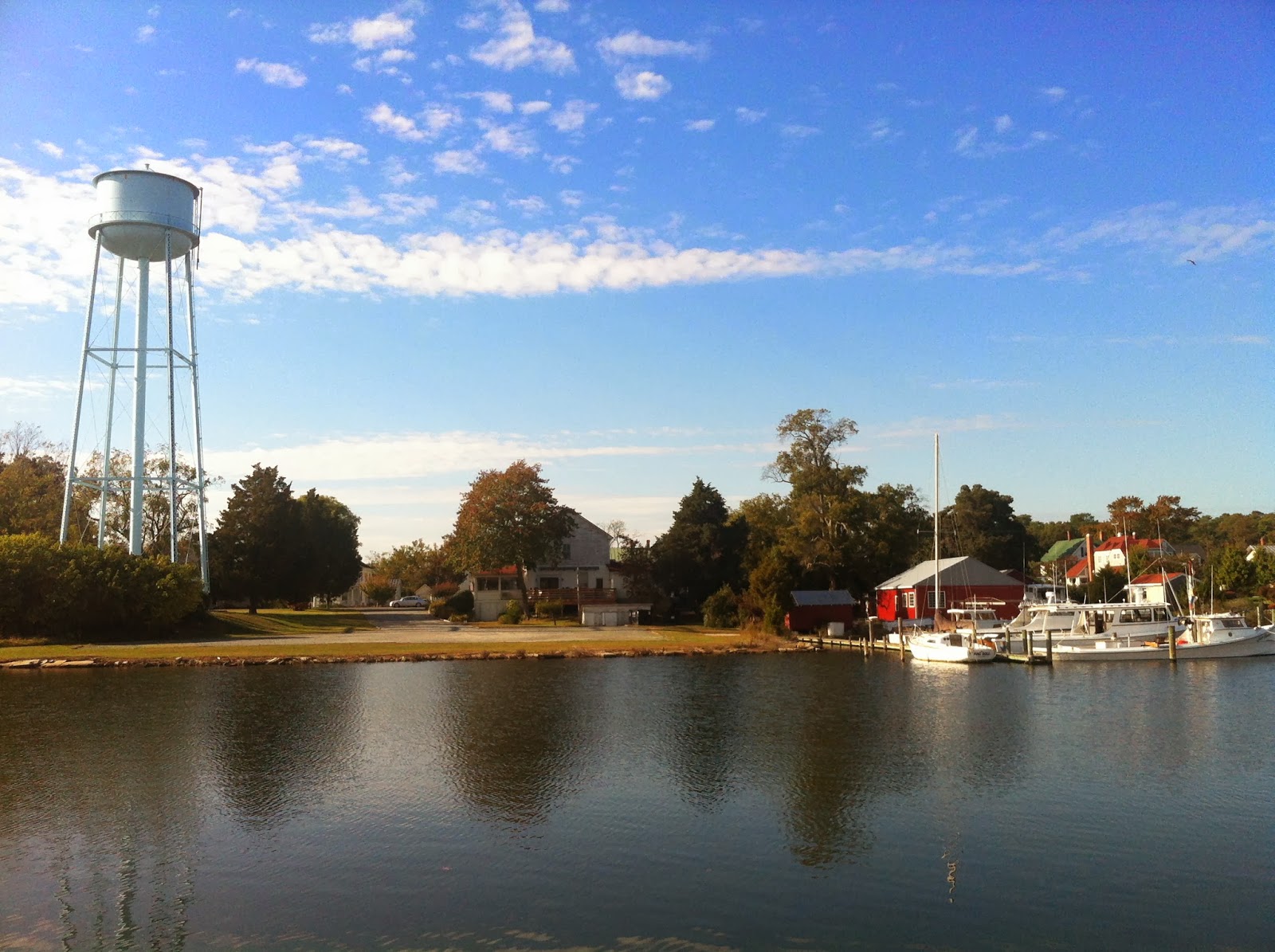
Scenery on Cockrell Creek.
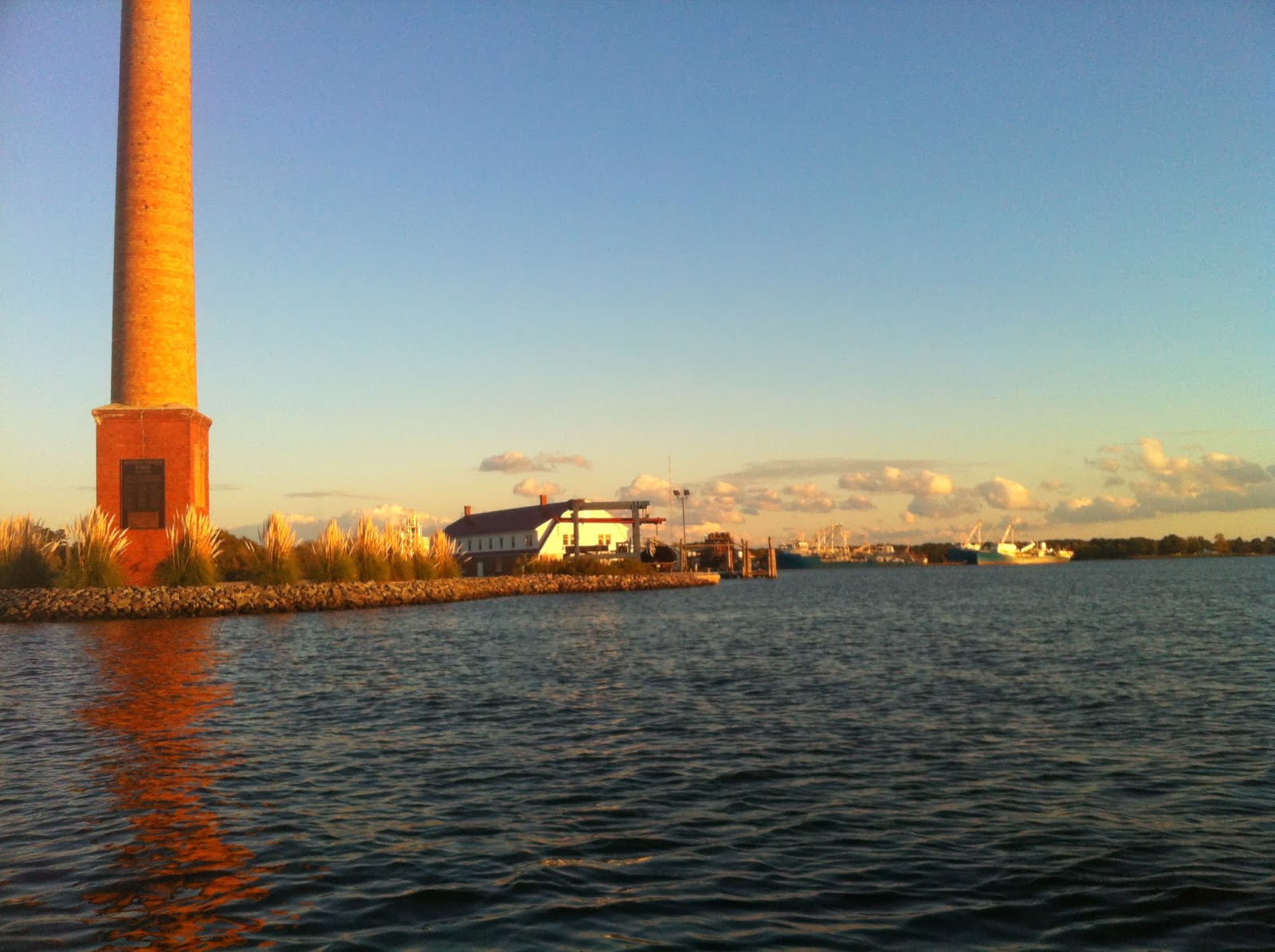
Reedville’s landmarks.
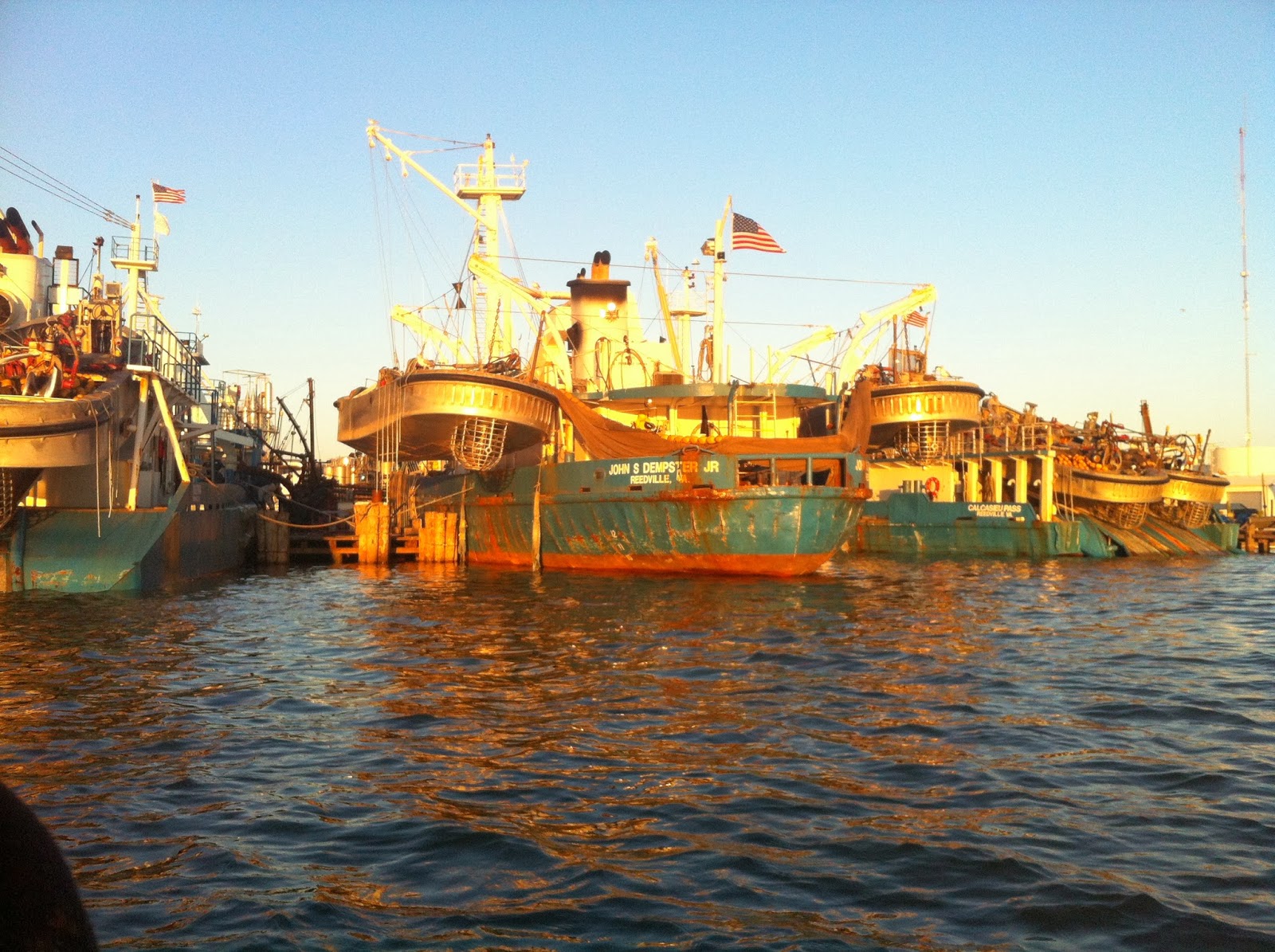
Part of Reedville’s (Fleeton’s) menhaden fleet.
Hard workers of the menhaden fleet.
Our neighbors in Reedville.
Me first matey. None better.

So, there you have it, just a taste of a poorly photographed week, but perhaps you get a hint of the beauty experienced. I leave you with a portion of our last sail home. Enjoy!


Shaping Sheaves

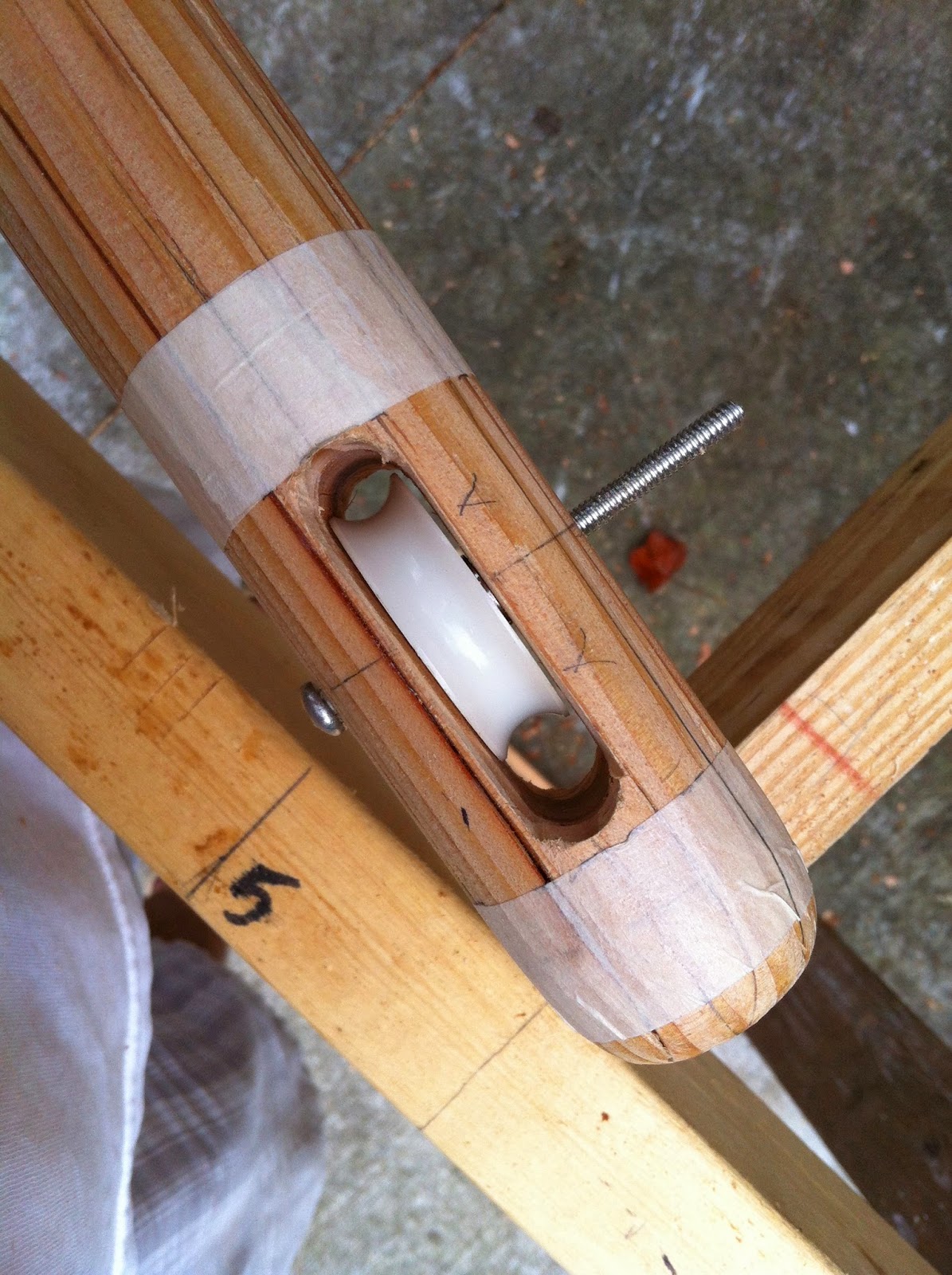
In preparation for spar sanding, I decided to cut the openings for the mast sheaves. I pulled the Delrin sheaves from a pair of old Schaefer blocks I found in the shed (don’t know what boat they came from). Both are approximately 3/16″ short of the mast tips and will work just fine for the halyards.

spar and drill press on bench.


successive borings.
   
Sheave test fit.

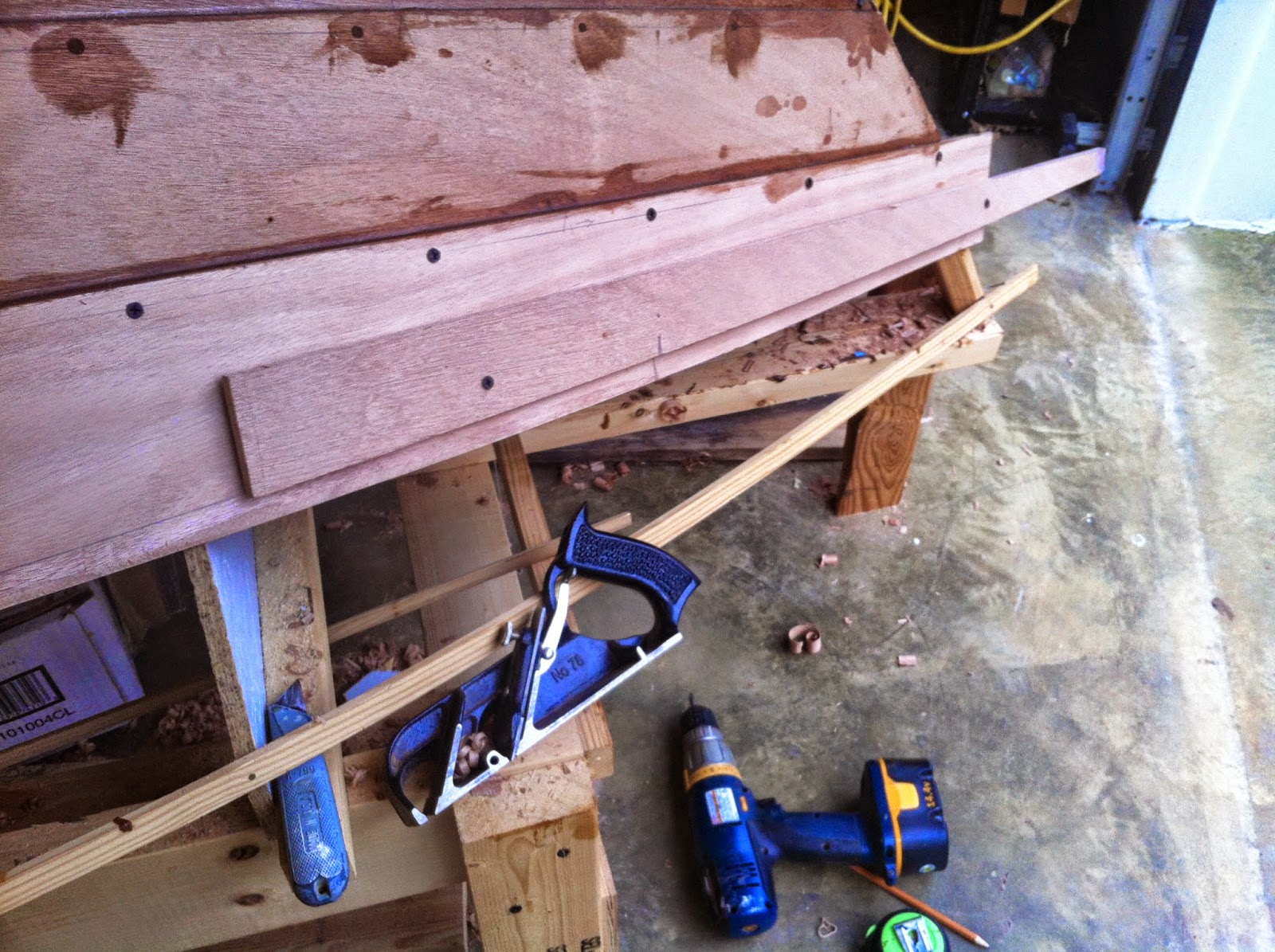
I jigged the spars level on the open bench, chocked them in place, and bore holes for the sheave slots. A Forstner bit did quick work of it.

A chisel and utility knife roughed the edges to shape. Filing completed the needed slot width.

I test fit the sheave with a pan  head machine screw. I’ll replace with a counter sink screw and finish washer later. he machine screw may be tight enough to fore go an aircraft nut on it.

The Cup!! and Mast Building

Well, first a big “Hurrah!” Well done Team Oracle USA. What an amazing spectacle. From being almost out at 8-1 (including a 2 race penalty from pretrials?!), they won 8 straight. Magnificent  duel in flying machines.

Back to a more “primitive” boat and building: no carbon so far.

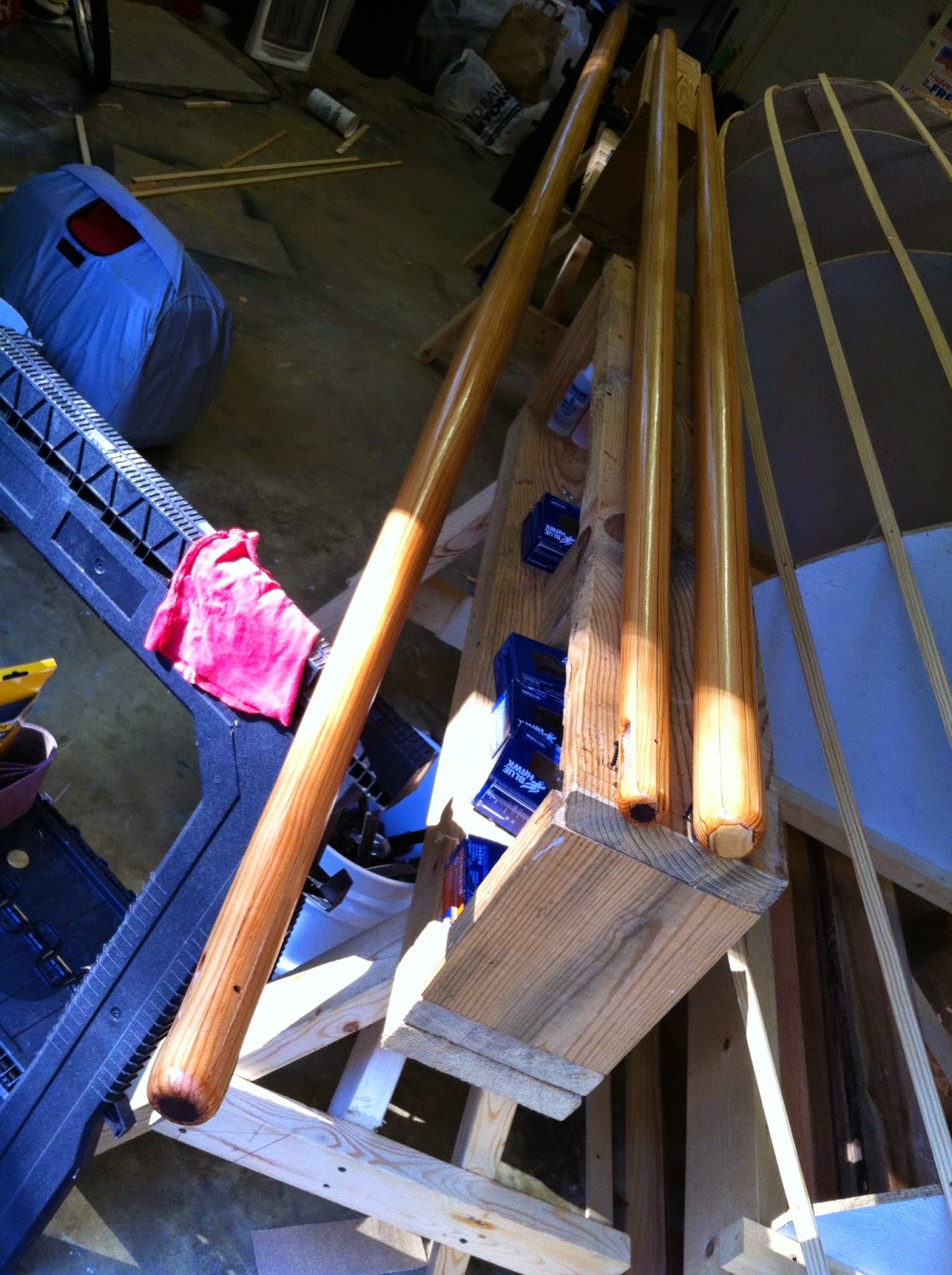
The main yard and mizzen mast birdsmouth spars were lead ups to the “biggie”, main mast. The practice was needed and I believe it paid off. While all spars need the final sanding, they have been 16 sided for that step. The other steps were:

  • for the 16′-10″ spar 8 staves were cut on the table saw out of a 5/4x6x18′ douglas fir board. Stave width, height, and taper were derived from Duckworks’ Calculator Program.
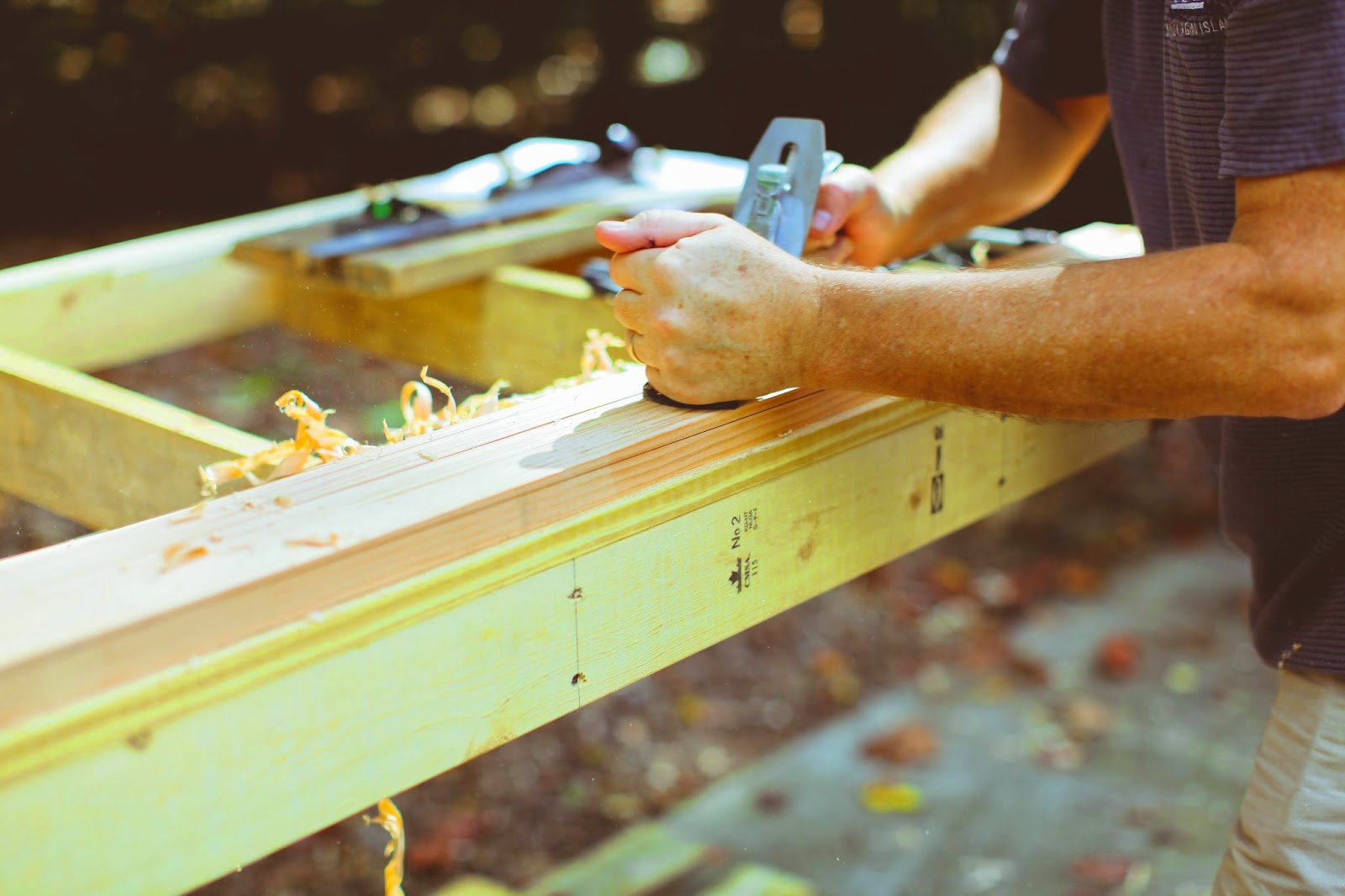
  • ganged together the staves were then tapered with a jack plane. Some sort of jig using either the table or circular saw would have been quicker, but I wanted to sneak up on the final taper. I also like planing.
  • a thin coat of epoxy was painted onto what would be the interior face of the staves.
  • then thickened epoxy was brushed onto the “beaks” of the staves.
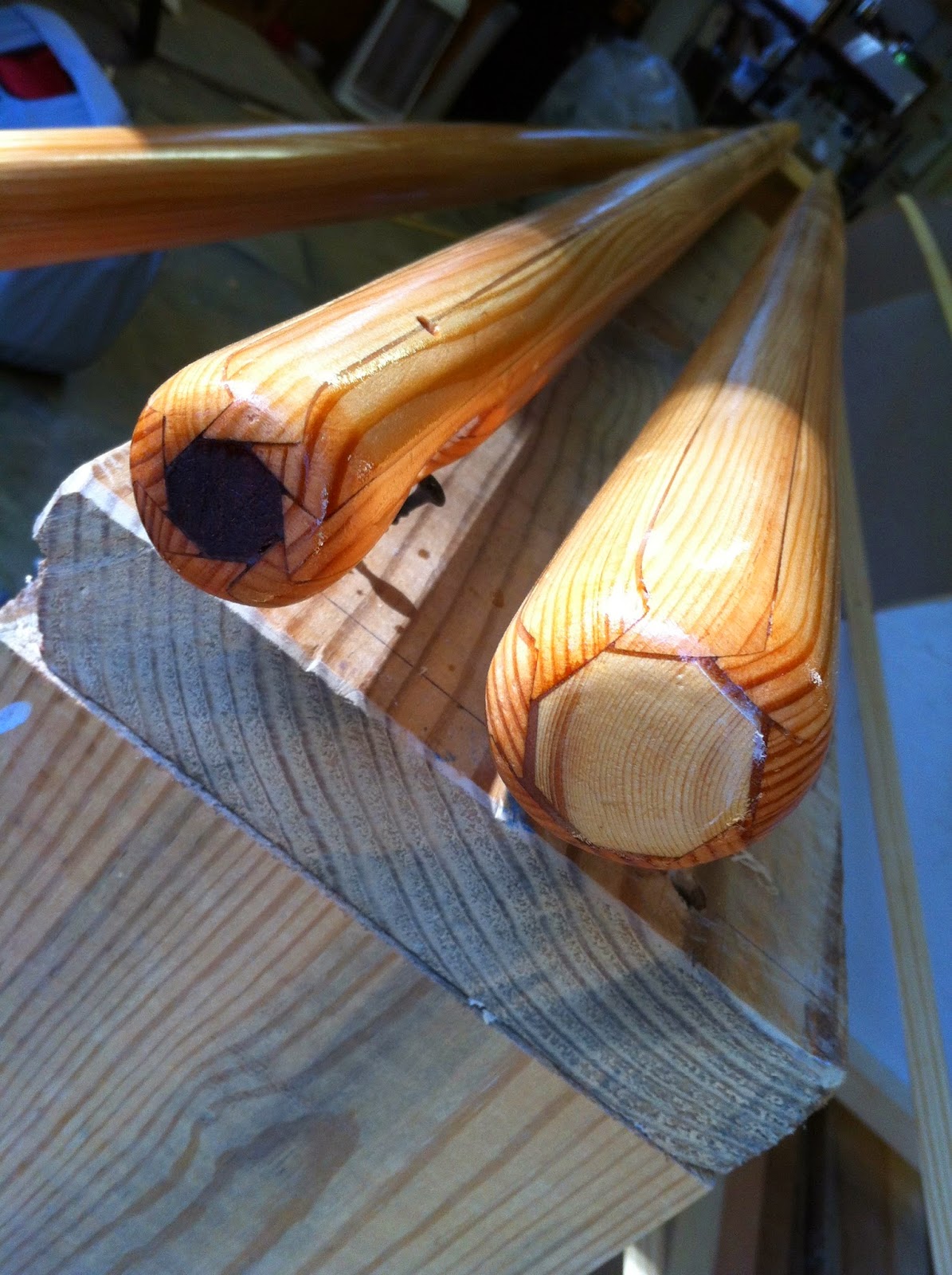
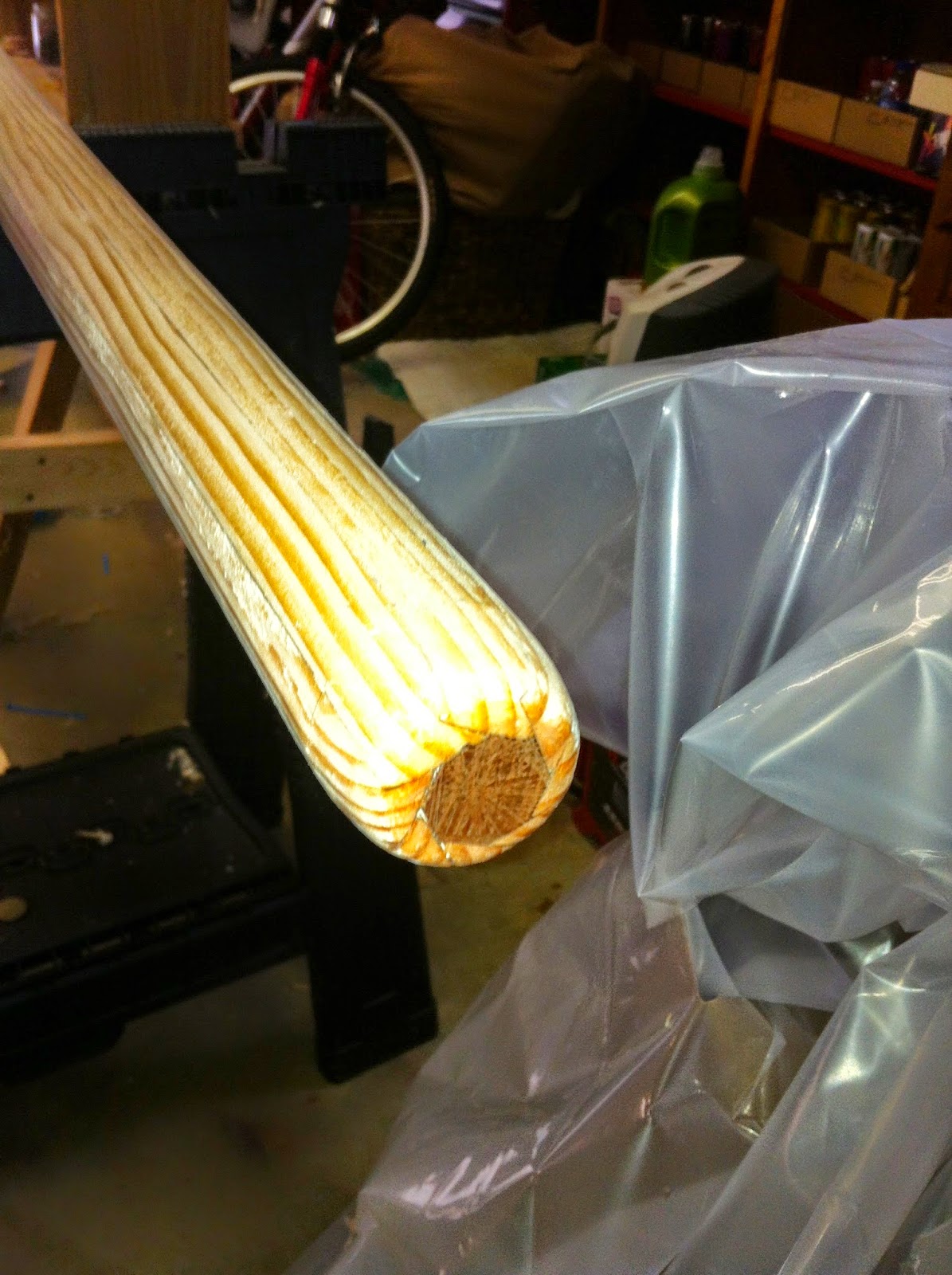
  • the base octagonal plug with feathered or crowned ends was inserted between the staves and actually aided in the glue up.


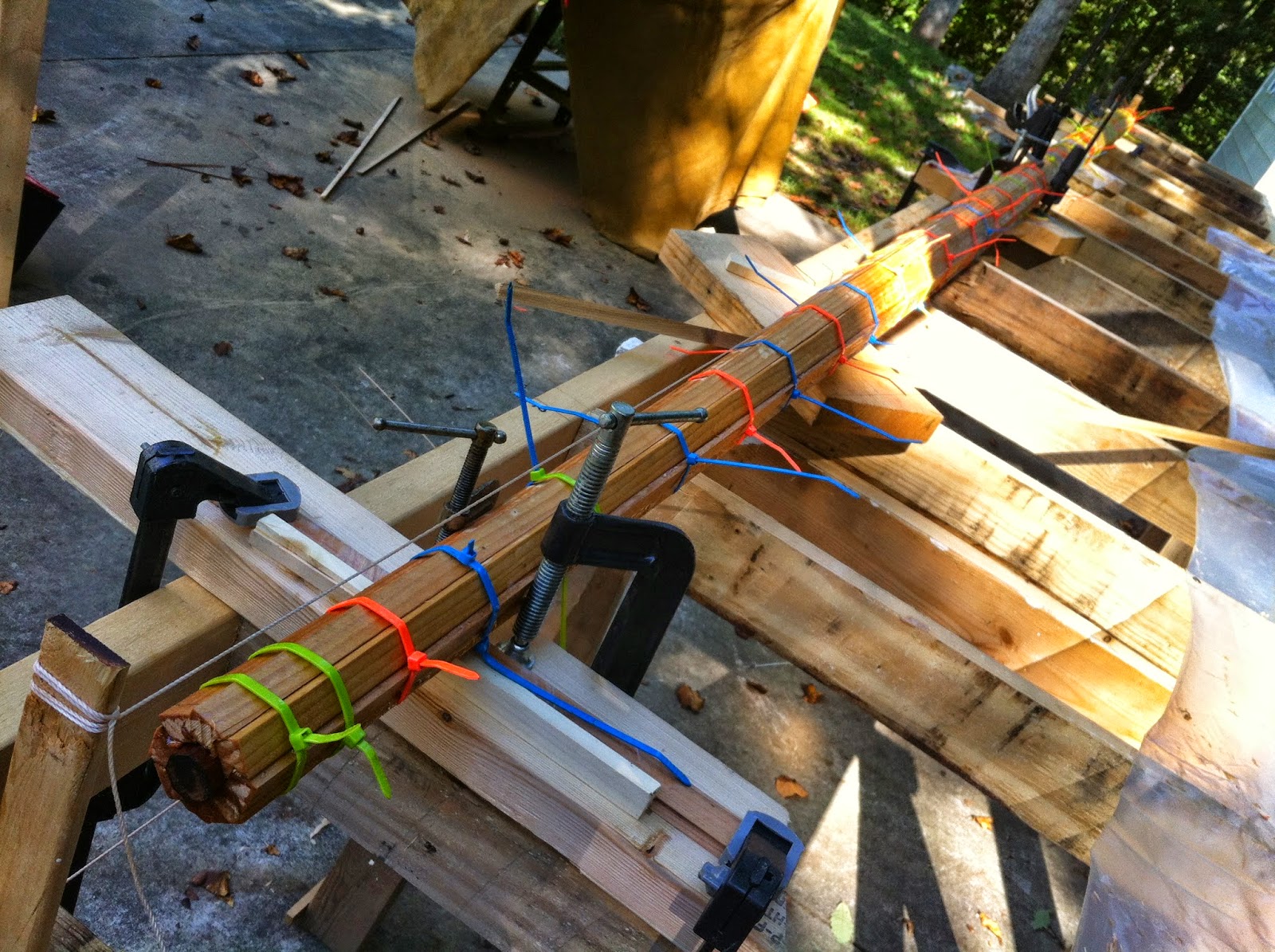
  • a second pair of hands helps tighten zip ties every 4-6″.
  • I spent perhaps an hour confirming the straightness of the glued and zipped spar. A tight string run over the mast proved very helpful toward keeping things true. For something larger I’d want to make a more exacting jig to hold everything true.
  • I left the setup overnight. Cut the ties this morning.
Abstract No. 2
  • Knocked the stave edges to 8 sides. With a spar jig turned that to 16 sides. Those residual corners were hit lightly with the plane.
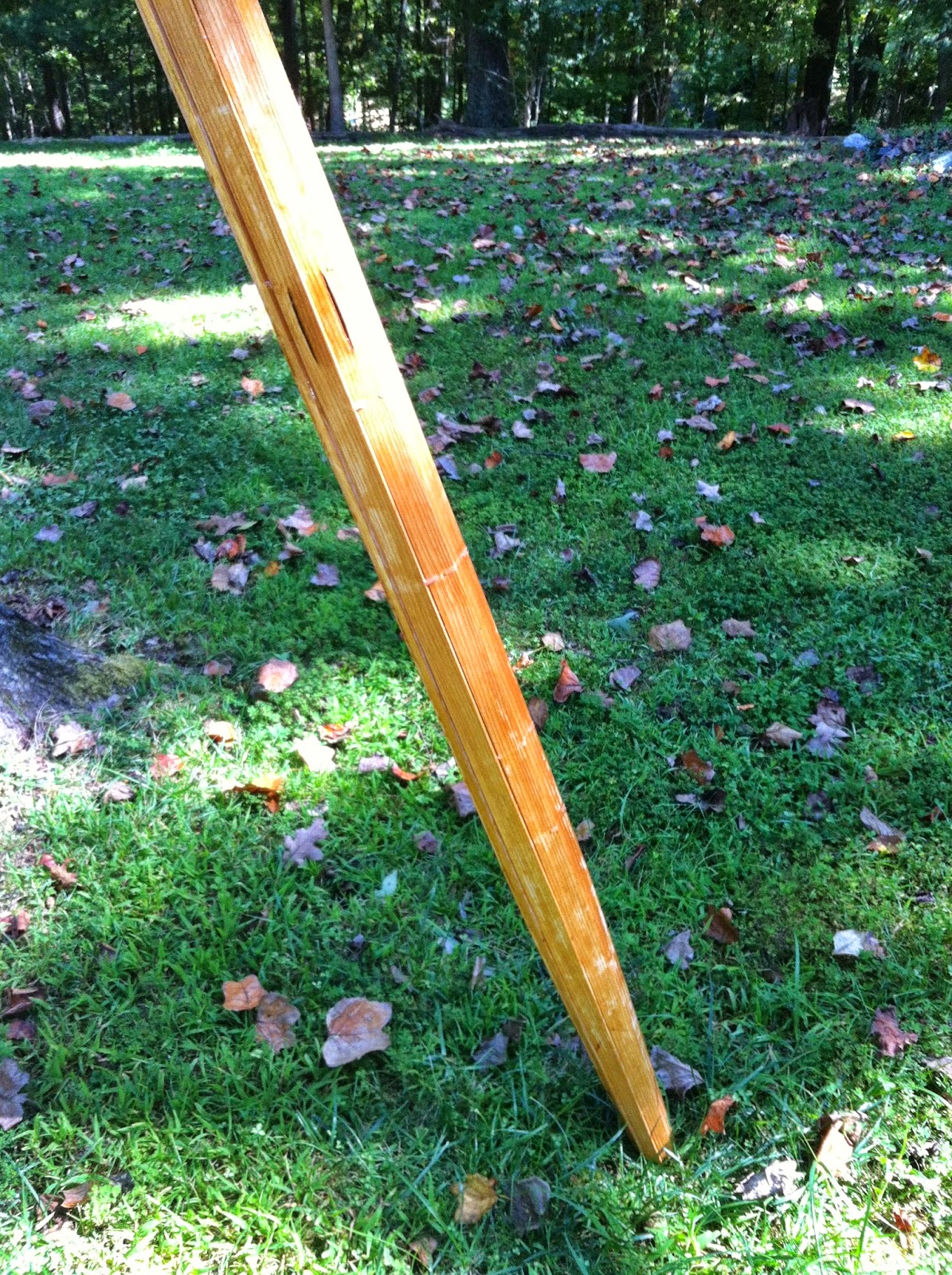
Almost 17′ and, thankfully, true.


Sap streaks I had intended to turn in, but didn’t catch it.


8 sided cherry plug.


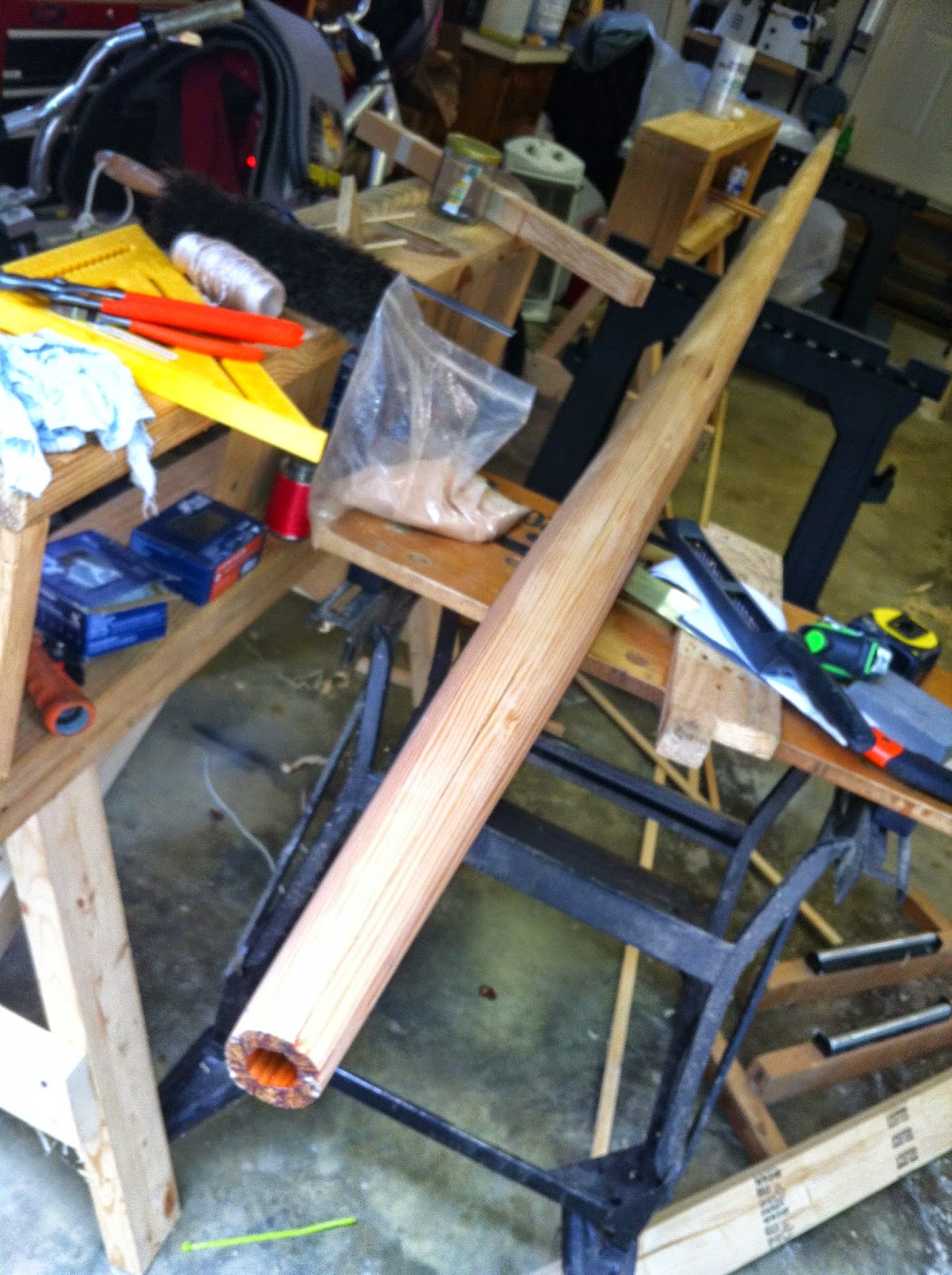
Overall. Final base plug yet to be added.
  • I almost forgot to add that I had estimated the weight of this spar to be 22 lbs. The unsanded/ unfinished spar is 19 lbs. 4 oz. On target!
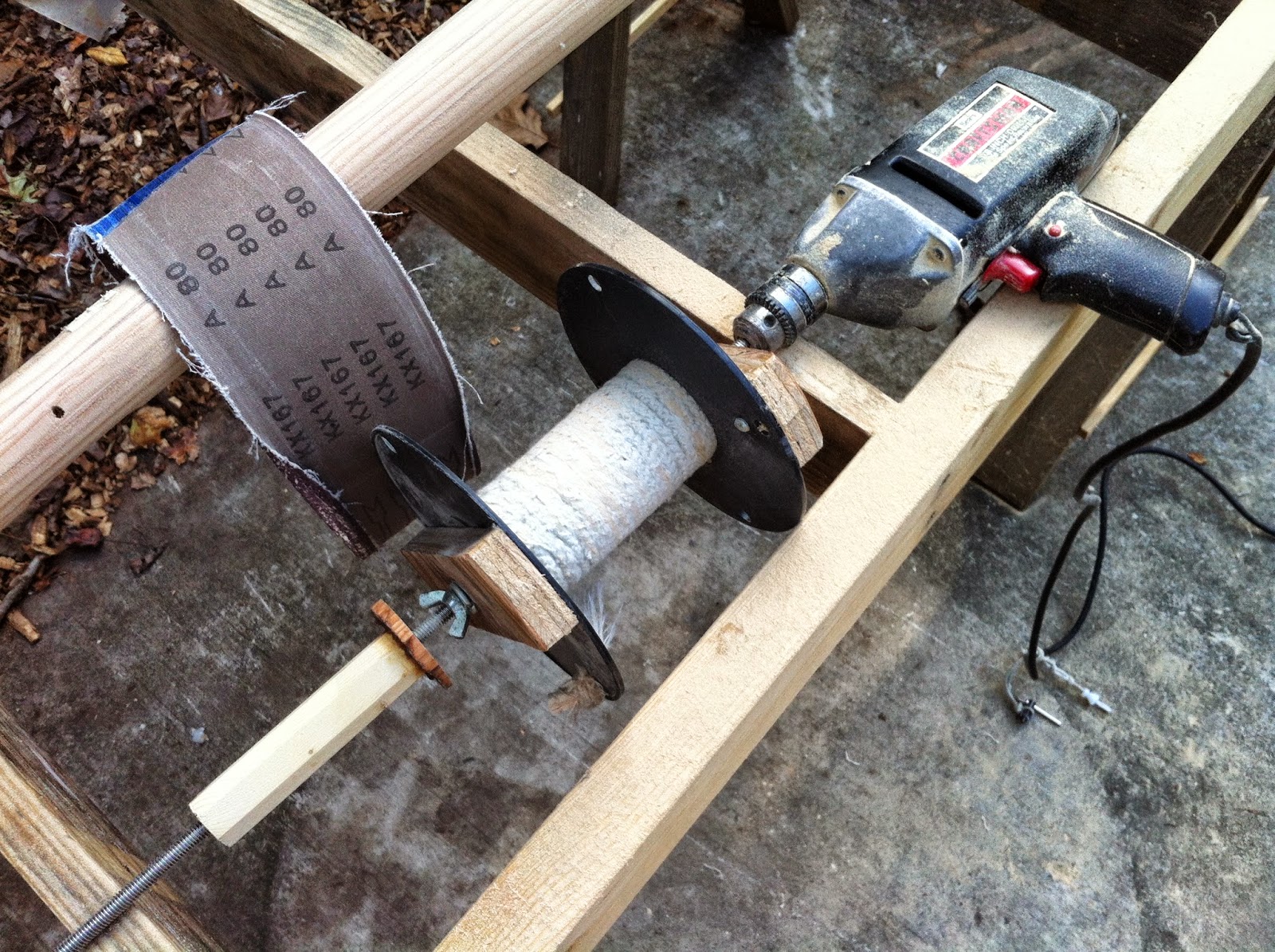
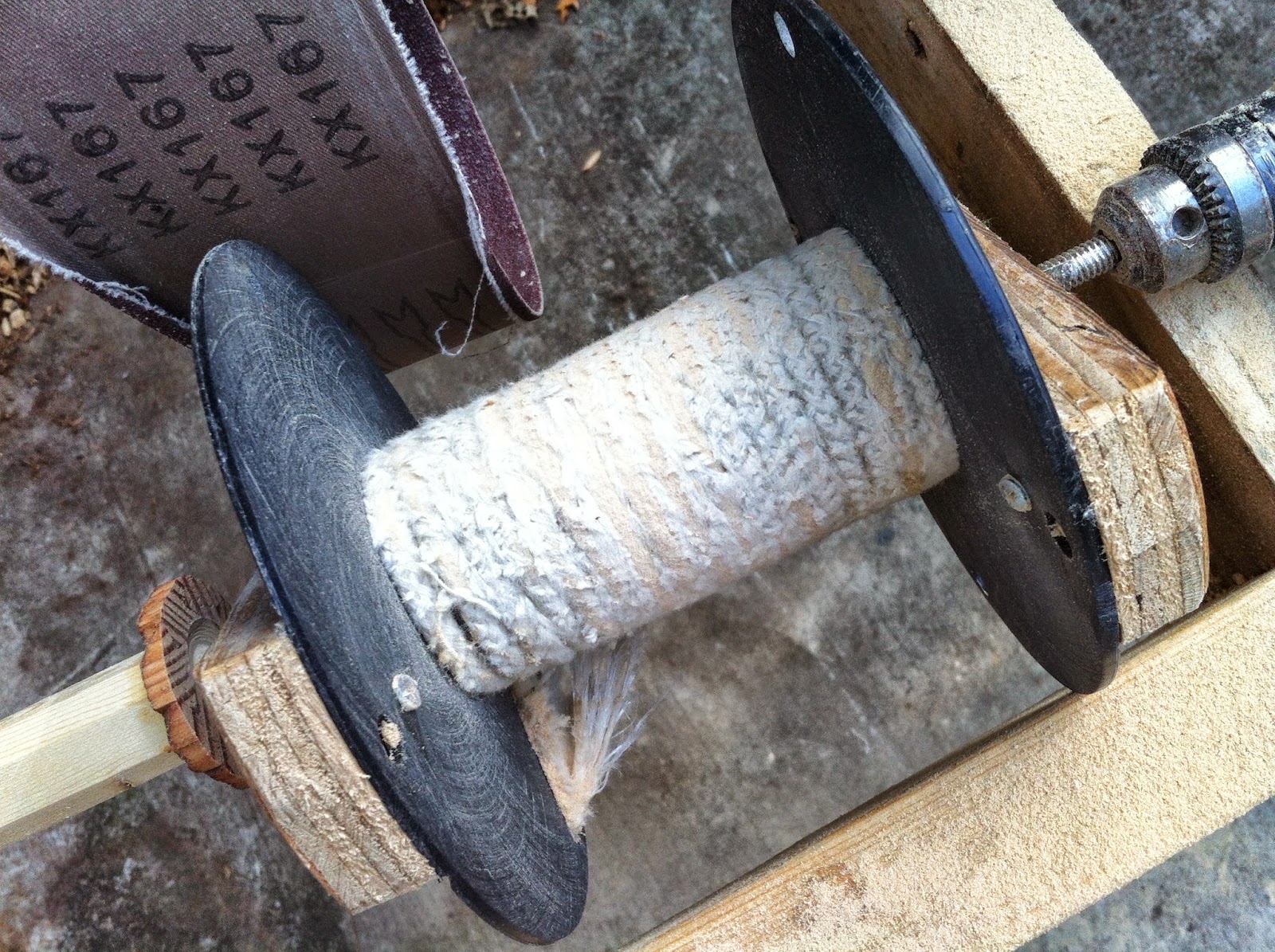
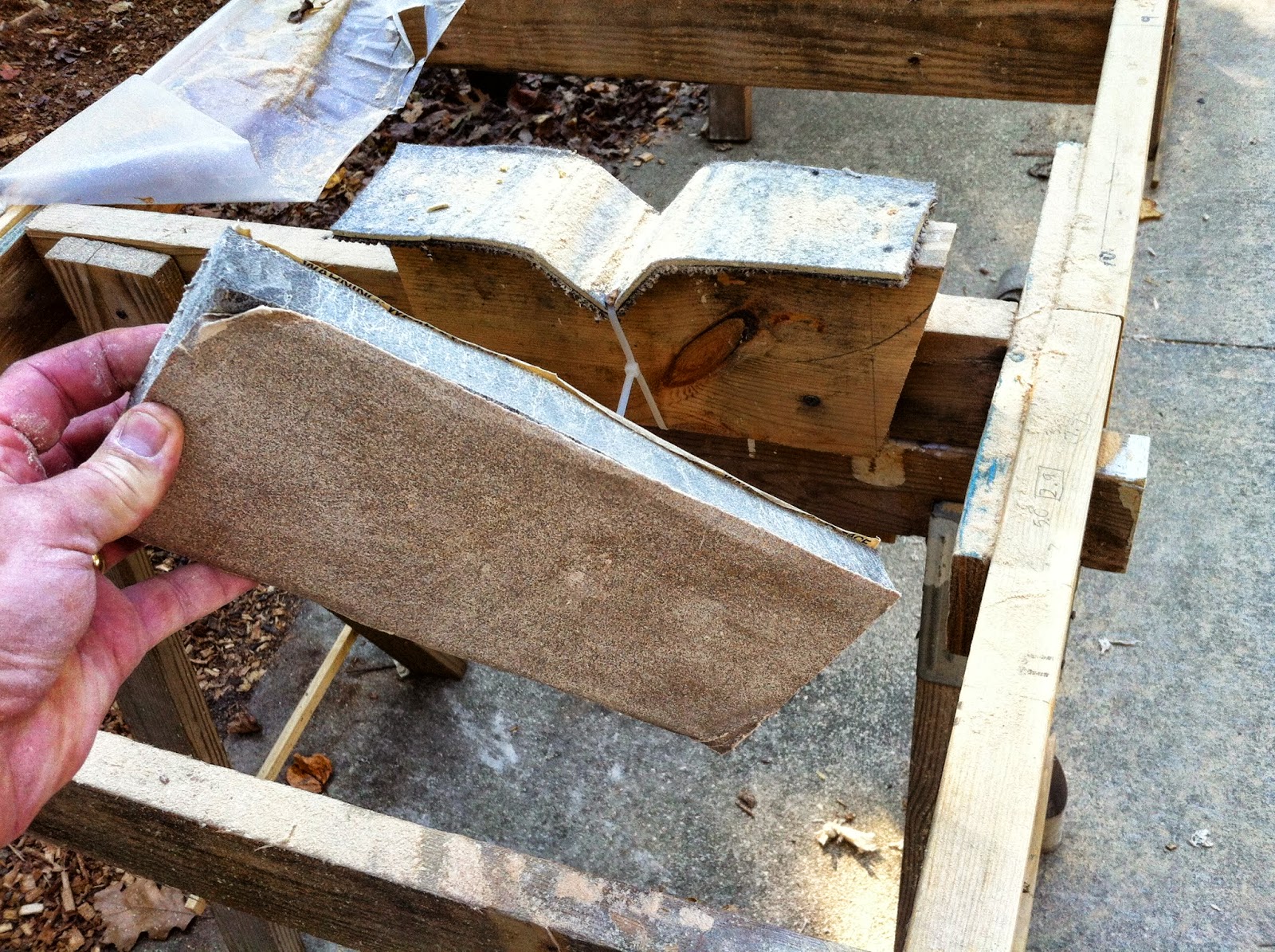
  • And so, sanding remains to suit for finish. I haven’t decided on this method: drill with drum, sanding longboards, or hand sanding by “shoe shine” with a sanding belt. Perhaps all of the above? I’d like to figure a simple way to rotate the mast like a lathe. We’ll see … I now need a boat for these sticks.

Keelson, Battens and Birdsmouth

In racing to get some work on the boat done before a busy week, I neglected to take many pictures. The weather was fantastic. Cool and bright today.

What I did accomplish:

  • Keelson shaping-
    • with “witness” saw cuts every 1.5″ a chisel readily removed a majority of the wood. The handplane got closer and will be fine tuned prior to setting the garboard planks.
  • New battens-
    • the previous set were so fraught with breaks and twists that they had to go.
    • new strong yellow pine battens were scarfed and placed on the forms. YP was from the kayak build. Save those scraps. They will be useful somewhere.
    • some tweaking of the battens has been made over 2 days as different views seem to reveal slight “hard” spots in the curves. No dramatic changes, but 1/8″ movements here and there.
  • Garboard plank template-
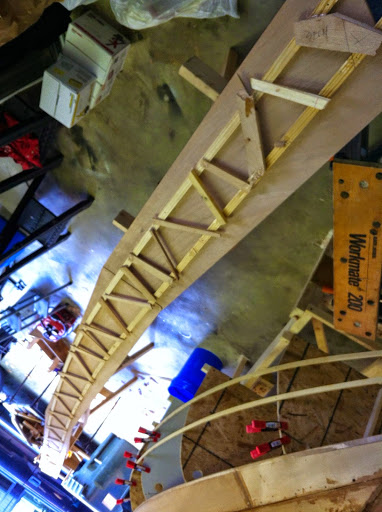
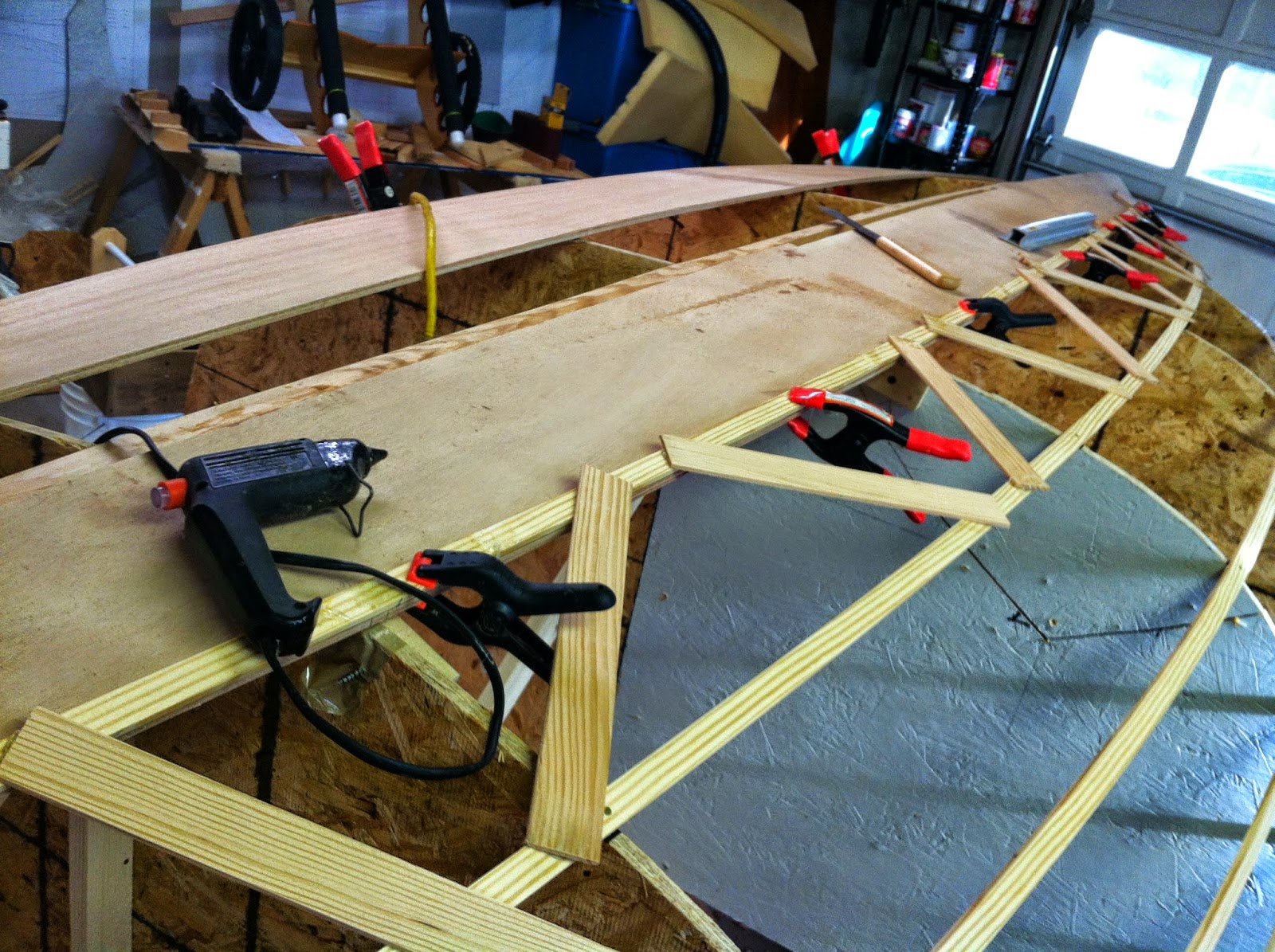
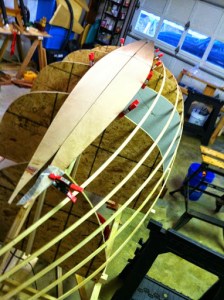
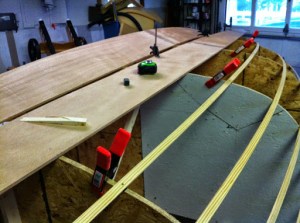
    • I will use the “ladder” technique to form a template from the battens.
    • a batten will have to be placed on the previous plank to make the successive template. We’ll see how that goes.
  • Cut birdsmouth staves for main mast-
    • all 8 came from a 5/4x6x18′ plank cut into 4 pieces which were then split vertically.
    • using a jack plane the staves were tapered. Hand planing smoothed the final result.
Familiar set up. See kayak build.


Multiple finger boards for ripping with kerf blade.


Planing taper to ganged staves.
Outdoor shop.
All tolled I’ve probably 12 hours of work over the past 3 days.
I forgot to mention I had built a 3/4″ scale balsa model of the boat to study a few details like a simple awning/tent and to generally familiarize myself with the build.


Awning study. Looking for a simple tent design with low windage.


Design, Platform, Moulds and Battens.

In reality there are no drawings for the Sooty. It is a stretched version of Oughtred’s “Arctic Tern” by 18″. The moulds are pushed further apart and the shear is adjusted up maybe 1/4″. So, you purchase the Arctic plans and a Sooty “supplement” which includes a lines plan and offsets. All other detail is derived from studying the Arctic plans seen here:

I will build the yawl rigged boat with birdsmouth spars, closed gunwales, and decked fore and aft. Of course, any of that can change. I’m actually well along in the build and neglected to take many photos so far, but some will show the process and progress so far.
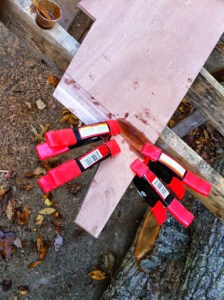
Made a stack of “clothes pin” clamps (32)


The building platform.


1/2″ OSB painted light grey for moulds.


Moulds cut and mounted.


Battens for plank alignment.


Aft stem & keelson added. Note mould bracing.


Not so fine platform extension for stem.
Stems are epoxy laminated douglas fir. Keelson is also fir. The centercase slot was cut on the table saw before mounting. I taped a copy of the stems on flat OSB taped over that to release from epoxy, and screwed short block for lamination clamps.
Aft stem formwork.


Formwork close up.


Inner stem or apron glued up.


Outer stem glue up.

Since I do not have enough long reaching clamps, I waited for inner stem to dry to use it as the form for the outer. Make sure to add clear plastic tape or plastic between the two!

While I waited for the plywood order, I began the spars. I’ll allow Duckworks to explain the particulars.
These too are of douglas fir. The preferred sitka spruce proved too dear by a cost factor of seven! I reality the weight savings is negligible in birdsmouth construction and I like the amber tones of fir better. Fir also shows some strength advantages. I questioned the 33#/cubic foot weight typically specified, so I weighed a 2x4x12′ board and interpolated to #/cu. ft. I got 33.4#/cf.
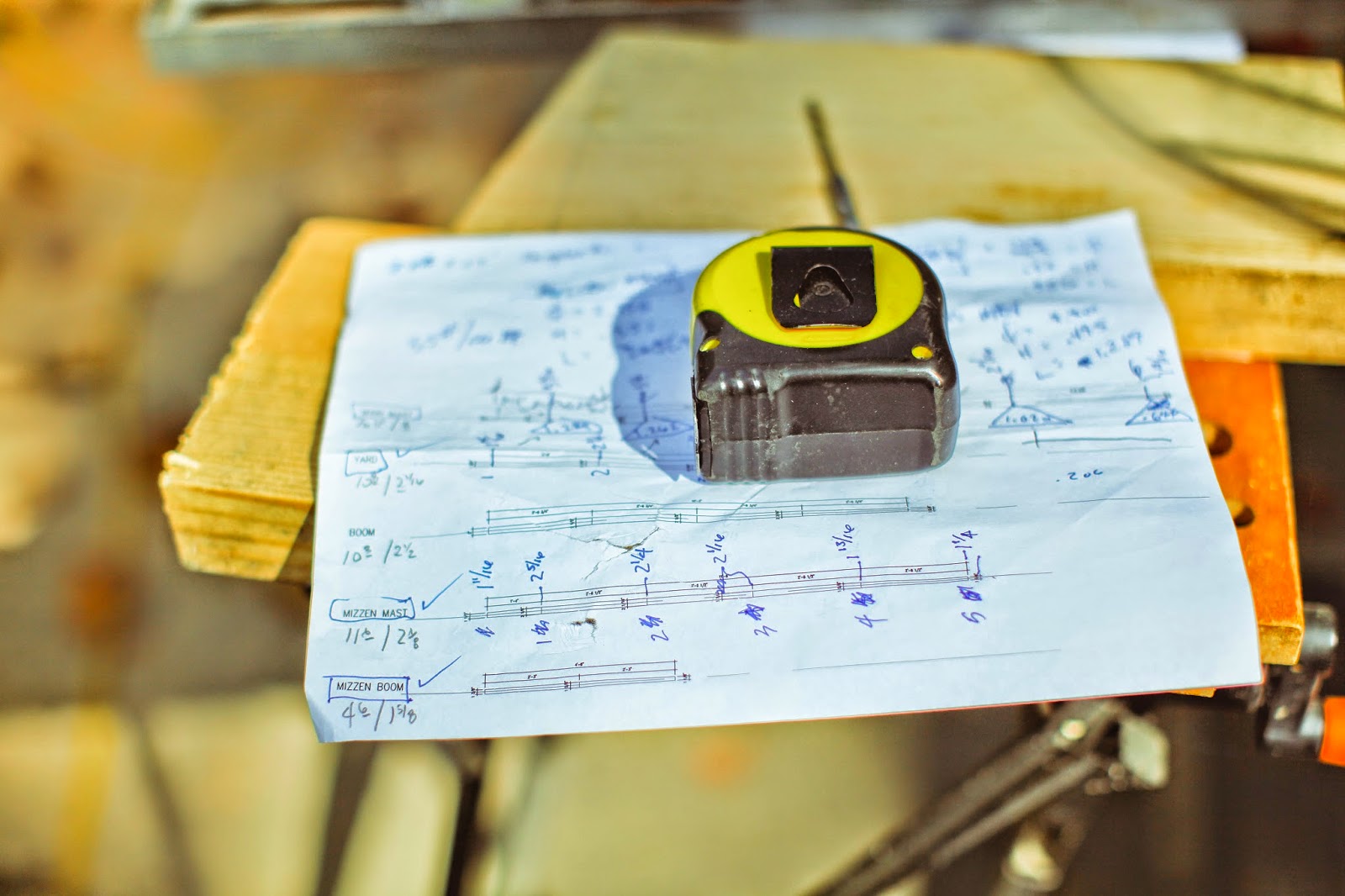
The Duckworks calculators are very helpful. There are calcs for proper diameter and stave thicknesses based on a solid spar. The main mast is specified as a 3″ diameter spar. The calcs add 15% for a 3.33″ diameter  or just more than 1/4″. Thus far I have constructed the mizzen mast and yard. The booms will be made solid due to their weight is low and all the blocking for cleats, pulleys, etc. would fill the hollow spar. I also thought a more bullet proof spar here would be desirable.

CADD drawings of spar and a cut off portion.


16 sided spar and cherry plug.


Mizzen mast base with slot as a weep.


Open bench allows spar clamping and shavings to fall.

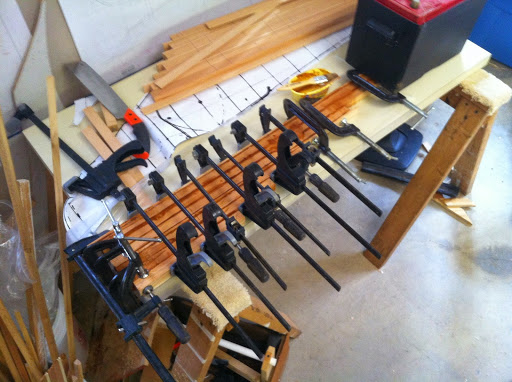
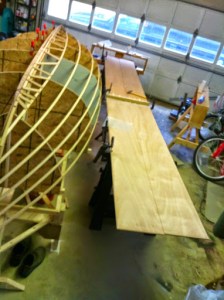
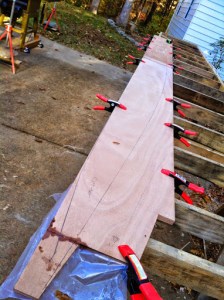
The open bench is 20′ long. I saw this great arrangement on Andy Kane’s photo collection. I built mine from a discarded pallet and four 10′ 2x4s. The reuse makes one feel you are cheating the expense. The stack of clamps were made from scraps left over from my SOF kayak frames. Having the bench outside keeps the dust outside too.

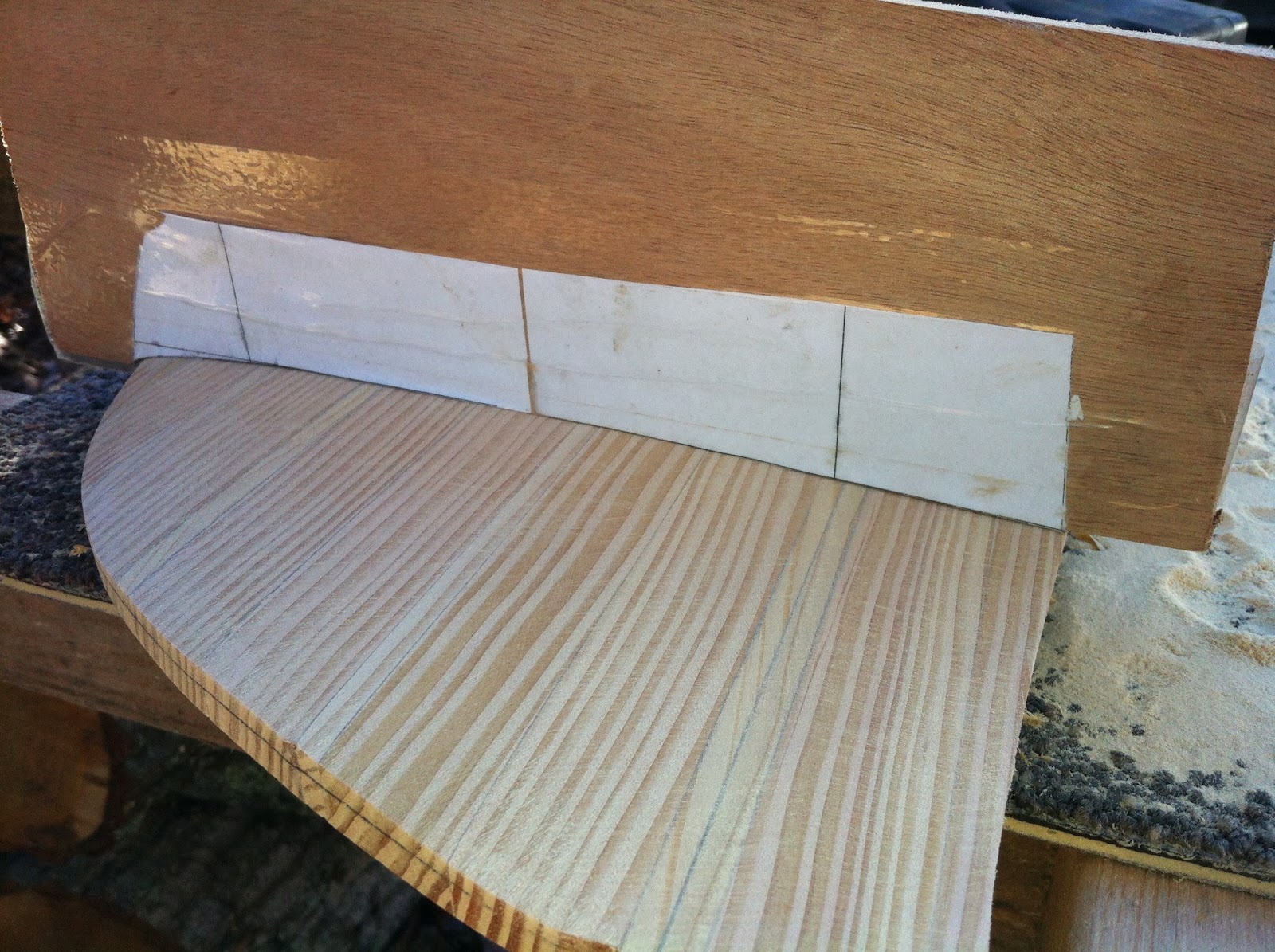
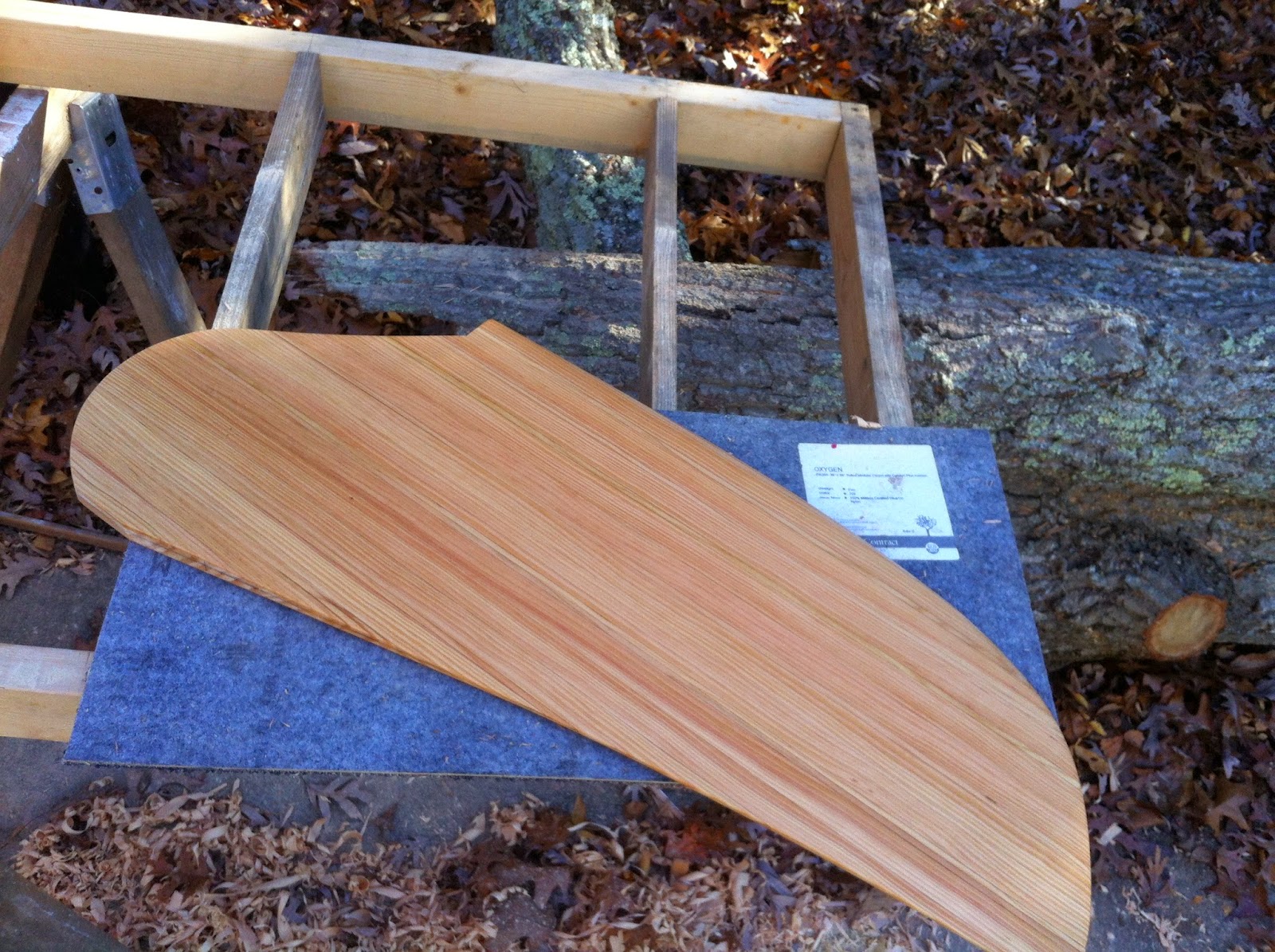
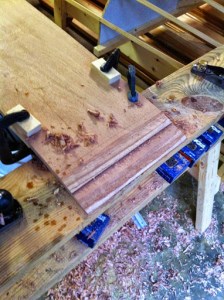
Other parts I’ve started are the rudder head faces. These are from cherry boards which I lugged from city to city and house to house from Houston to Virginia. I knew one day I’d find a project to do the boards justice. I enlarged the rudder drawing, plotted sheets (8.5×11), taped them and made an OSB template. The cherry was just shy of the needed width, so I epoxied a joint where the faces will hold a solid piece inside.

Rudder layout.


Layout on cherry.


Rudder head template.


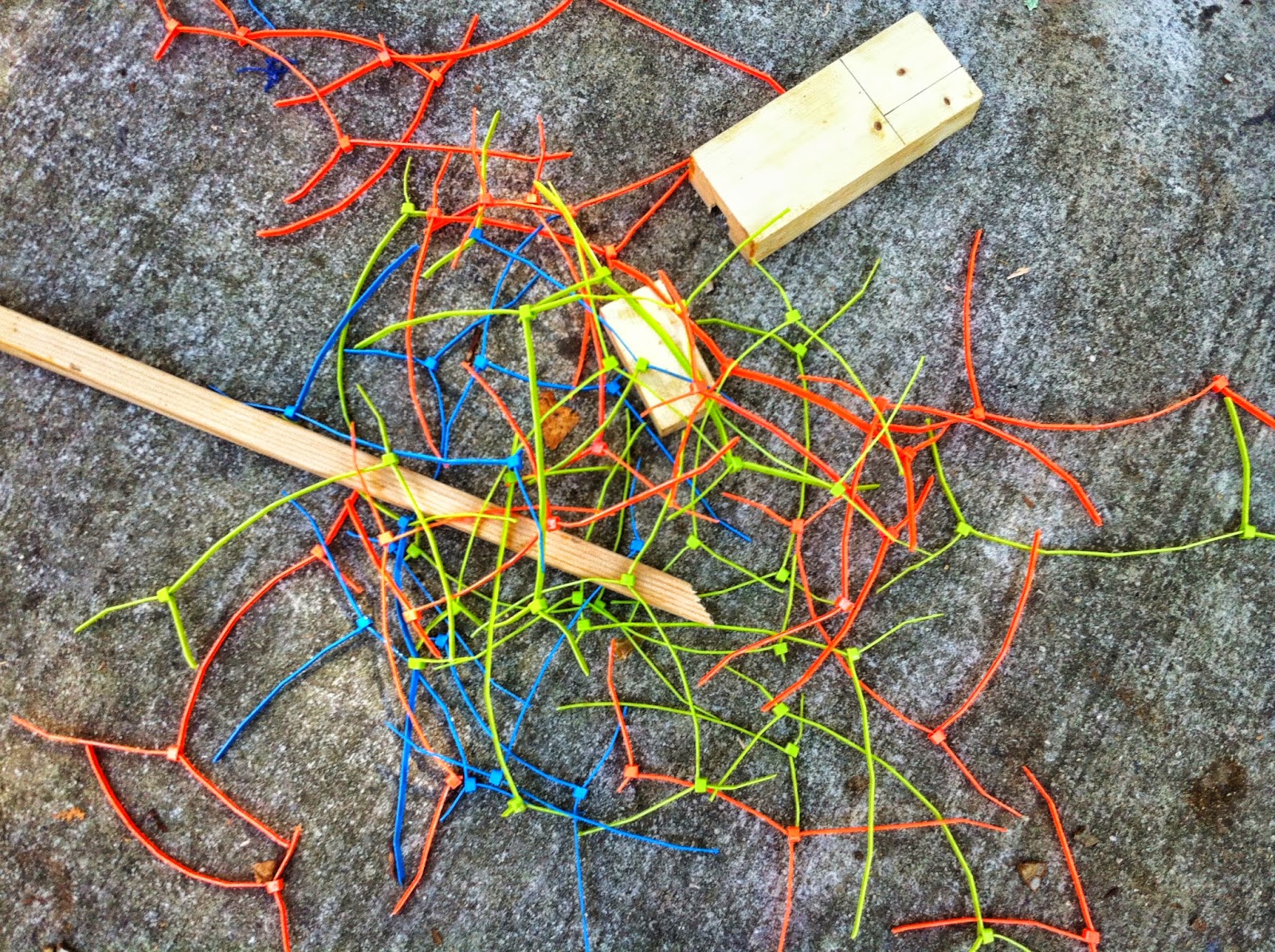
Lastly, I’ll show a screw up. Despite my efforts to place the birds mouth yard in a jig to keep it true, in tightening the zip ties I must have pushed/pulled too hard and put a crook in the spar’s end. I was ready to make another when cooler heads prevailed. I realized the spar was straight on one axis. A delicate slice along 4′ of the crooked axis allowed for realignment and work to go on. In an odd way I’m proud of the small scar left in the spar

Zip tie waste.


Saw surgery along curved stave.
Slice before epoxy.

I’ll photo the finished spar later. A second boom and the main mast need to be built, but we have the hang of it now.

What’s Next?

With the kayak done and Summer temps winding down, I decided to construct another boat. This is actually the end of a rather meandering path of fitful beginnings without any starts. For several years now the idea of sailing an open boat closer to shore for extended days has poked and prodded for my attention.

For this type of cruising, there are many suitable boats. Not all are a suitable builds and not all evoke the perhaps romantic notion of slipping along a reedy creek on some crisp Fall afternoon. For countless hours I’ve dreamed and studied this design or that building method. A library now resides in the upstairs hall dedicated to this pursuit. However, if I had to pinpoint the initial spark, it likely came when I stumbled upon Ross Lillistone’s “Periwinkle”, a cat ketch with balanced lugs (video here).  She has that historical reference, yet with new construction techniques is a fresh original.

Lillistone’s “Periwinkle”

Not long after, research turned up another boat from down under, Mickey Floyd’s “Salty Heaven”.
Say what you will about the name, this yawl lugger’s workboat lines make her a beauty.

Floyd’s own “Salty Heaven”

Somehow the New Jersey gunning skiff dropped in there most likely due to Barry Long’s exquisite “twins” he crafted in his basement (video). These got my longest attention, but ultimately they lacked the volume I hoped for to take 2 or 3 sailing. His blog Marginalia is a great history of his builds.

Long’s Melonseed “Aeon”

The long search and dragging of feet ended with a double ended balanced lug yawl  by Iain Oughtred called the “Sooty Tern”. Perhaps his 100th design, she is the inheritor of a long evolution of his yawls. Details are here (Sooty Tern). Max Filusch has one of the best sets of photos of this boat. This blog’s current background photo is one of his. Here’s another:

Max’s “Sooty”

Oughtred’s designs are some of the most built boats out there. With a large following, resources abound on WoodenBoat Forum. For that matter, any wooden boat of note is virtually catalogued there. Sooty fits the bill. With a nod toward history, an evolution of ideas, and simplicity of design, this boat proves to answer a dream …

Dolly for a Kayak

While the kayak is light, the added accessories (paddle, life jacket, pump, spray skirt, lunch, etc.) can make the load awkward, if not heavier, and hauling the whole kit any distance can be trying. The solution? a good dolly. I decided to make my own.

I used 17″ plastic wheels, 1/2″x2’x2′ birch plywood, some 1″ PVC with caps, and machine bolt for axles. The ply was cut into 3 pieces and slotted. The heads of the bolts were ground off and holes for cotter pins drilled through the shafts. These were then epoxied into a wood channel. The PVC was cut to length, slotted to slip over the 1/2″ ply and secured with screws. Once the pipe was capped, split pipe insulation was glued onto the pipe.


The entire assembly can be broken down readily for ease of storage. The “lightening” holes really serve to strap the kayak to the dolly and they add a bit of style. After a good sanding I’ll put a few coats of polyurethane on the works. I’m very happy with the results. It is very serviceable.

A Little More and a Little Less

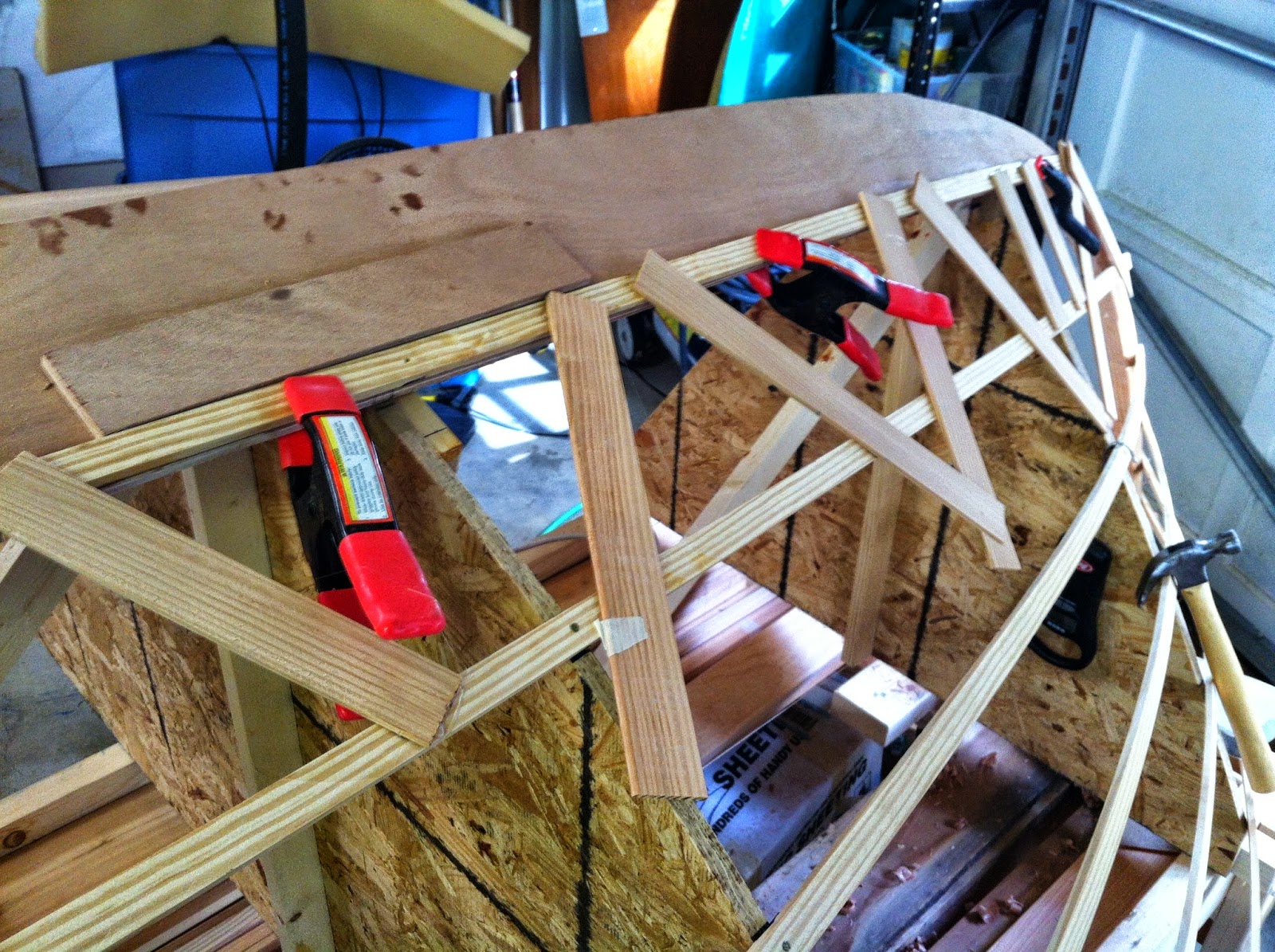
The hard turn of the shear to deck took several 1/4″ strips as I recall.


Sweet lines for such a well behaved boat.

Just a couple pics my daughter ( A Girl Named Leney ) took that I liked of the boat (and some dude with hairy legs).  I continue to make small improvements to the details, but they are slight and I’ve maybe 20+ hours in the boat now.

I recently sold “Chica”, my Classic Moth. Felt like a traitor, but she was really too narrow for my 200 #s. I may build another down the road. Wonderful, light 75# hulls, and responsive open class boats (if it fits in the rule box, its a Moth). Still basically a garage built class, the Moth evolved into a taller rig to become the International Moth. I sailed such as a teen. At 14 I could pick it up from the beach or lawn and walk it to the water solo. They would require your constant hand as they capsized if left alone, but boy were they fast. Those boats grew hydrofoils and now skip across the surface like a water bugs. Anyhow, here are some shots of old Chica:


Jimmy "Hands" Shannon – craftsman / boatbuilder

Stumbled upon these 3 videos of a true Irish craftsman. Had his 50th birthday before he “took” to sailing! Thought I’d share:


Kayak Hoist

Thought I’d pass this along. I have been simply hanging these light weight boats from eye hooks anchored in the ceiling at joist locations. It was a very awkward one man operation and really needed 2 because I had to get boat so close to the ceiling to clear the overhead door when up. Luckily I happened to find a bicycle hoist at Harbor Freight Tools that I readily modified for kayak use.

Host’s box.

The weight limit states 40#.  I suspect this can be significantly extended by replacing the very cheap nylon “line” (term used lightly). I switched to some 1/4″ braided nylon. And, if you really had a load, I’d recommend drilling out the riveted axles and replacing them with a small steel carriage bolt.

The hooks won’t go to waste. They can make good wall hooks for tool storage. Take them apart and you have 3. There are 2 per box = 6 total.

Removed hooks from pulleys.
I added a PVC strut to the lower pulleys for more control of hoist strap locations. I use nylon webbing for the straps, but still run that through the hollow in the pulley to bear the load. Also, the tubular webbing variety is softer on the boats. I’m using both at the moment.

1″ ID PVC added in lieu of “hooks”
Boat #2 raised.

The upper pulleys are mounted to a 1x4x8′ board which is screwed into above floor joists (24″ OC). I further hooked the tail end with orange strapping to help assure the overhead door clears. Now the system is truly a one man operation. Very satisfactory. $9 hoist + $5 line + $1.50 board + $2.50 PVC =  $18. No complaints. Made three.

Boats #1 & 3