Garboard Planks (or Shadows of the Whiskey Plank)

Until I made the first plank, I felt I was dancing around the idea of building a boat. Most of the spars have been made. Pieces like the rudder head have been cut. Aprons and stems have been created. Even the backbone with its moulds and fretted battens (I’ve moved them countless times) hadn’t mentally convinced me I was building this boat.

Before shear batten was adjusted.

That all changed yesterday when the garboard planks were lain on the moulds for a test fit. I am pleased with the result and the technique. Those steps are as follows:

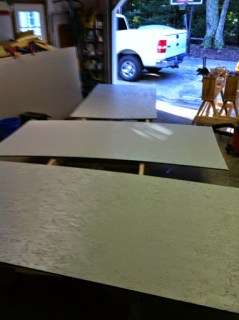
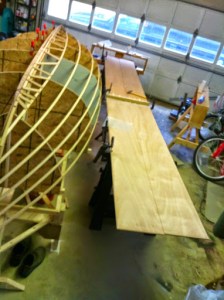
  • 2 sheets of the 6mm okoume ply were ripped down the length to 12″ wide panels. The finished plank was almost 10″ at its widest and this width worked (by happenstance?).
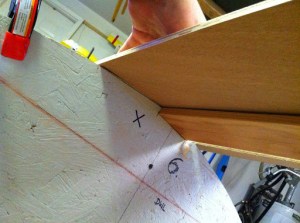
  • These were stacked and tapered to a 8:1 scarf for joining.
Scarfing of 2 stern ends. Previously had done 4 for middle joints.
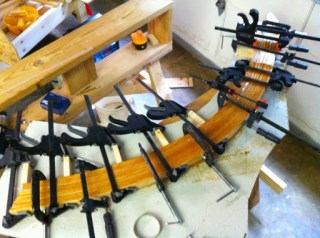
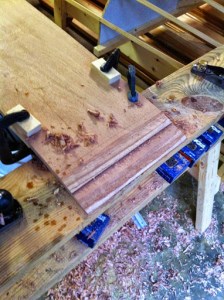
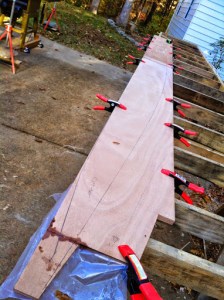
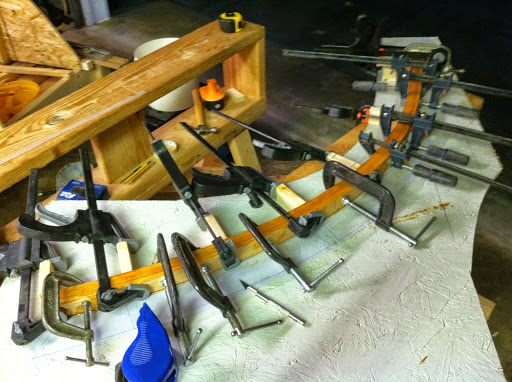
  • With wax paper on my Black & Decker Workmate, the panels were joined. “Wet” epoxy on the scarfs were followed by thickened epoxy.
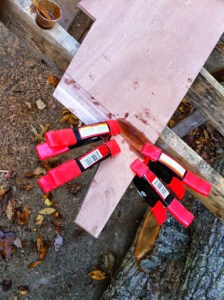
  • I used a small nail through the panels to prevent epoxy slide in the joint. Small wedges under the clamped joint batten help snug it all down uniformly.
  • 24 hrs later one panel was ready. A heat gun and scraper readily removed the excess. (Thanks Ross Lillistone).
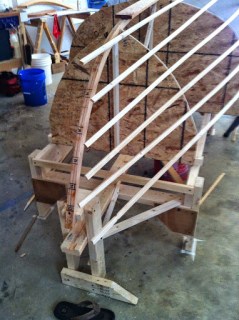
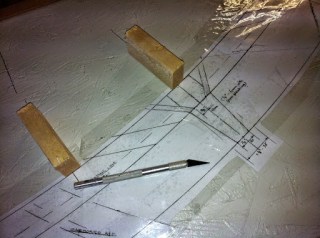
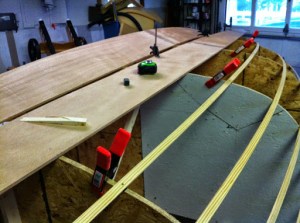
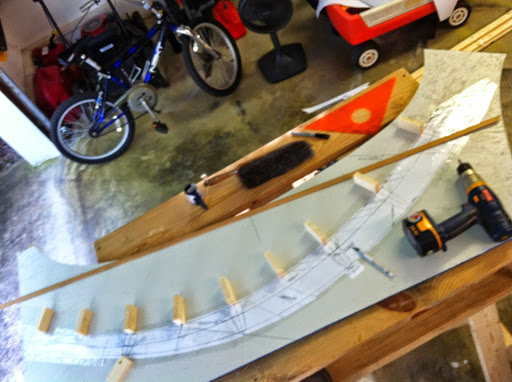
Stacked planks with tracings from the spiling truss.
  • Since I let the bow end run wild for final shaping, I was not convinced I had enough panel once joined so I added 8″ from what was to be cut off at the stern end.
Added 8″.


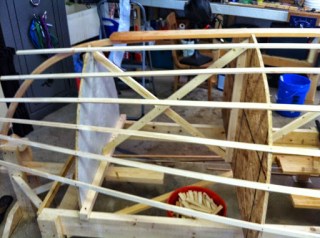
  • The trussed batten ladder from the moulds worked like a charm. The finer ends do need extra cross pieces to hold the joined battens in place.
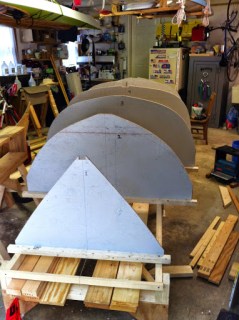
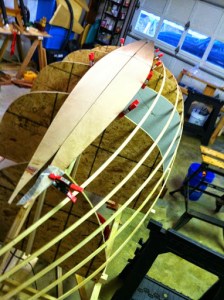
I regret I didn’t take more photos, but I was wrapped up in the process. I’ll take more detail pics in subsequent planks. Here are the planks resting on the moulds.
Garboard planks resting.


Planks landed on their marks.
Some slight trimming of a couple moulds will be required.

All in all the work went fine and much better than expected. There will be some twist in the fine ends to the planks, but that is expected. I likely could have done without the 8″ scabbed piece. This part will be painted and nobody will know. I’ve heard some complain about wielding the long planks, but I had no problems and thankfully … they fit!

At this point we have 105 hrs in the build. Most Americans have probably 4 times that in television viewing over the same period, but that is a sad discussion I’ll save for another day. Later-

Sticks Without a Boat

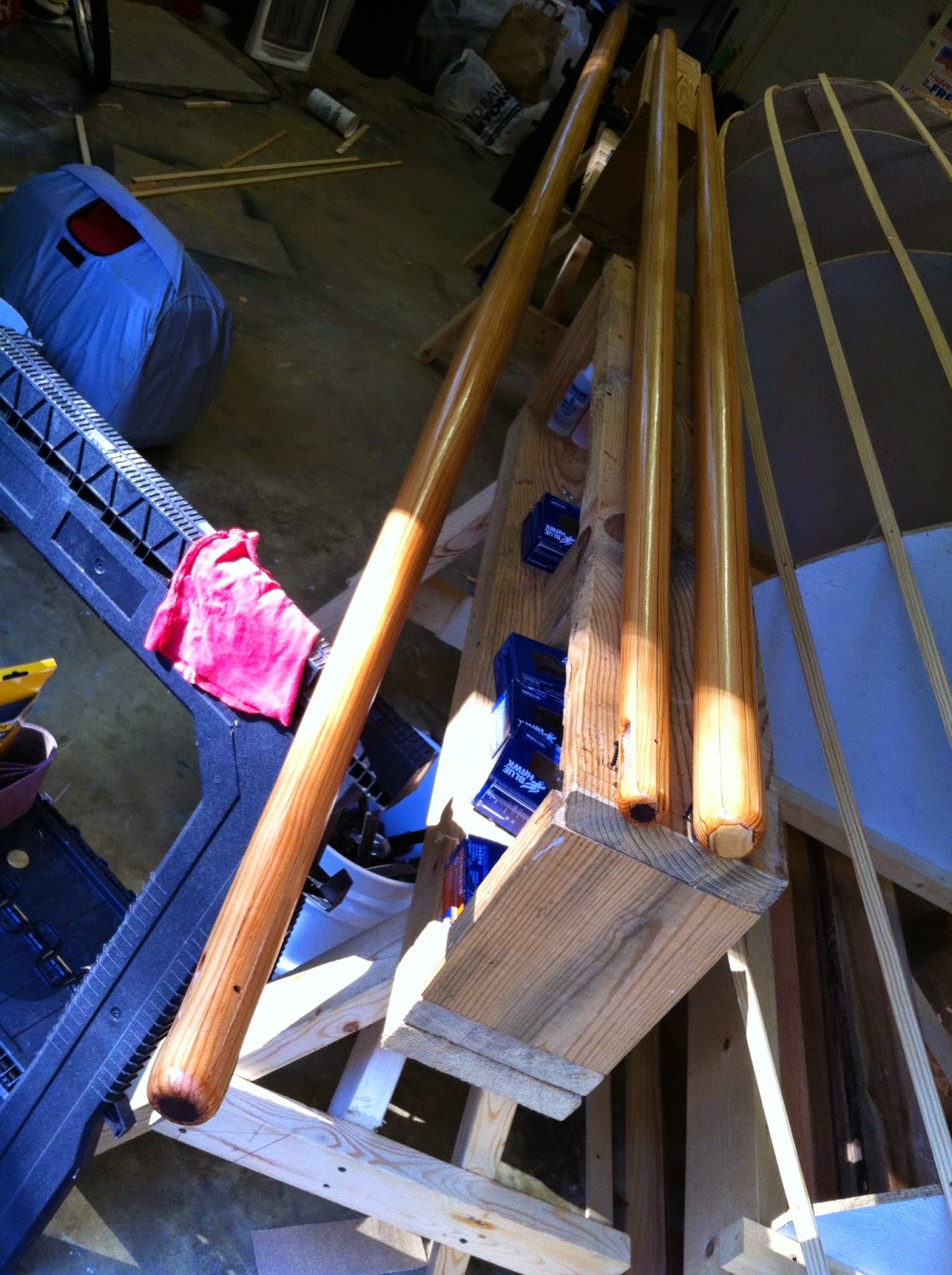
For some reason that first coat of varnish has given me the notion that I have the beginnings of a boat. The molds didn’t. Stems haven’t, but these parts have. I finished sanding the birdsmouth spars today and gave them a thinned coat of varnish. This includes both main and mizzen masts as well as the yard. Both booms and boomkin will be solid as the weight savings is negligible that low in the boat and there are likely many fastenings (blocks, cleats, etc.) that will benefit from solid material to screw into.

Sanding drum chucked into drill.


Drum after good use.

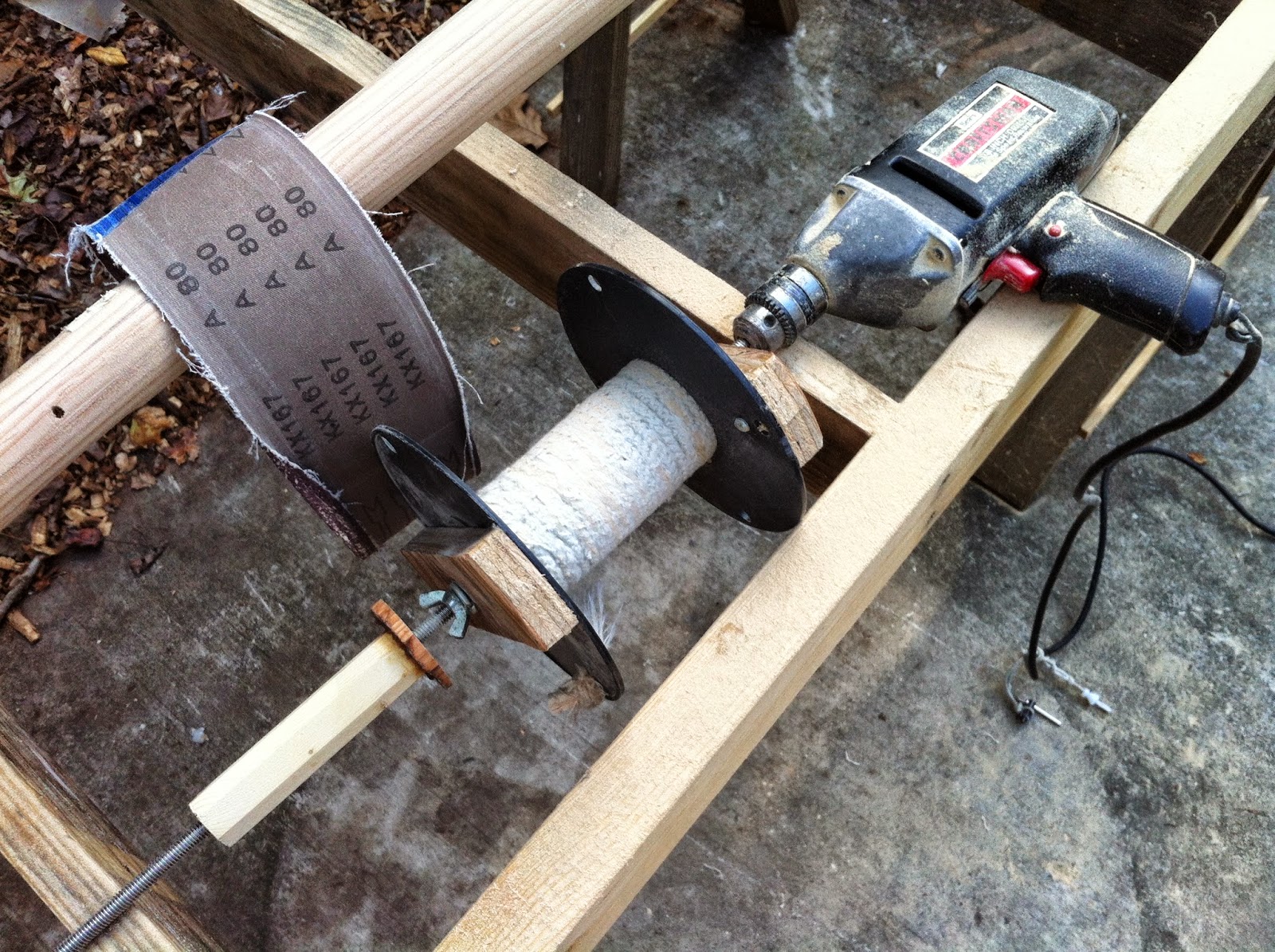
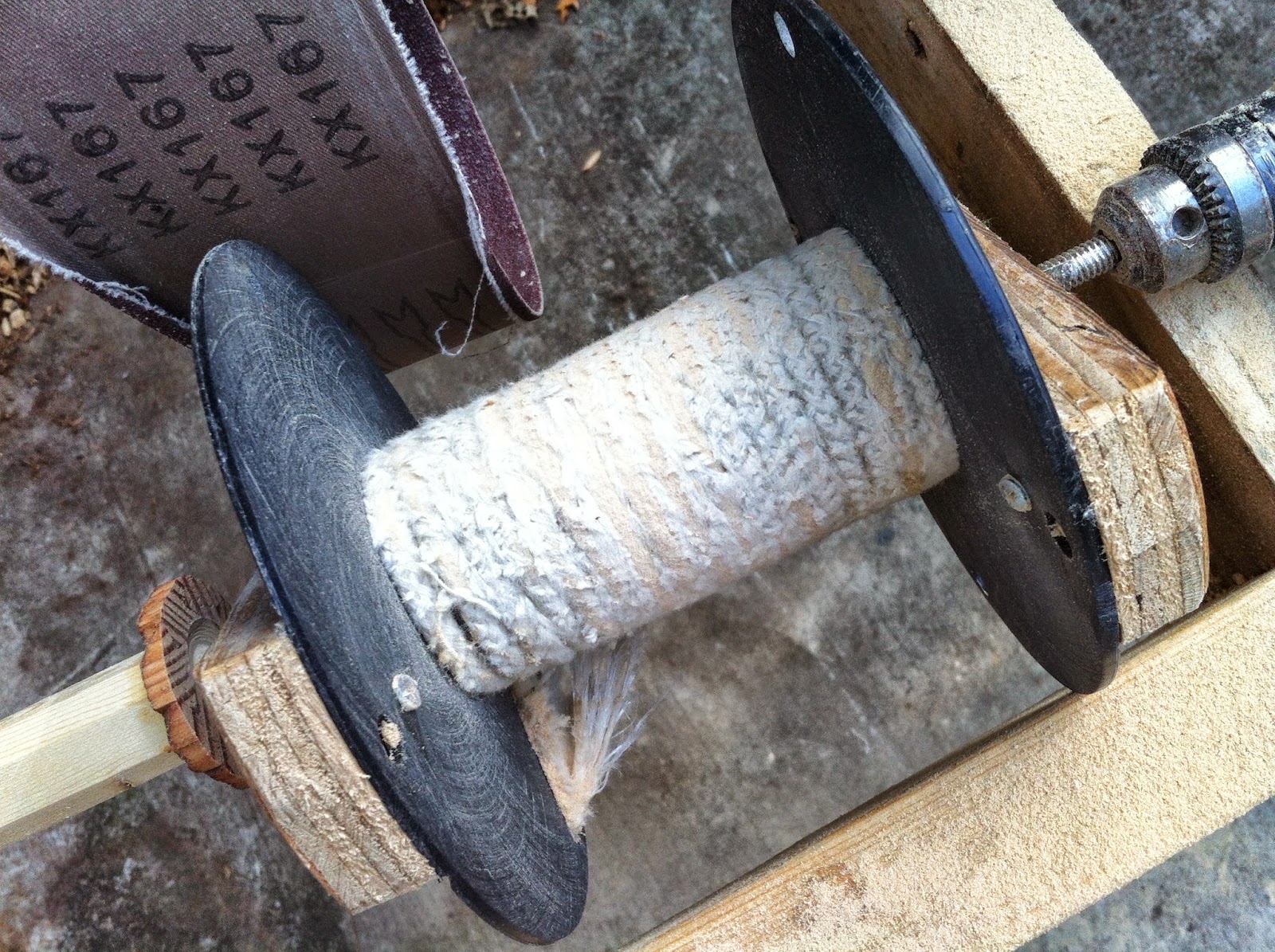
An  old wire spool with adaptations served well for rolling the sanding belts. I went through several failed attempts to provide enough friction to roll the belt however. An old bike inner tube glued to the shaft kept creeping. Rubber bands worked great, but only for a few revolutions. Finally I spun sash cord on the drum and that worked fine until it would wear out after 30 minutes use. That was about one complete sanding of a spar. Why does the first time doing anything take twice as long? Discovery and experimentation. Edison’s light bulb took a few tries. This old Craftsman drill has been through countless projects. The cord is needing replacement, but I’m not worried yet. It seems to work just fine standing in water.


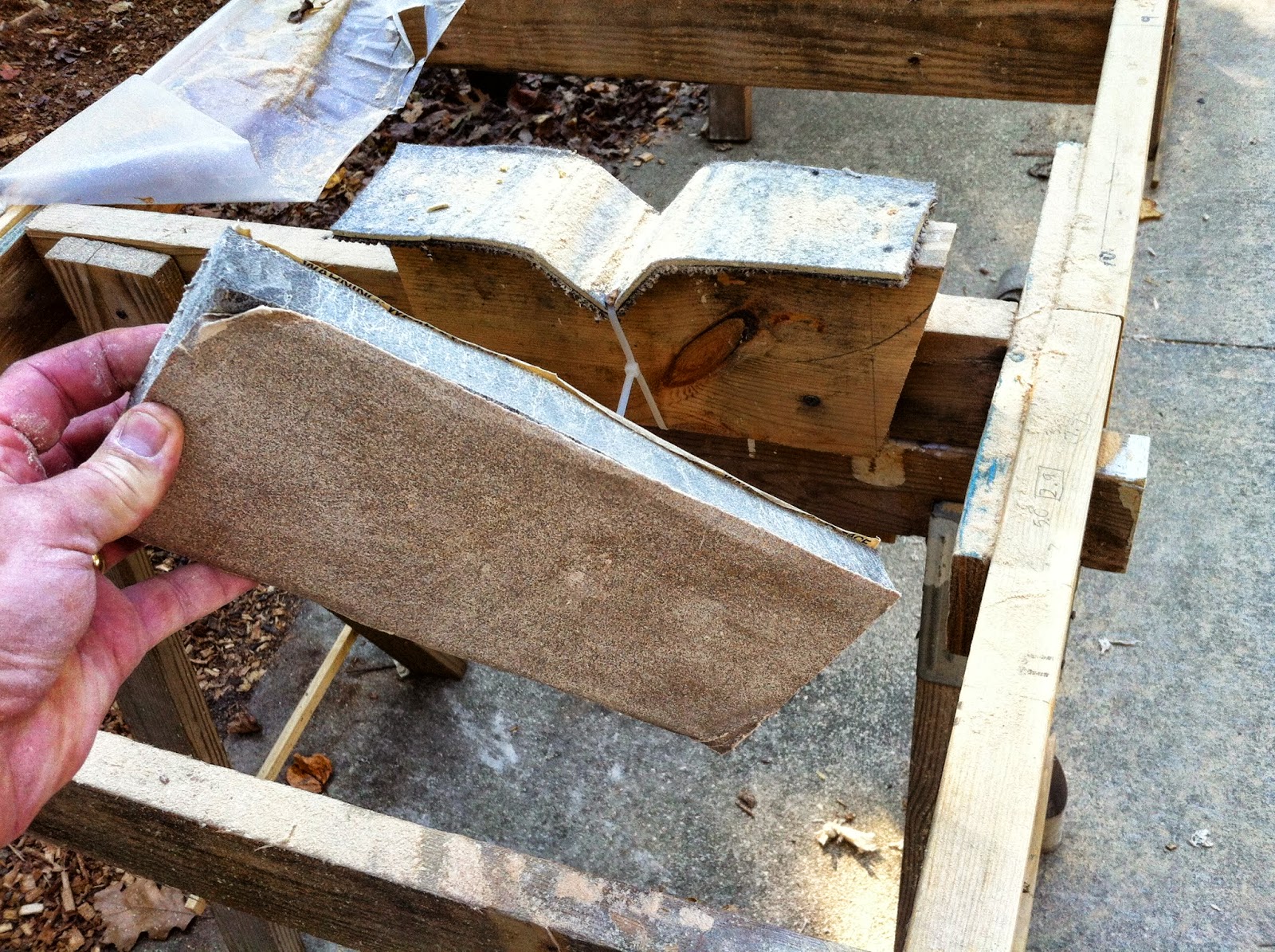
Sanding block.


Final sanding was done by hand with 150 paper. I spray mounted the paper to a block of minicell foam. Worked great.


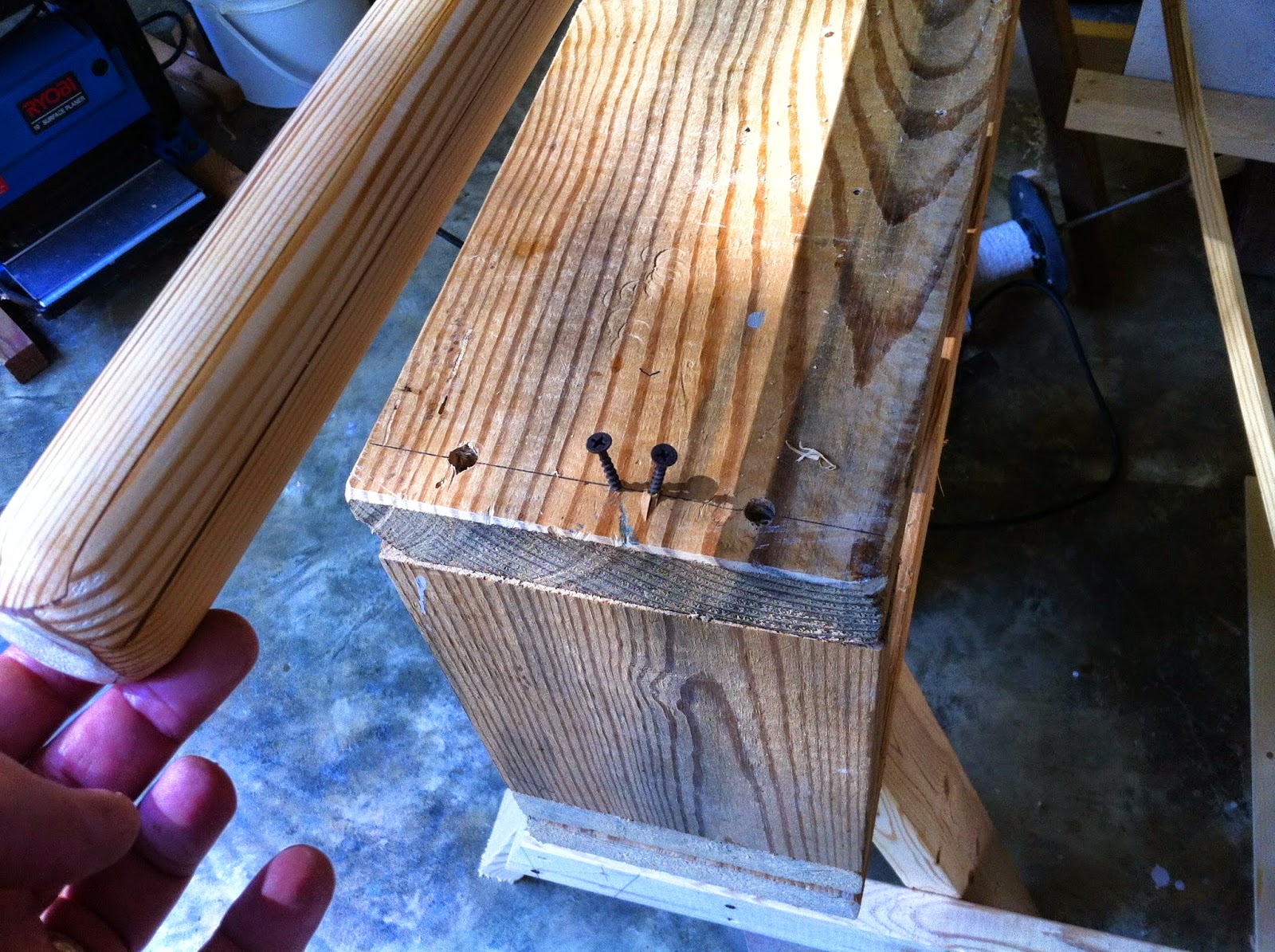
Drywall screws for spar support on manning benches.
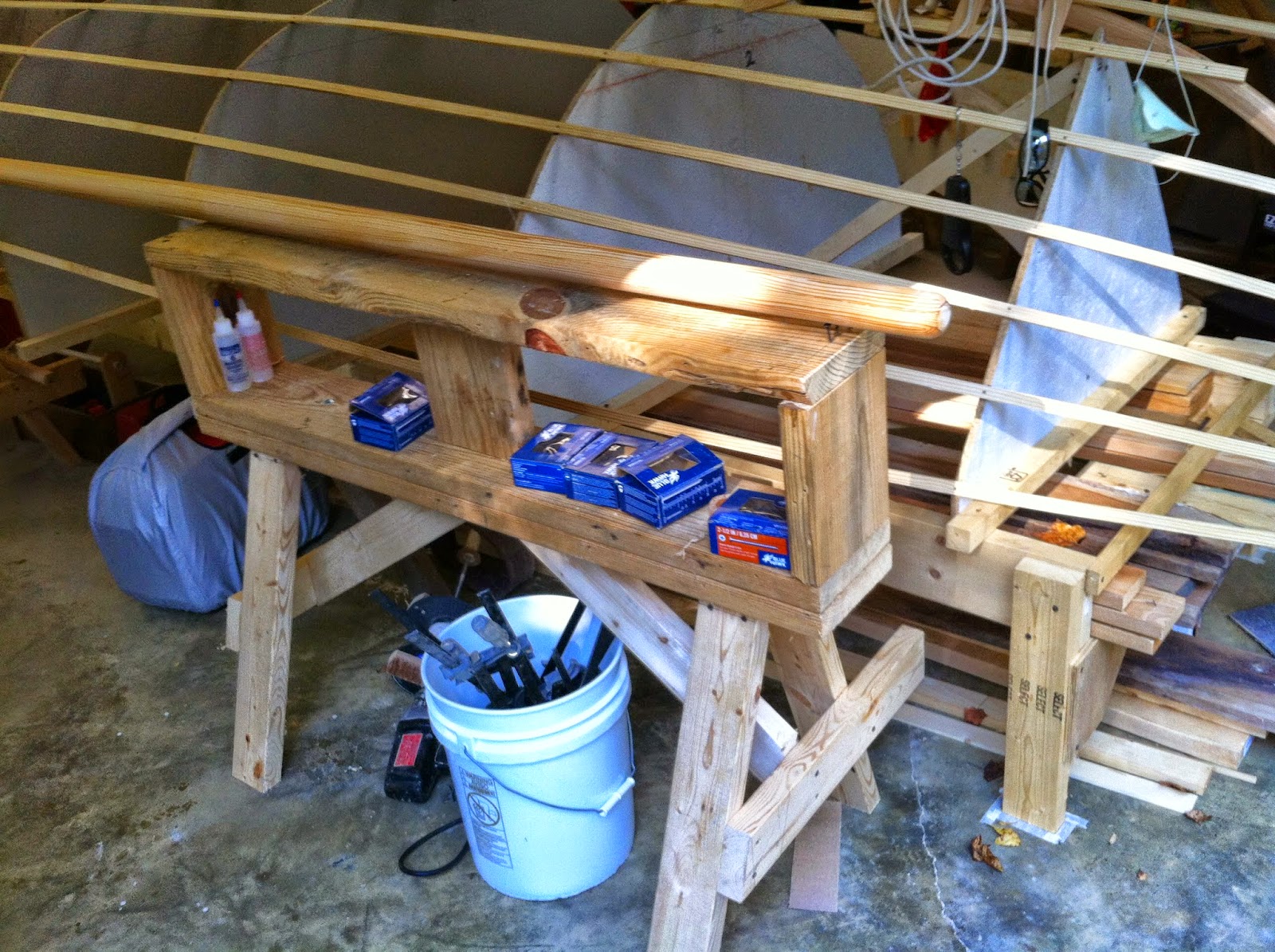
Manning bench.


The drywall support idea I grabbed from Off Center Harbor. It is a cool site of helpful videos on all things wooden boat. There also a series of vids in progress on the building a Caledonia Yawl.


This first coat of spar varnish was thinned and liberally applied.

Now I need a boat for these sticks.


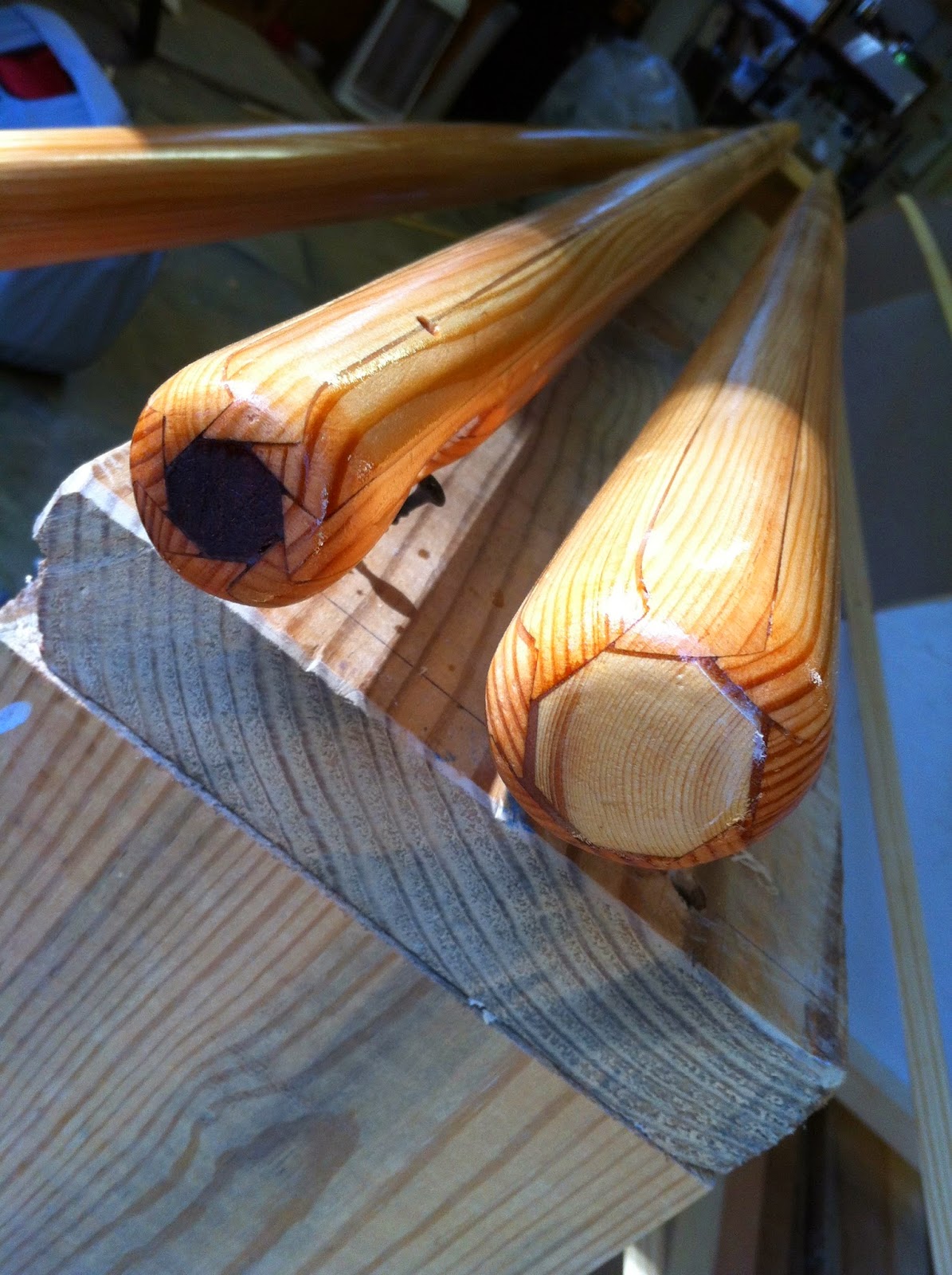
3 spars


Plug detail.


Shaping Sheaves

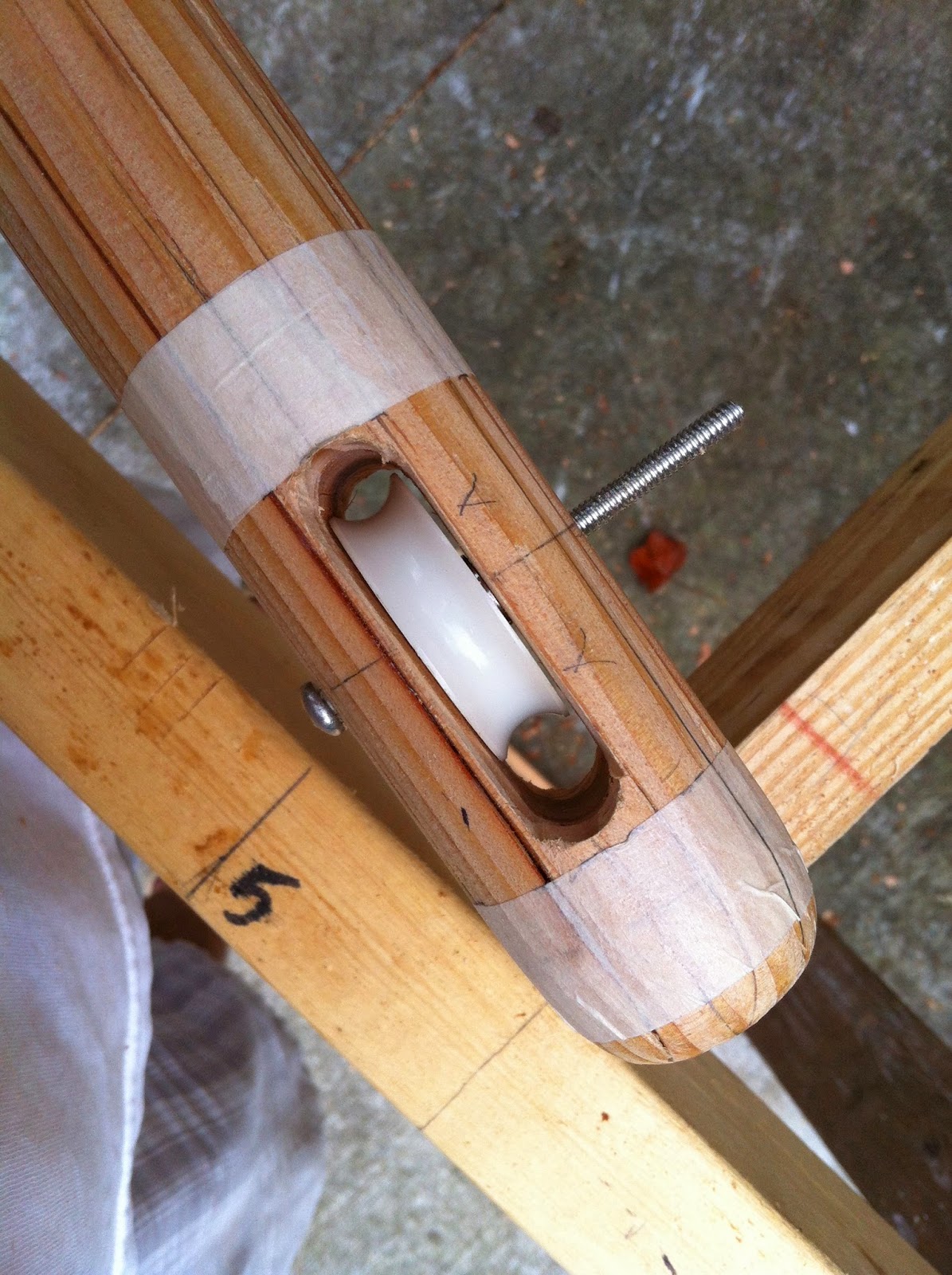
In preparation for spar sanding, I decided to cut the openings for the mast sheaves. I pulled the Delrin sheaves from a pair of old Schaefer blocks I found in the shed (don’t know what boat they came from). Both are approximately 3/16″ short of the mast tips and will work just fine for the halyards.

spar and drill press on bench.


successive borings.
   
Sheave test fit.

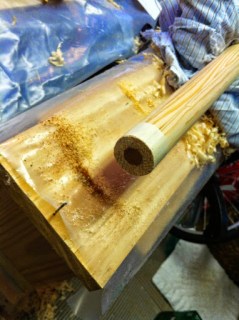
I jigged the spars level on the open bench, chocked them in place, and bore holes for the sheave slots. A Forstner bit did quick work of it.

A chisel and utility knife roughed the edges to shape. Filing completed the needed slot width.

I test fit the sheave with a pan  head machine screw. I’ll replace with a counter sink screw and finish washer later. he machine screw may be tight enough to fore go an aircraft nut on it.

The Cup!! and Mast Building

Well, first a big “Hurrah!” Well done Team Oracle USA. What an amazing spectacle. From being almost out at 8-1 (including a 2 race penalty from pretrials?!), they won 8 straight. Magnificent  duel in flying machines.

Back to a more “primitive” boat and building: no carbon so far.

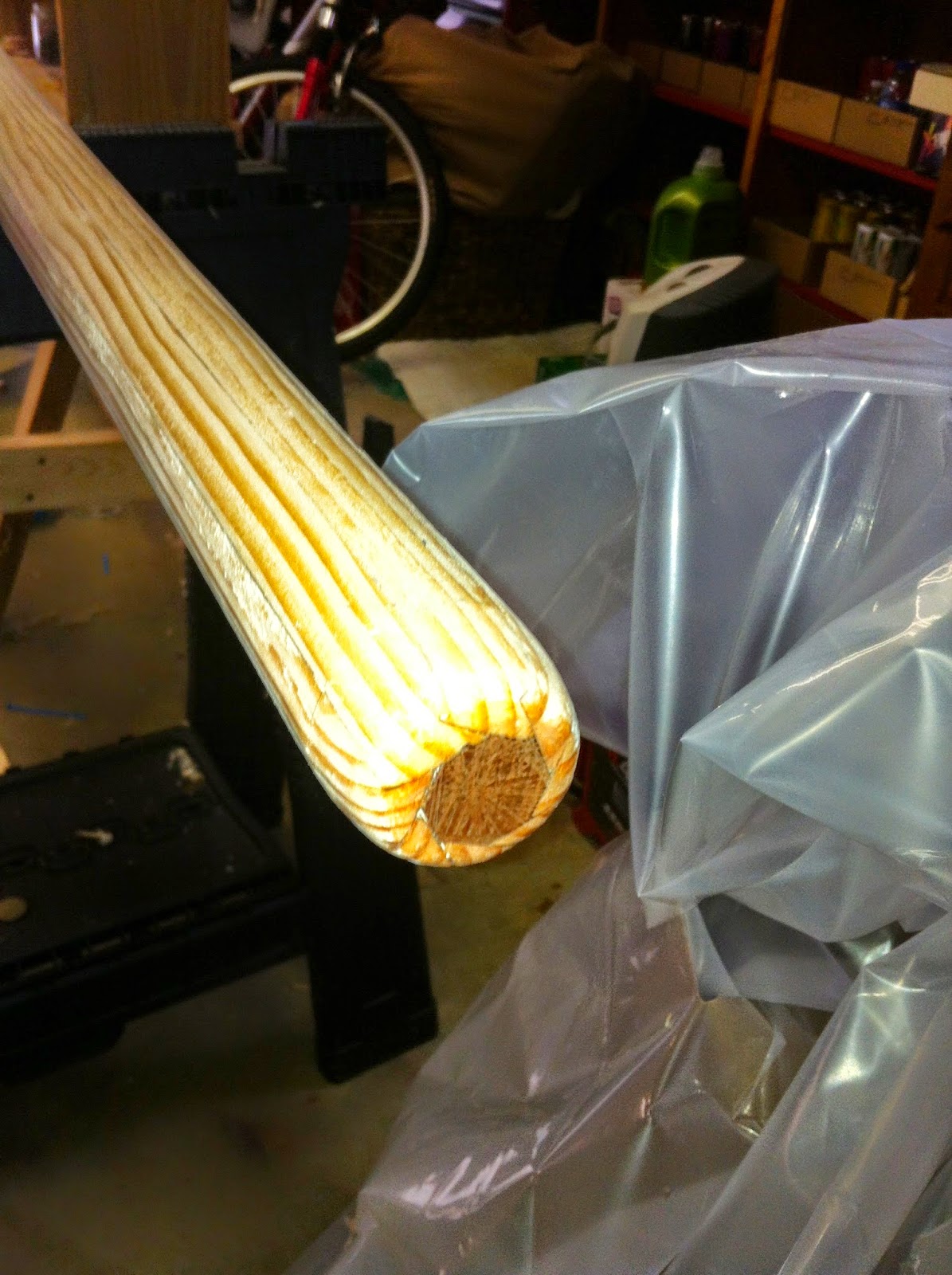
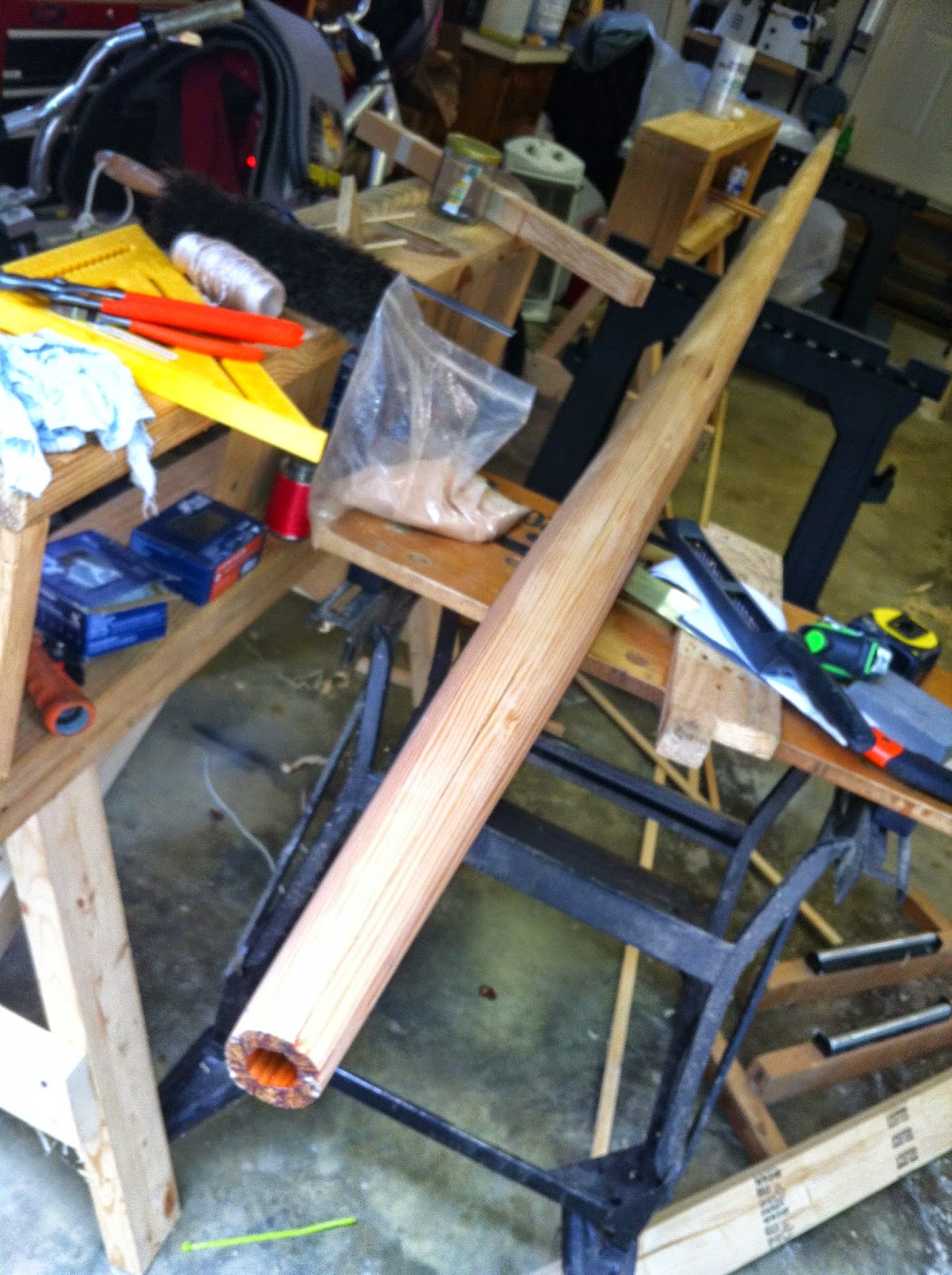
The main yard and mizzen mast birdsmouth spars were lead ups to the “biggie”, main mast. The practice was needed and I believe it paid off. While all spars need the final sanding, they have been 16 sided for that step. The other steps were:

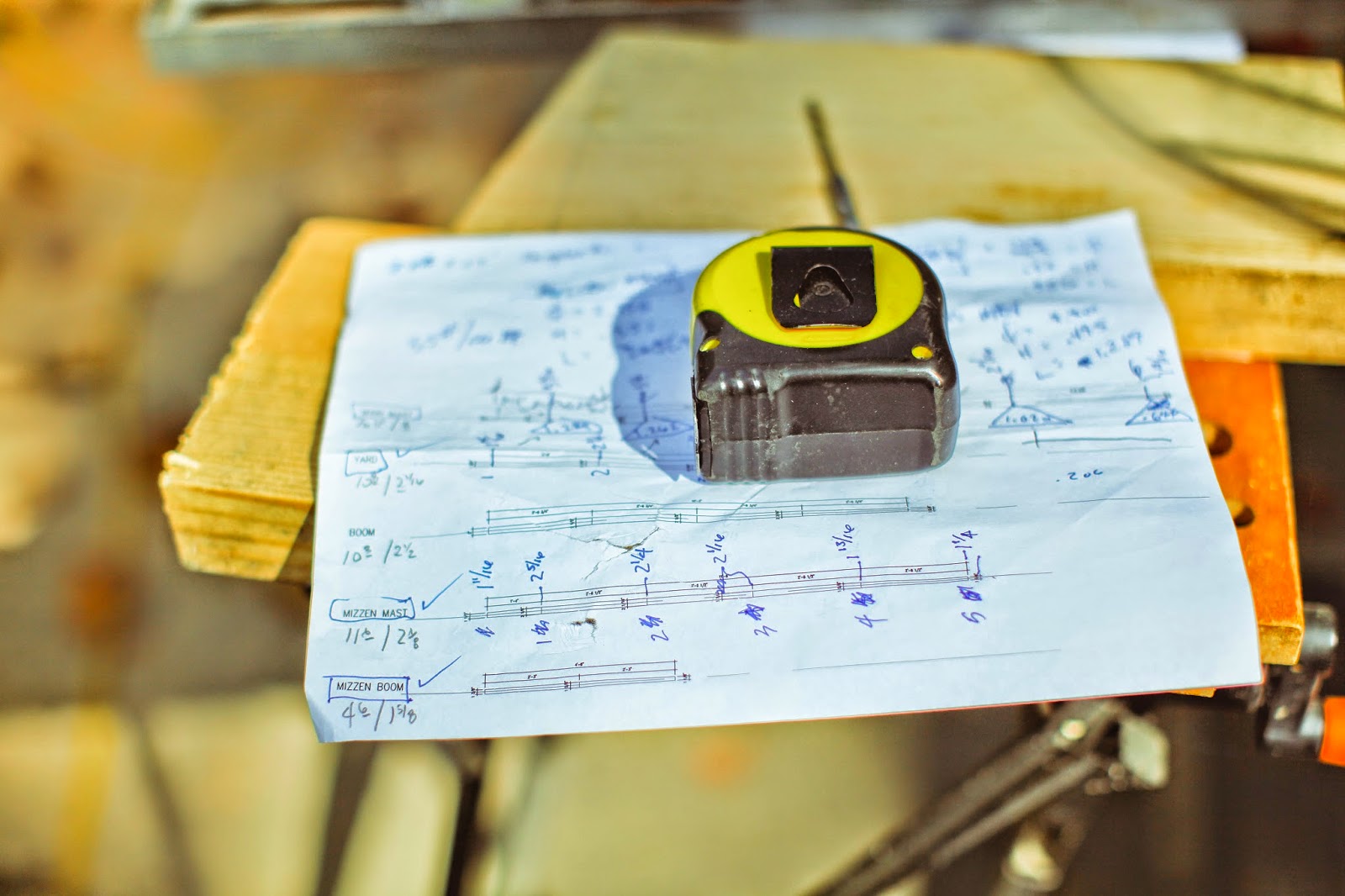
  • for the 16′-10″ spar 8 staves were cut on the table saw out of a 5/4x6x18′ douglas fir board. Stave width, height, and taper were derived from Duckworks’ Calculator Program.
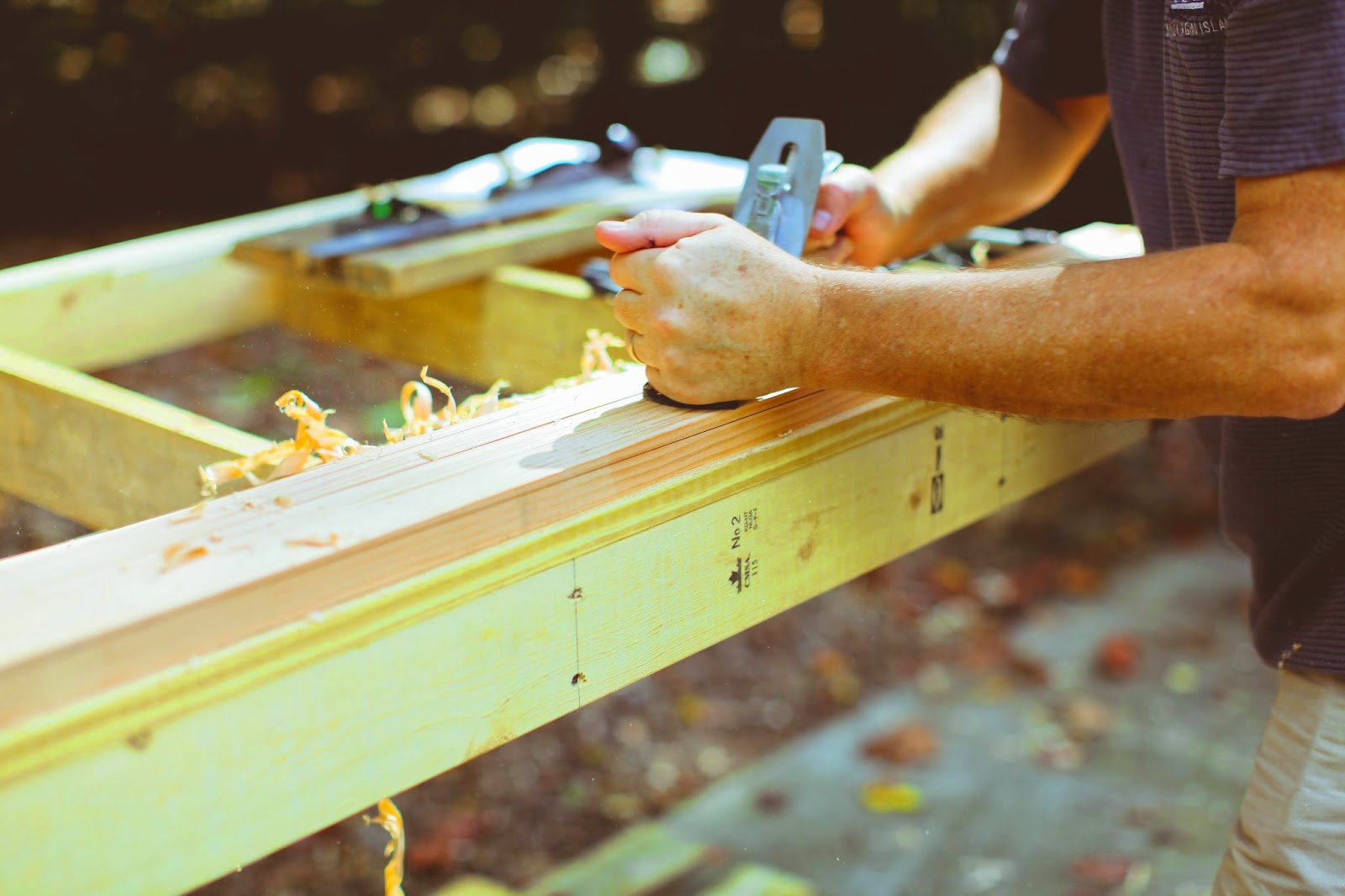
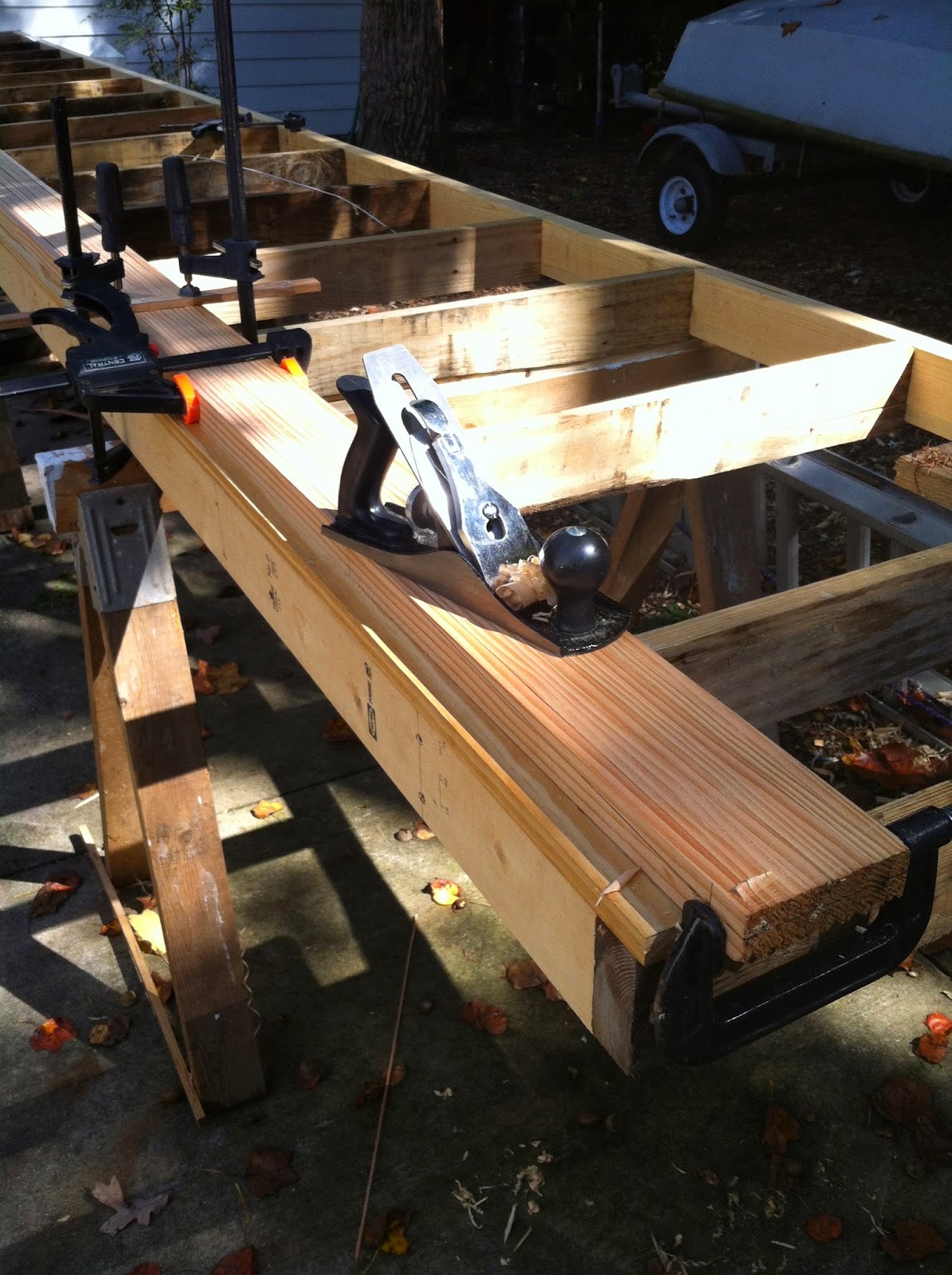
  • ganged together the staves were then tapered with a jack plane. Some sort of jig using either the table or circular saw would have been quicker, but I wanted to sneak up on the final taper. I also like planing.
  • a thin coat of epoxy was painted onto what would be the interior face of the staves.
  • then thickened epoxy was brushed onto the “beaks” of the staves.
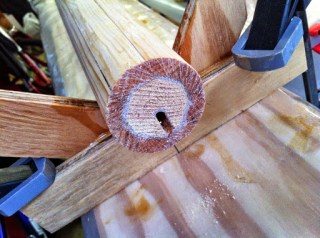
  • the base octagonal plug with feathered or crowned ends was inserted between the staves and actually aided in the glue up.


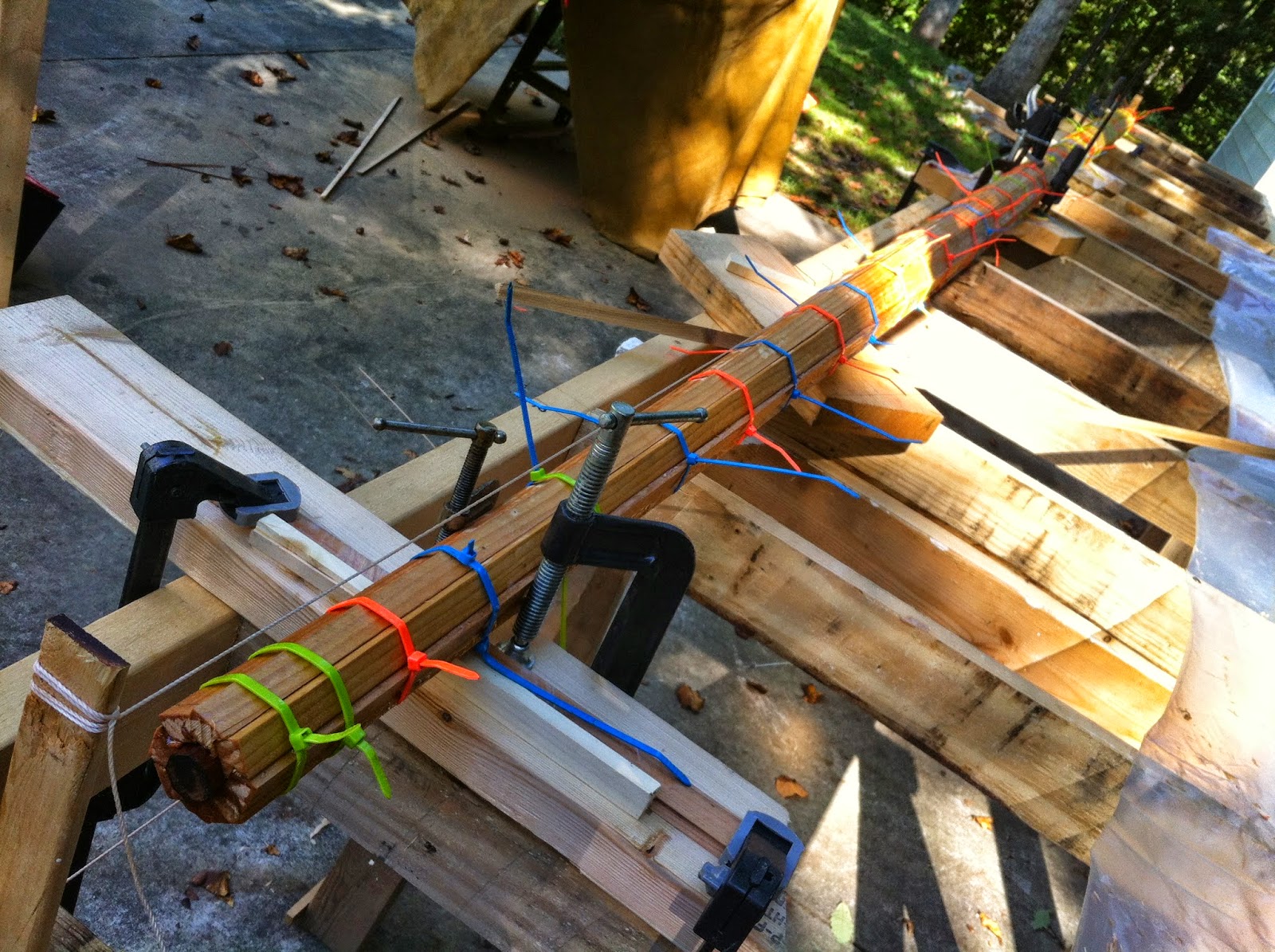
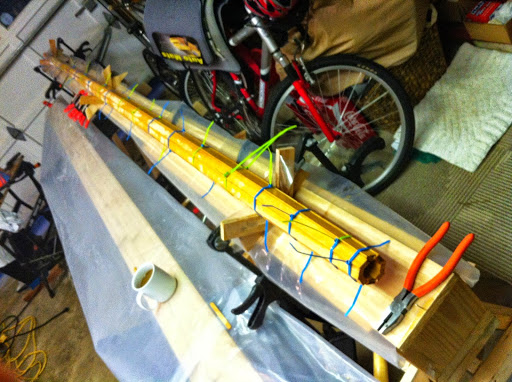
  • a second pair of hands helps tighten zip ties every 4-6″.
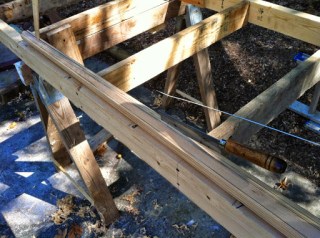
  • I spent perhaps an hour confirming the straightness of the glued and zipped spar. A tight string run over the mast proved very helpful toward keeping things true. For something larger I’d want to make a more exacting jig to hold everything true.
  • I left the setup overnight. Cut the ties this morning.
Abstract No. 2
  • Knocked the stave edges to 8 sides. With a spar jig turned that to 16 sides. Those residual corners were hit lightly with the plane.
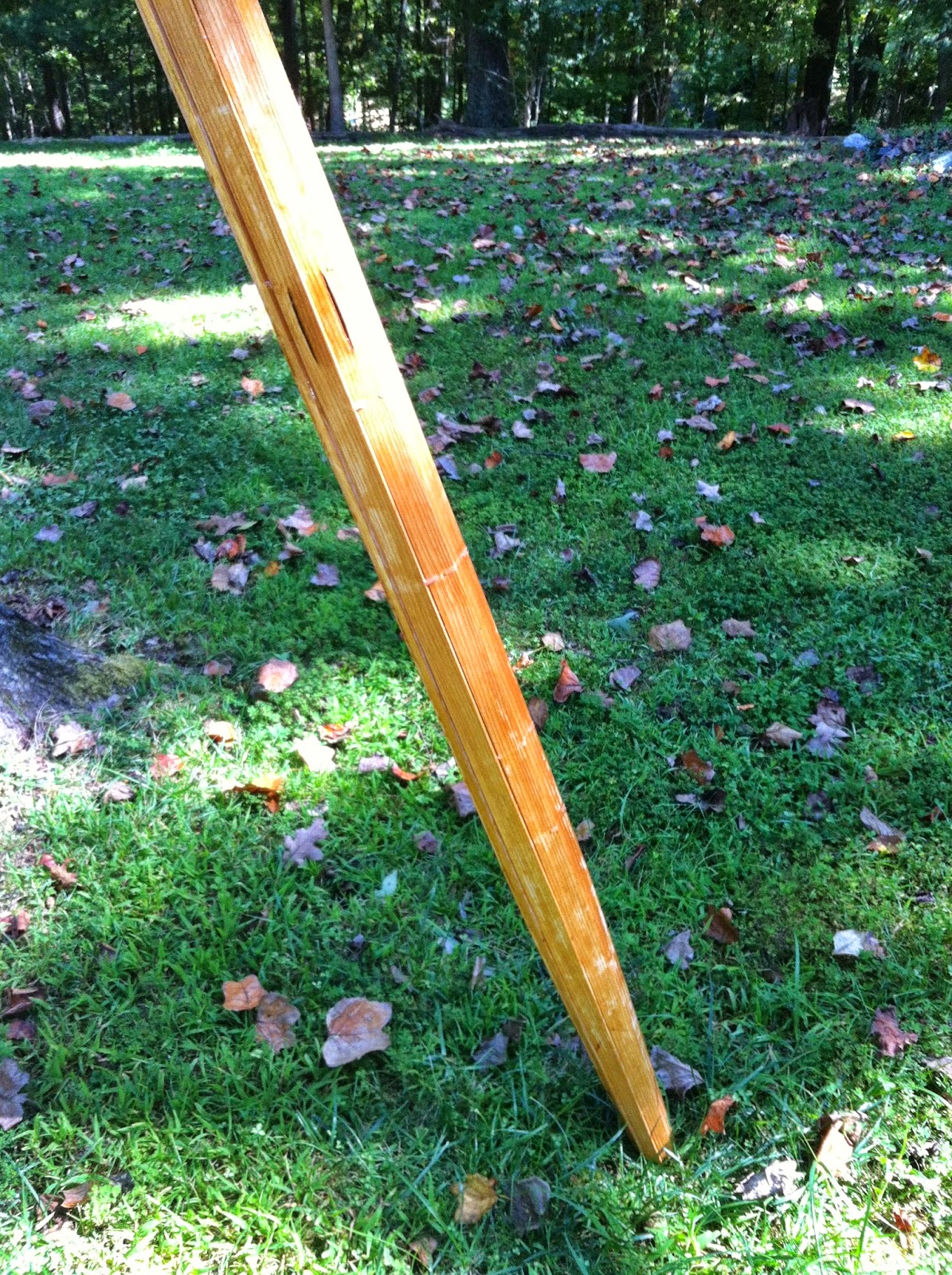
Almost 17′ and, thankfully, true.


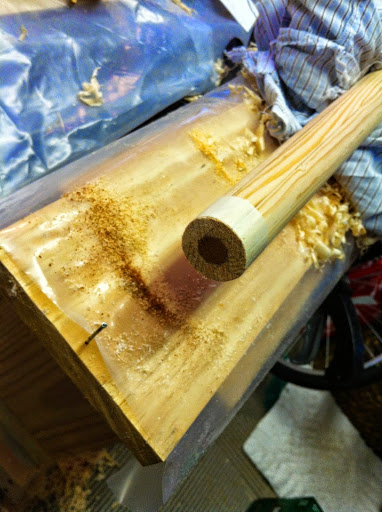
Sap streaks I had intended to turn in, but didn’t catch it.


8 sided cherry plug.


Overall. Final base plug yet to be added.
  • I almost forgot to add that I had estimated the weight of this spar to be 22 lbs. The unsanded/ unfinished spar is 19 lbs. 4 oz. On target!
  • And so, sanding remains to suit for finish. I haven’t decided on this method: drill with drum, sanding longboards, or hand sanding by “shoe shine” with a sanding belt. Perhaps all of the above? I’d like to figure a simple way to rotate the mast like a lathe. We’ll see … I now need a boat for these sticks.

Keelson, Battens and Birdsmouth

In racing to get some work on the boat done before a busy week, I neglected to take many pictures. The weather was fantastic. Cool and bright today.

What I did accomplish:

  • Keelson shaping-
    • with “witness” saw cuts every 1.5″ a chisel readily removed a majority of the wood. The handplane got closer and will be fine tuned prior to setting the garboard planks.
  • New battens-
    • the previous set were so fraught with breaks and twists that they had to go.
    • new strong yellow pine battens were scarfed and placed on the forms. YP was from the kayak build. Save those scraps. They will be useful somewhere.
    • some tweaking of the battens has been made over 2 days as different views seem to reveal slight “hard” spots in the curves. No dramatic changes, but 1/8″ movements here and there.
  • Garboard plank template-
    • I will use the “ladder” technique to form a template from the battens.
    • a batten will have to be placed on the previous plank to make the successive template. We’ll see how that goes.
  • Cut birdsmouth staves for main mast-
    • all 8 came from a 5/4x6x18′ plank cut into 4 pieces which were then split vertically.
    • using a jack plane the staves were tapered. Hand planing smoothed the final result.
Familiar set up. See kayak build.


Multiple finger boards for ripping with kerf blade.


Planing taper to ganged staves.
Outdoor shop.
All tolled I’ve probably 12 hours of work over the past 3 days.
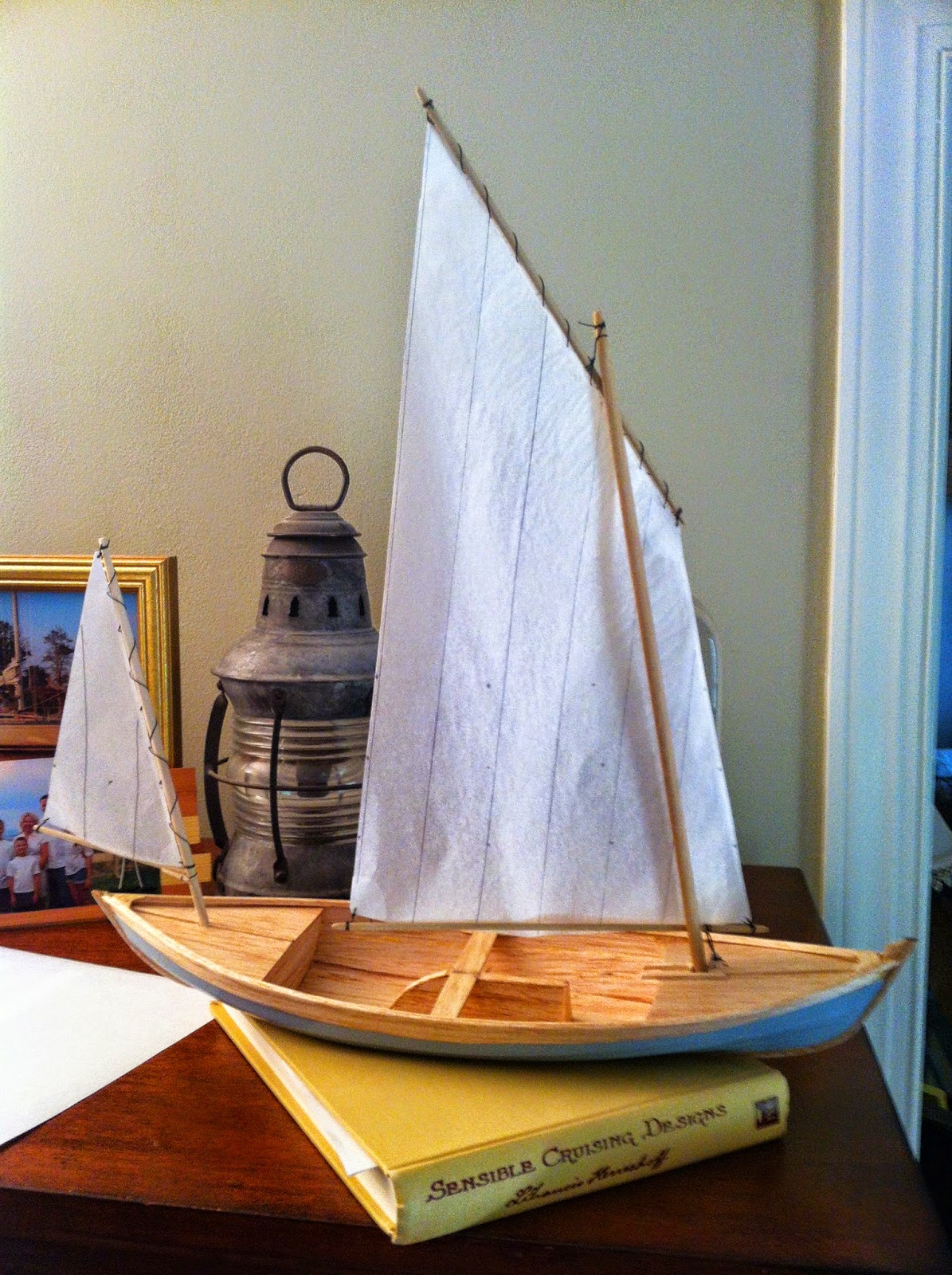
I forgot to mention I had built a 3/4″ scale balsa model of the boat to study a few details like a simple awning/tent and to generally familiarize myself with the build.


Awning study. Looking for a simple tent design with low windage.


Design, Platform, Moulds and Battens.

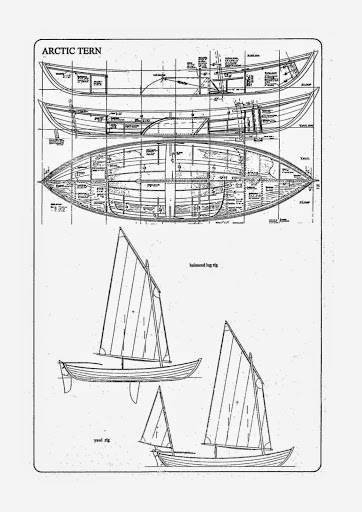
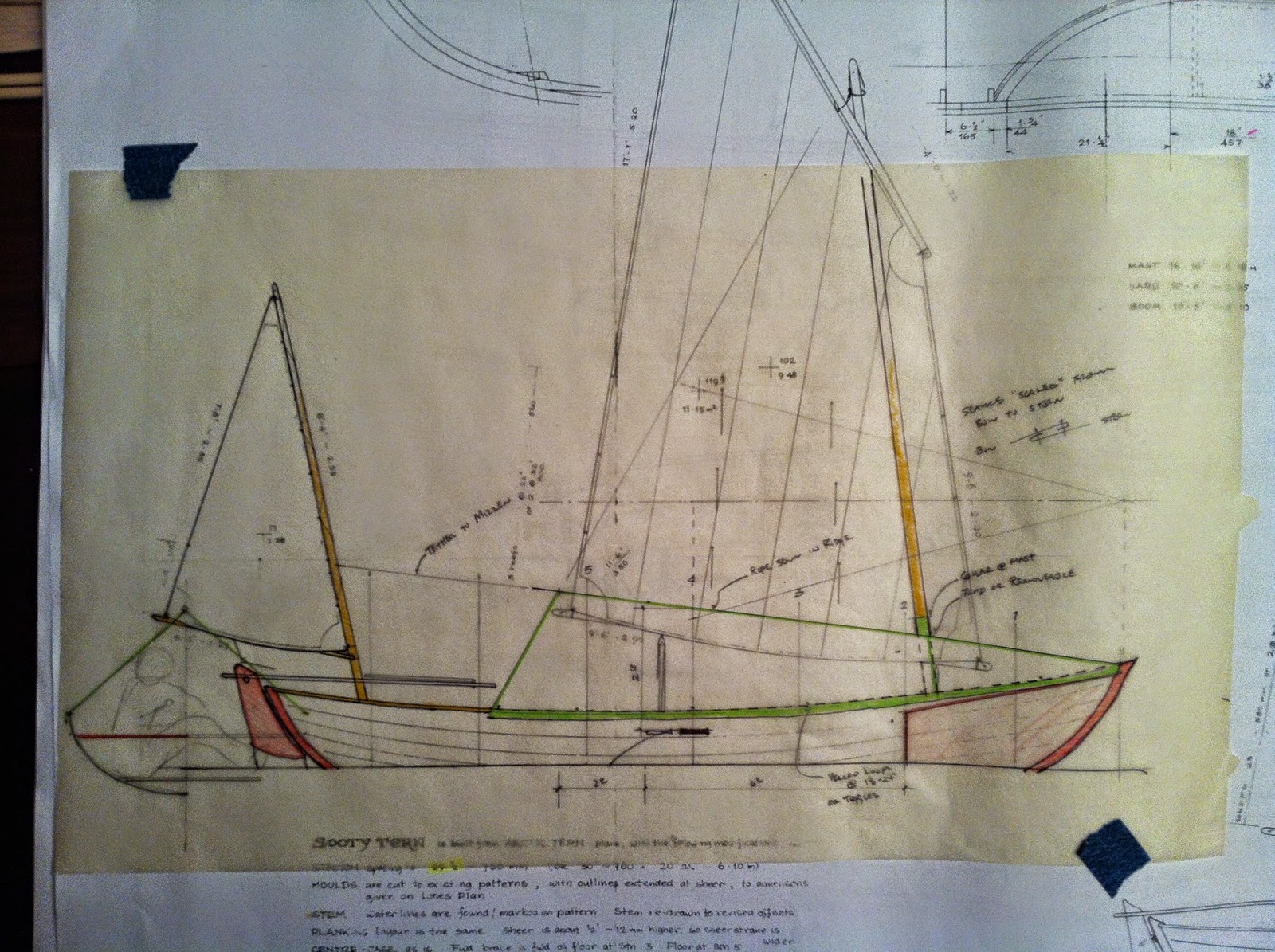
In reality there are no drawings for the Sooty. It is a stretched version of Oughtred’s “Arctic Tern” by 18″. The moulds are pushed further apart and the shear is adjusted up maybe 1/4″. So, you purchase the Arctic plans and a Sooty “supplement” which includes a lines plan and offsets. All other detail is derived from studying the Arctic plans seen here:

I will build the yawl rigged boat with birdsmouth spars, closed gunwales, and decked fore and aft. Of course, any of that can change. I’m actually well along in the build and neglected to take many photos so far, but some will show the process and progress so far.
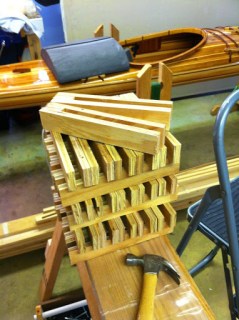
Made a stack of “clothes pin” clamps (32)


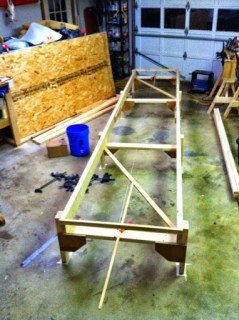
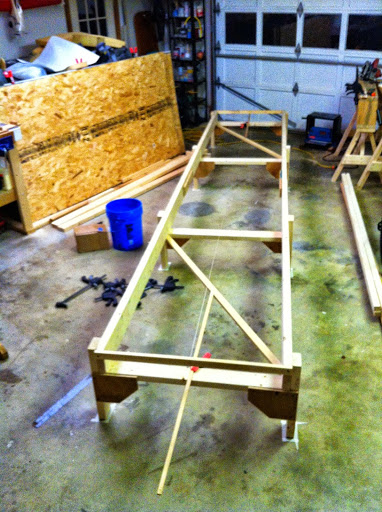
The building platform.


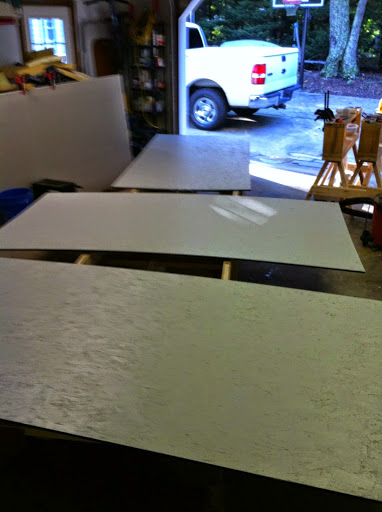
1/2″ OSB painted light grey for moulds.


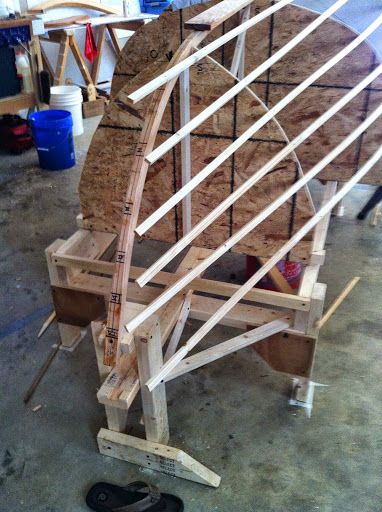
Moulds cut and mounted.


Battens for plank alignment.


Aft stem & keelson added. Note mould bracing.


Not so fine platform extension for stem.
Stems are epoxy laminated douglas fir. Keelson is also fir. The centercase slot was cut on the table saw before mounting. I taped a copy of the stems on flat OSB taped over that to release from epoxy, and screwed short block for lamination clamps.
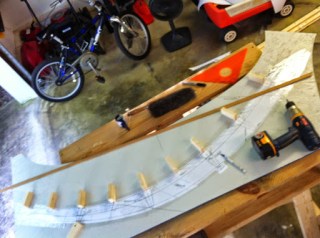
Aft stem formwork.


Formwork close up.


Inner stem or apron glued up.


Outer stem glue up.

Since I do not have enough long reaching clamps, I waited for inner stem to dry to use it as the form for the outer. Make sure to add clear plastic tape or plastic between the two!

While I waited for the plywood order, I began the spars. I’ll allow Duckworks to explain the particulars.
These too are of douglas fir. The preferred sitka spruce proved too dear by a cost factor of seven! I reality the weight savings is negligible in birdsmouth construction and I like the amber tones of fir better. Fir also shows some strength advantages. I questioned the 33#/cubic foot weight typically specified, so I weighed a 2x4x12′ board and interpolated to #/cu. ft. I got 33.4#/cf.
The Duckworks calculators are very helpful. There are calcs for proper diameter and stave thicknesses based on a solid spar. The main mast is specified as a 3″ diameter spar. The calcs add 15% for a 3.33″ diameter  or just more than 1/4″. Thus far I have constructed the mizzen mast and yard. The booms will be made solid due to their weight is low and all the blocking for cleats, pulleys, etc. would fill the hollow spar. I also thought a more bullet proof spar here would be desirable.
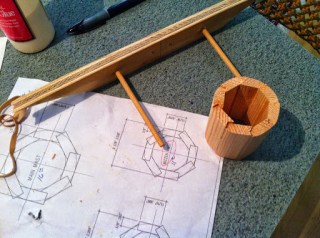
CADD drawings of spar and a cut off portion.


16 sided spar and cherry plug.


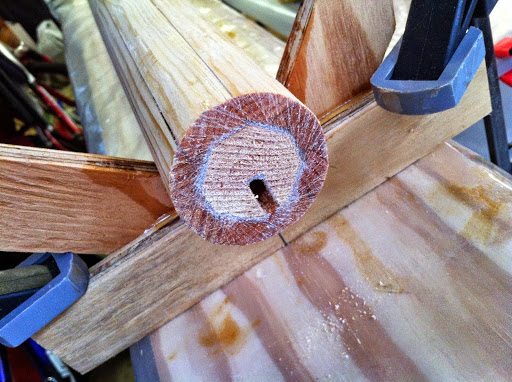
Mizzen mast base with slot as a weep.


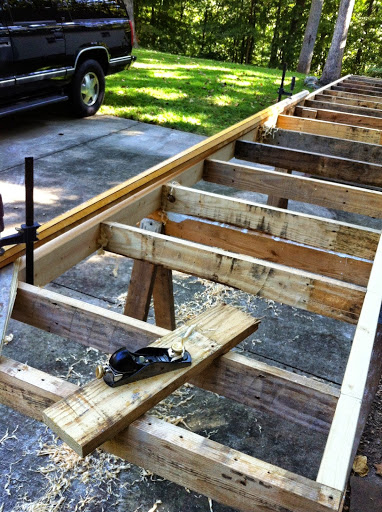
Open bench allows spar clamping and shavings to fall.

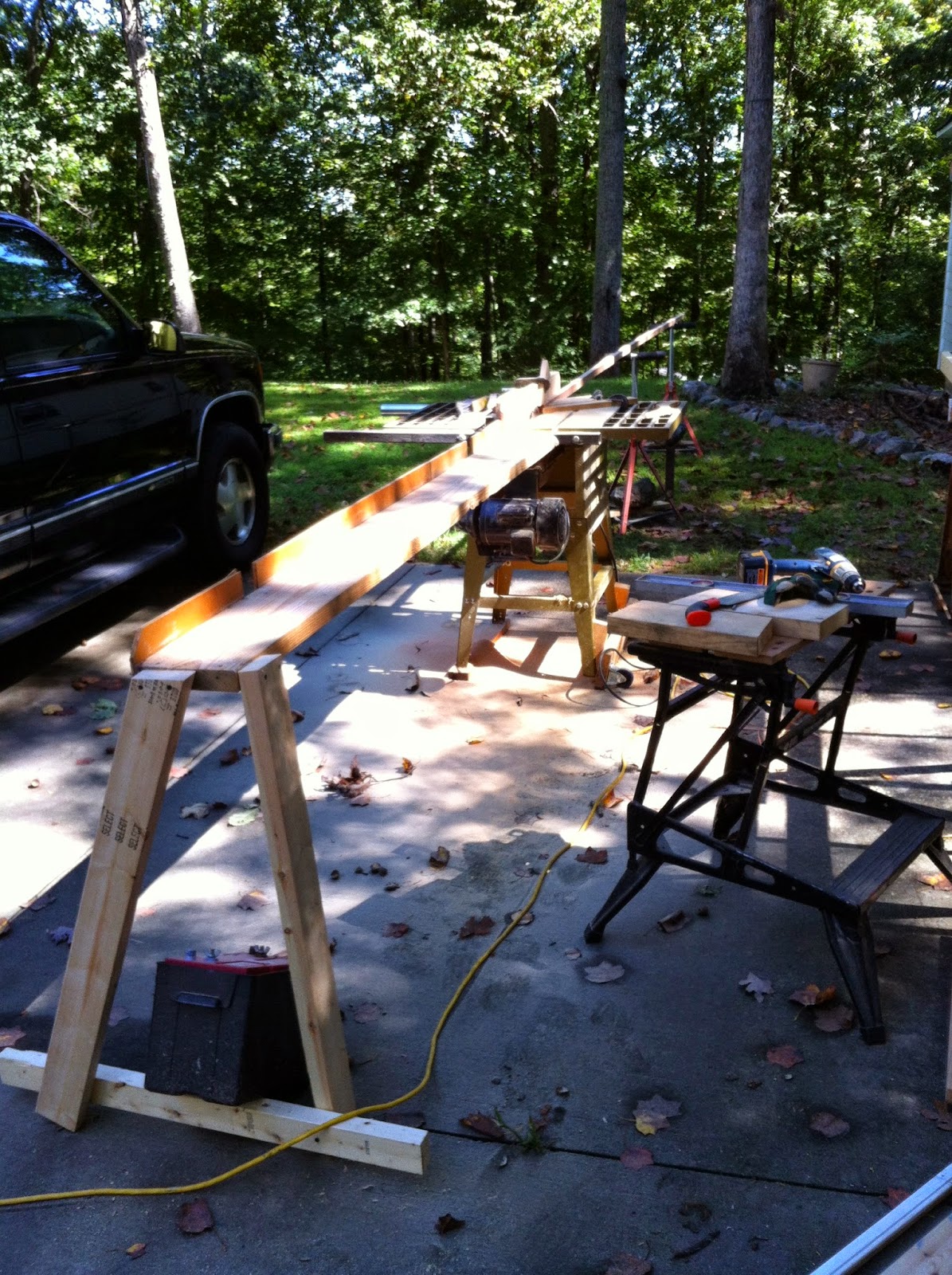
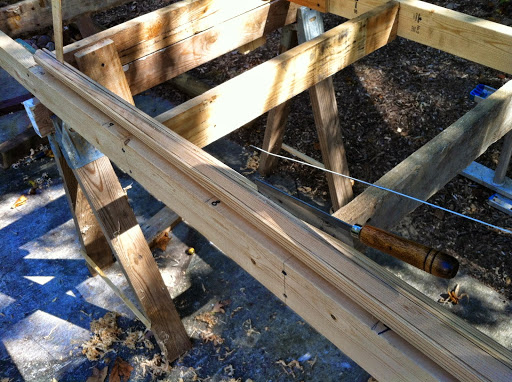
The open bench is 20′ long. I saw this great arrangement on Andy Kane’s photo collection. I built mine from a discarded pallet and four 10′ 2x4s. The reuse makes one feel you are cheating the expense. The stack of clamps were made from scraps left over from my SOF kayak frames. Having the bench outside keeps the dust outside too.

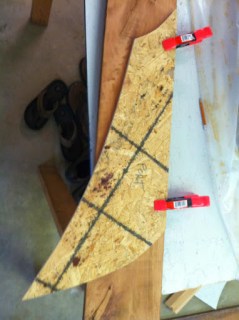
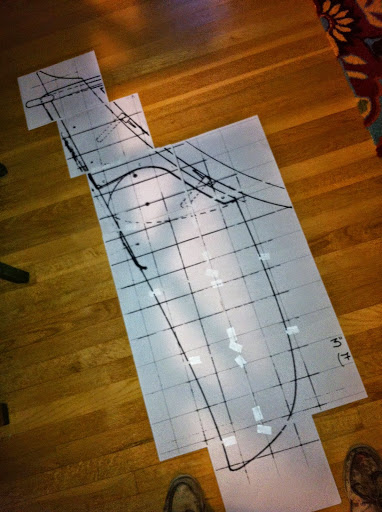
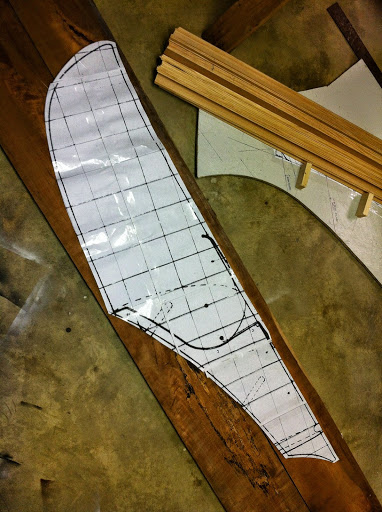
Other parts I’ve started are the rudder head faces. These are from cherry boards which I lugged from city to city and house to house from Houston to Virginia. I knew one day I’d find a project to do the boards justice. I enlarged the rudder drawing, plotted sheets (8.5×11), taped them and made an OSB template. The cherry was just shy of the needed width, so I epoxied a joint where the faces will hold a solid piece inside.
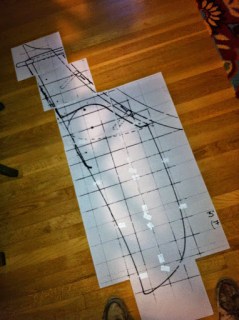
Rudder layout.


Layout on cherry.


Rudder head template.


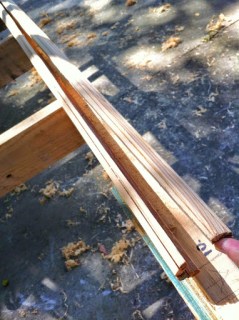
Lastly, I’ll show a screw up. Despite my efforts to place the birds mouth yard in a jig to keep it true, in tightening the zip ties I must have pushed/pulled too hard and put a crook in the spar’s end. I was ready to make another when cooler heads prevailed. I realized the spar was straight on one axis. A delicate slice along 4′ of the crooked axis allowed for realignment and work to go on. In an odd way I’m proud of the small scar left in the spar
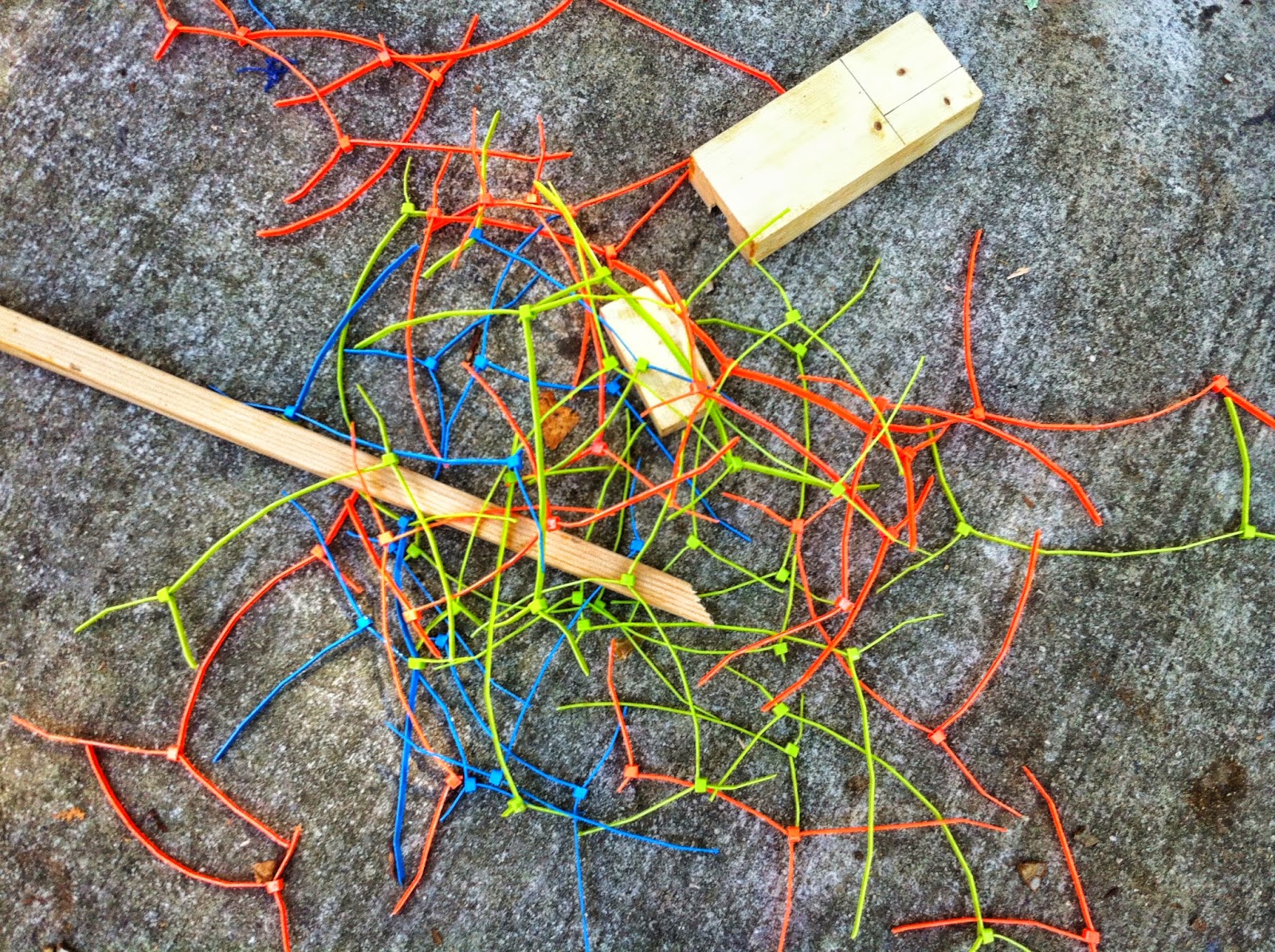
Zip tie waste.


Saw surgery along curved stave.
Slice before epoxy.

I’ll photo the finished spar later. A second boom and the main mast need to be built, but we have the hang of it now.

Credit Due

Well, rightly or wrongly, I’ve assigned blame. Now to establish some credits.

For many years, decades really, I’ve made an October pilgrimage to Annapolis, Maryland to wander the United States Sailboat Show. In all honesty most of the boats on display have never interested me too much. Either they are way out of reach and too encumbering or are simply living rooms with a stick. However, the promise of finding the ideal boat and the scene of a harbor full of boats has kept me returning. On one such occasion a modest bateau, a New Jersey gunning skiff (the Melonseed), stood out from the otherwise brash carnival. She was simple, beautiful in form, and to this day represents sailing in its purest form to me. A fellow named Roger Crawford resurrected the 19th century design from extinction. He builds her in glass to this day and a strong and loyal following has resulted. They call themselves, “Melonheads”. Loads of info on the boat is now out there. Perhaps I’ll offer some links later. In any event Roger’s display has always been on the “must visit” list for the show. Every year the boat is the same with hardly a change and every visit is more gorgeous than the last. Why I don’t have one, I can’t figure, but perhaps the stable needs to be thinned first. So, kudos to Crawford Boatworks.
Others to thank for enabling the plunge:

  • Ross Lillistone of Bayside Wooden Boats: He’s an Aussie who’s cat ketch “Periwinkle” re-ignited my small boat interest to the point of seriously considering building (3 yrs ago!). His designs are wonderful and very well thought out. With immense patience he answered countless emails and started my collection of proper tools for the “yak” task here begun. Perhaps there’s a clinker ply boat in my future still.
  • Barry Long: He is the craftsman and dare I say artist of 2 of the most beautiful Melonseeds I’m ever likely to see. I venture to say there is no better documentation on the journey of creating a small vessel as his blog Eye In Hand/ Marginalia. He too has endured many an inquiry and shares in the blame for encouraging my slip from reality here. If this kayak adventure proves as rewarding as I expect, it will be the prelude to a Melonseed build.
  • Ross Leidy: like Barry, he’s an artisan whose site Blue Heron Kayaks shows his prolific kayak builds of which his Outer Island is one of the prettiest out there. I’ve poured over his site to get a good understanding of the build.

Lastly, I credit Jay Babina for his Outer Island design. It is a looker and possesses a form that innately made sense for my use. His plans and manual are well set. An accompanying “free” video will amaze you in demonstrating the kayak’s efficiency of movement and grace. Outer Island

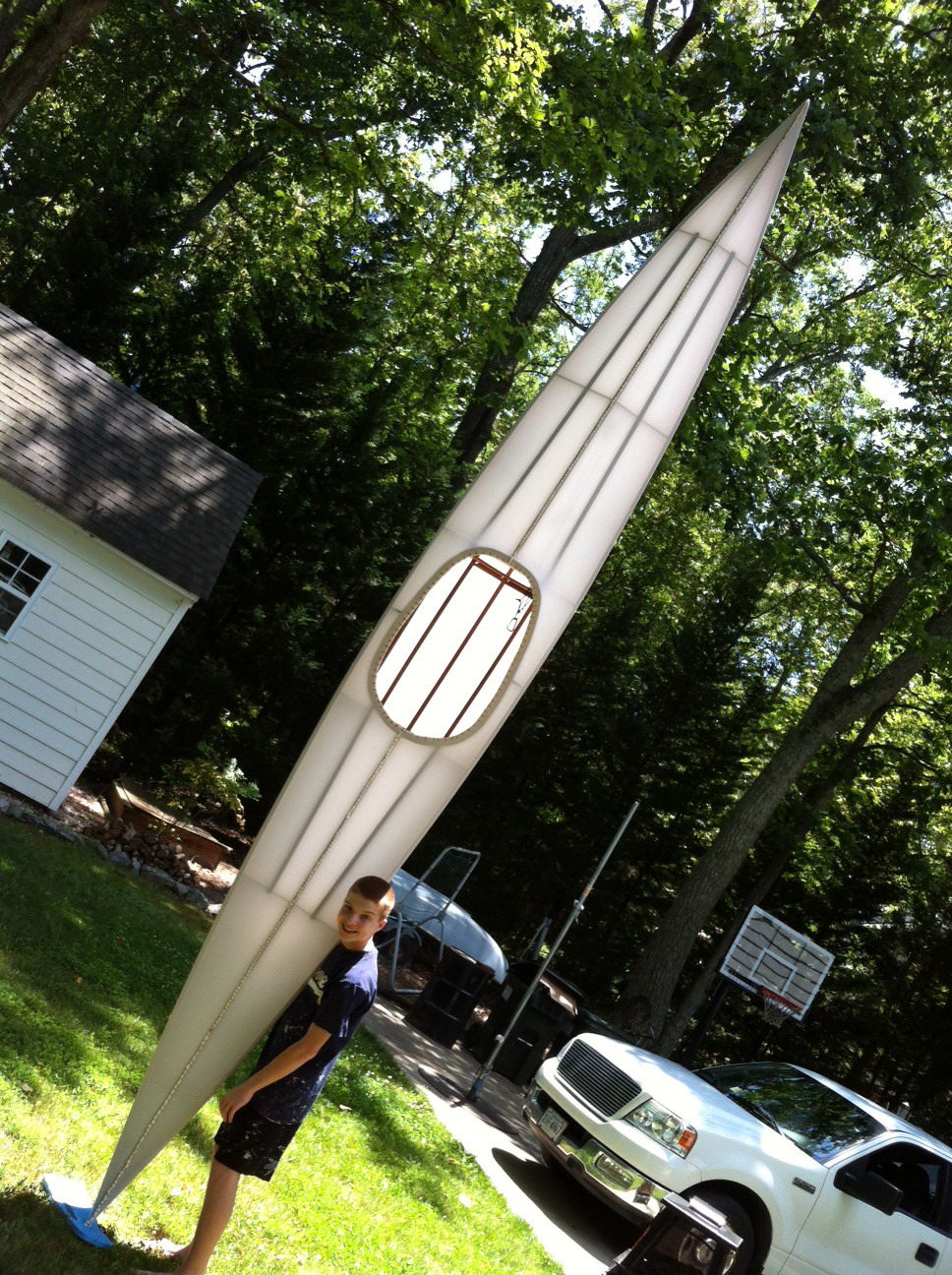
Aside from these 2 skin-on-frame kayaks (below) one of my sons and I built last year as an introduction, I’m no boat builder. I aspire to gain the craftsmanship to pull this new work off.

The “bones” of a slightly altered (deck 3/4″ higher) Sea Tour 17 Explorer. SOF #1.


The ST 17 with skin on frame. All up = 37 pounds.

Pictured is the “japanese lantern” before painting.

She floats.


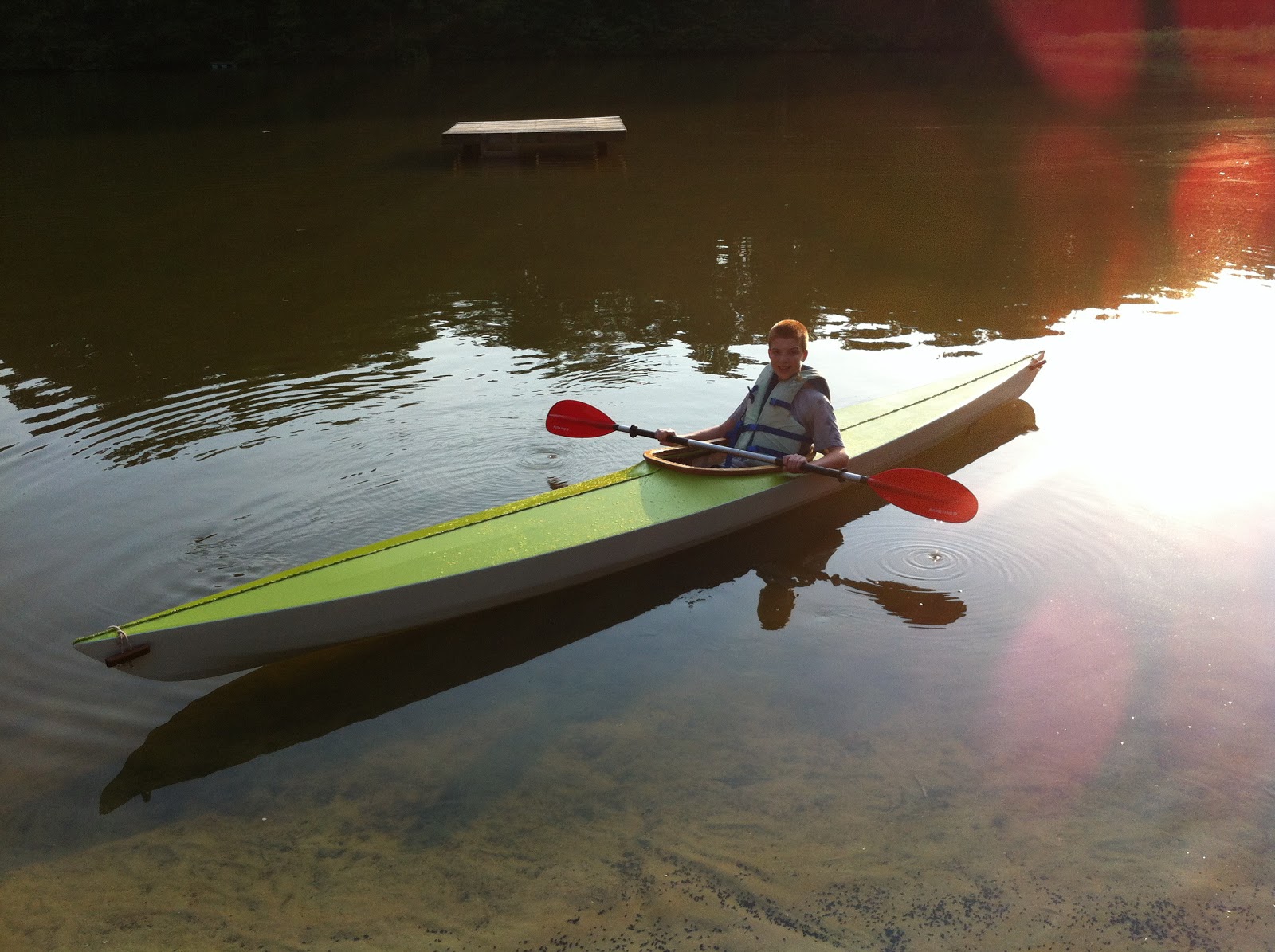
Here is the captain in the painted (3 coats of Rustoleum) boat on her maiden trip.

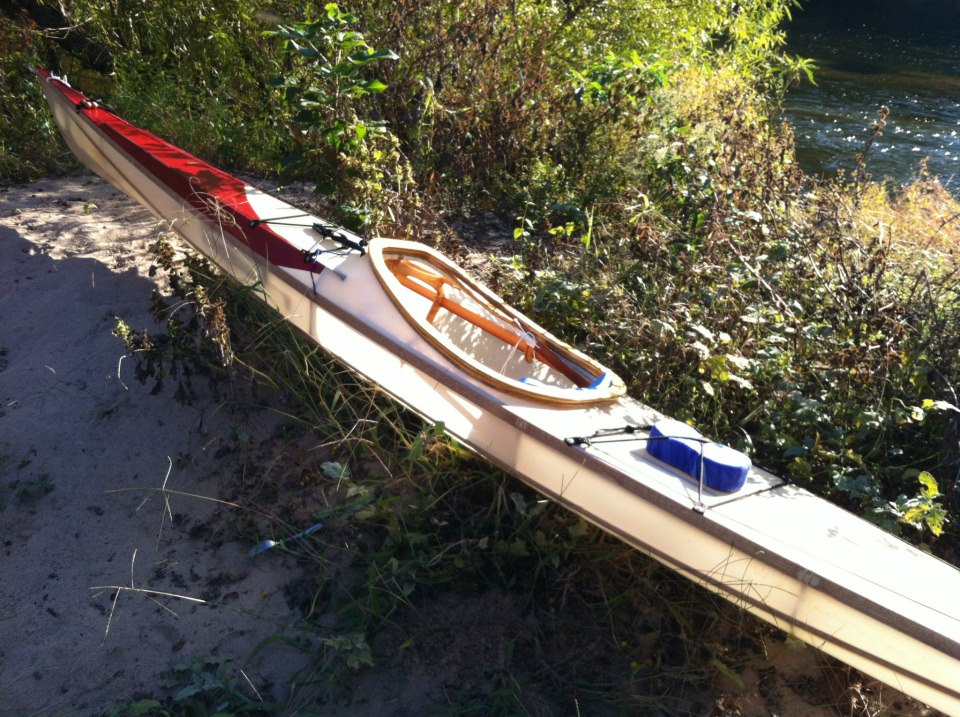
SOF #2: A Siskiwit Bay 17. All up at 34 lbs.

Without further ado, what follows will be the pieces and parts of an actual build. I hope it proves helpful (remember, you can always learn from another’s mistakes).

A Start …

You can’t blame everything on your parents, but of this one thing I am certain I can: my love for “messing about in boats”. Early memories evoke summer evenings at age 3 or 4 lying in the bottom of a small sloop as she slid across the Lafayette River. The warm sea air, the sparkling reflection s of shore lights, and perhaps most infectious, the hypnotic movement of a vessel on the water. This all conspired to lure me in.

Fast forward many years and countless such evenings, I now find myself these recent evenings in a cluttered garage100 miles from the ocean. The purpose? To dream childhood memories and build a boat. Not just any boat (certainly not an Ark), but one of the 3 boats this “sailor” has concluded fit his boating needs. They are an 18′ touring kayak called an Outer-Island, a small 14′ sailing skiff named the Melonseed, and 25′ keelboat known as the Nordic Folkboat. I’ve no illusions of building the latter and have whiled away hours staring at the skiff. However, I have finally put strips to forms for my kayak.

How long will it take? A guess would only be that. Others have approximated 300-400 hours. That alone intimidates. Where does it come from? Do you include the unrecorded hours of investigation, correspondence, gathering of tools and materials, and the dreaming? Surely not, but nonetheless, I have begun to record the actual build time. It all makes no sense … unless you are a romantic, and I was hooked as a baby boy.

So, enough of the “why”. I don’t have an answer, don’t want to be a writer (much less a poet), but I do desire to record my progress and process in hopes that it will force a finish and paddle up some river or across a small bay. I too feel some indebtedness to the many folks who educated me regarding this build and to those who’ve kept me from drowning early on.

30 hours. That’s actual cobbling pieces together for you accountants (who aren’t likely to be so touched as to build a boat). I’m nuts and am going to do this contrary to notions of being reasonable. After all the studying, the learning begins. And so, as I continue to figure things out, … this … is … a … start.