UNA Projects

UNA, like most boats, has an ongoing list of improvements. Most usually get kicked along, but an upcoming cruise got me motivated. The respite from the miserable July/August heat certainly helped too.

What are they? See below from most recent:

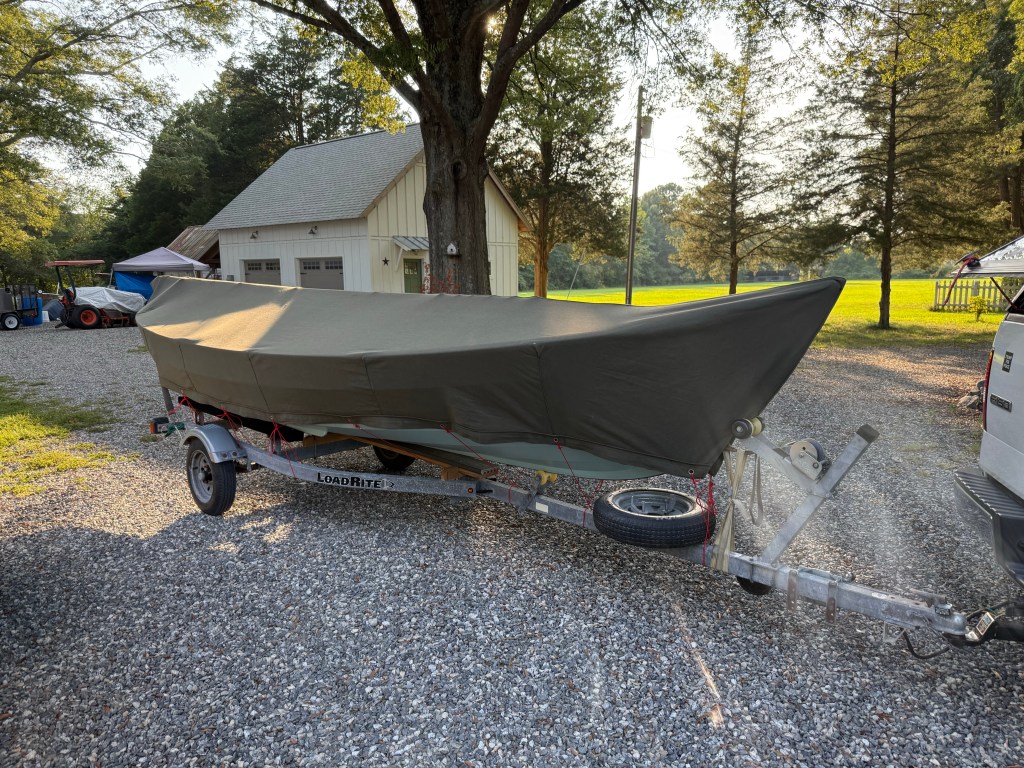
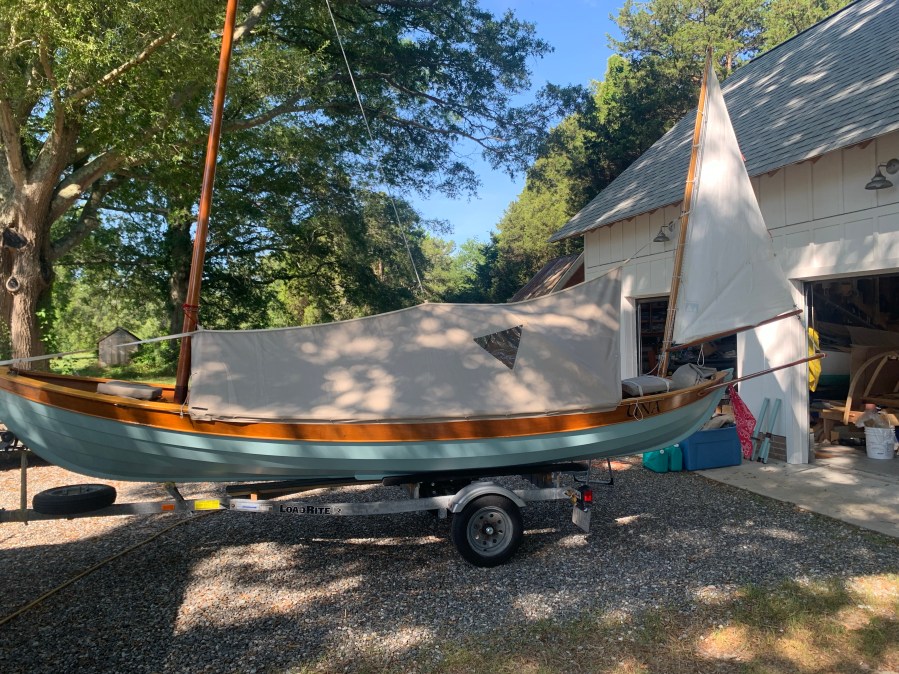
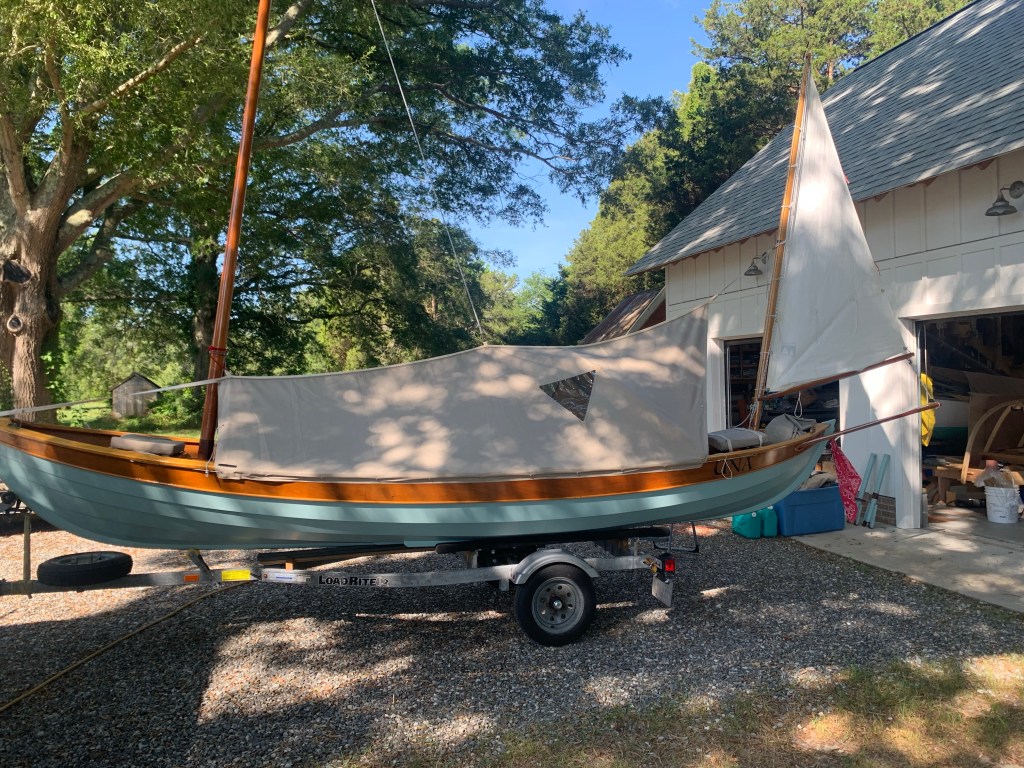
  1. A road cover. She deserved it after 11 years. Heavy duck canvass.
  2. A lighter, quicker tent fashioned from a rain fly with loads of eyelets, kiddie tent poles, miscellaneous plastic hooks and paracord.
  3. A repurposed cot, minus its legs, stretched between gunnels with webbing. works! Took a nap in the garage one day.
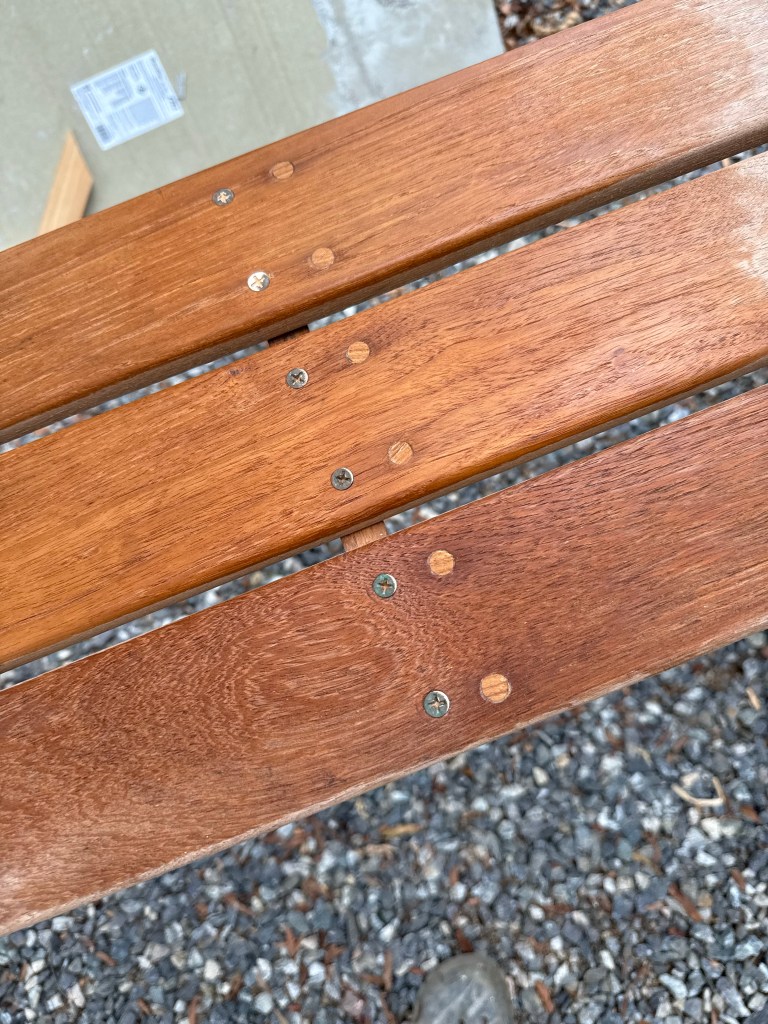
  4. Ganged floorboards port and starboard for easy access to the bilge. Now 3 bolts replace the some 50+ wood screws.
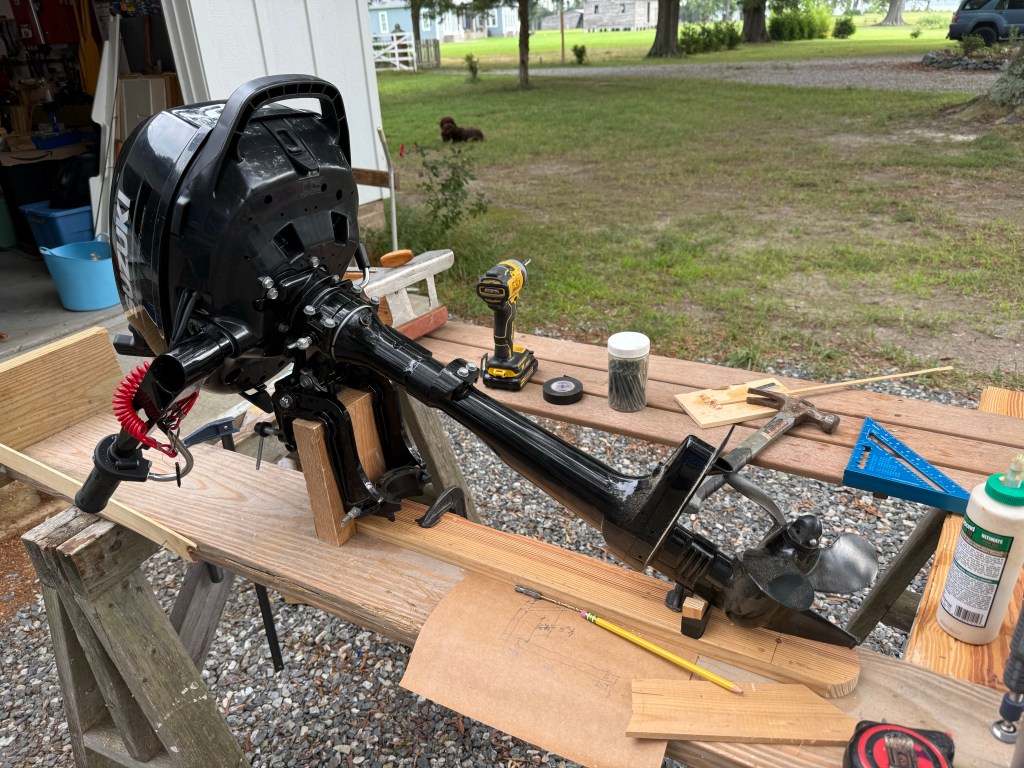
  5. An engine storage mount inside the boat. A couple mock ups led to the final.
  6. Widened cockpit seats. It’s amazing what an extra 3” has done in comfort.
  7. A bottomless box for the lazarette for organizing gear. Before, everything wanted to occupy the center of the bilge there.
  8. A repeater for the ammo battery box 12v meter and charge ports. The box is lashed under the aft deck now.
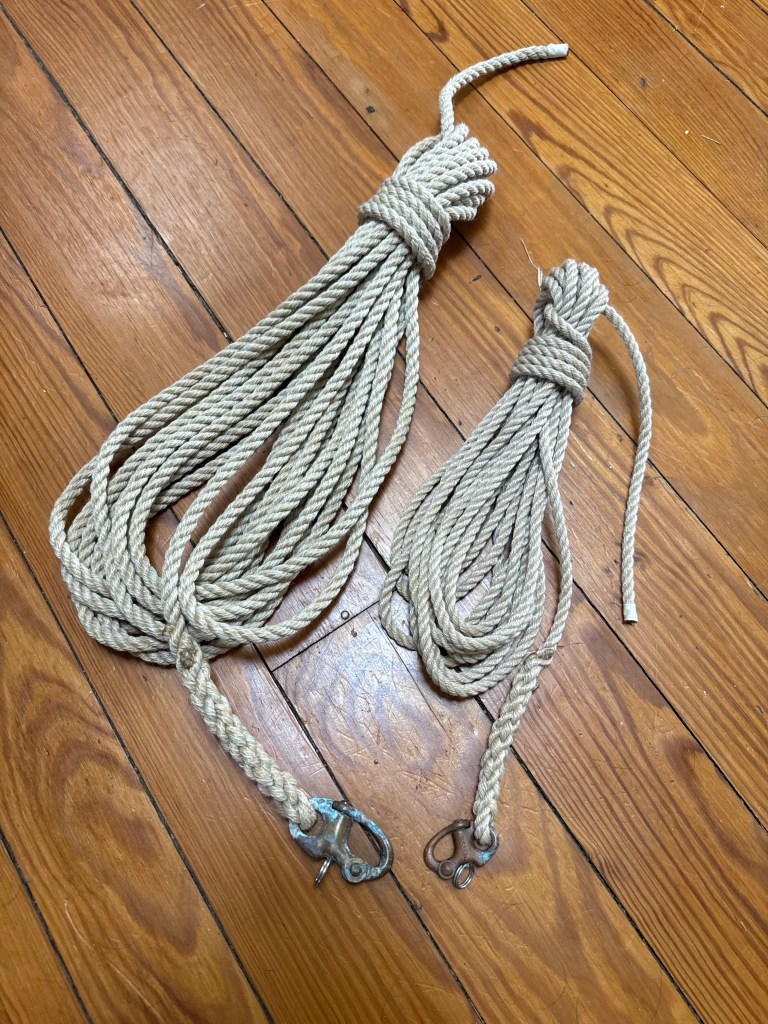
  9. New halyards and sheets using New England Ropes “Vintage”.
  10. A modified toilet flapper valve to protect boat from flopping main sheet block.
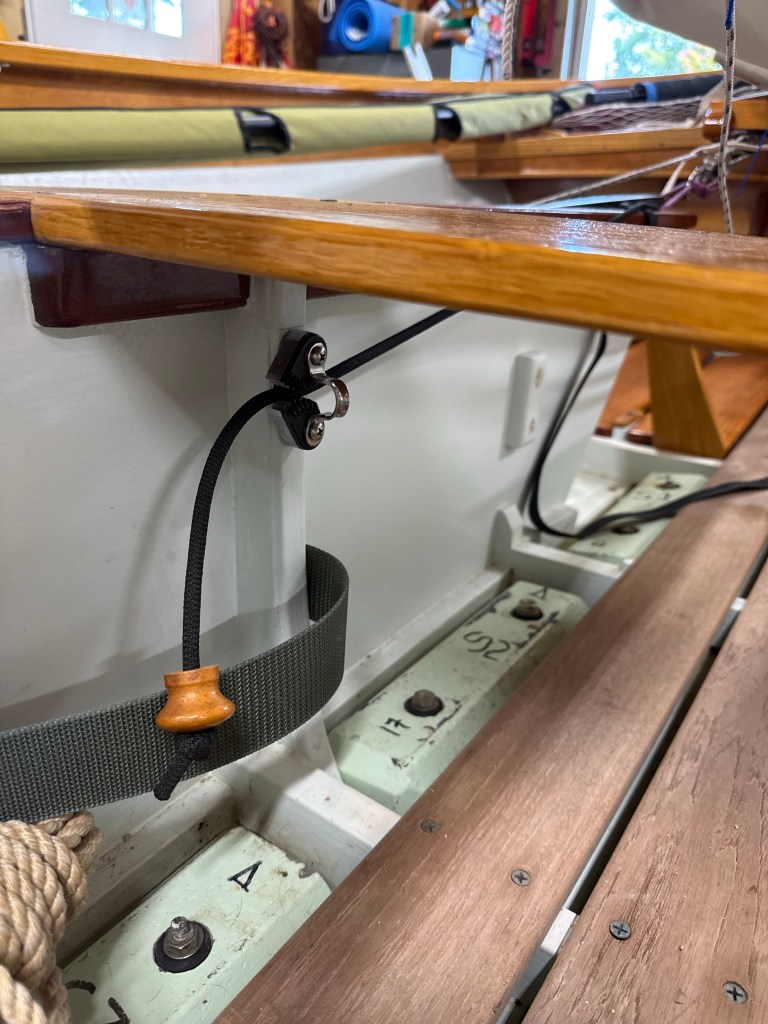
  11. Cam cleat for shock cord centerboard hold down.
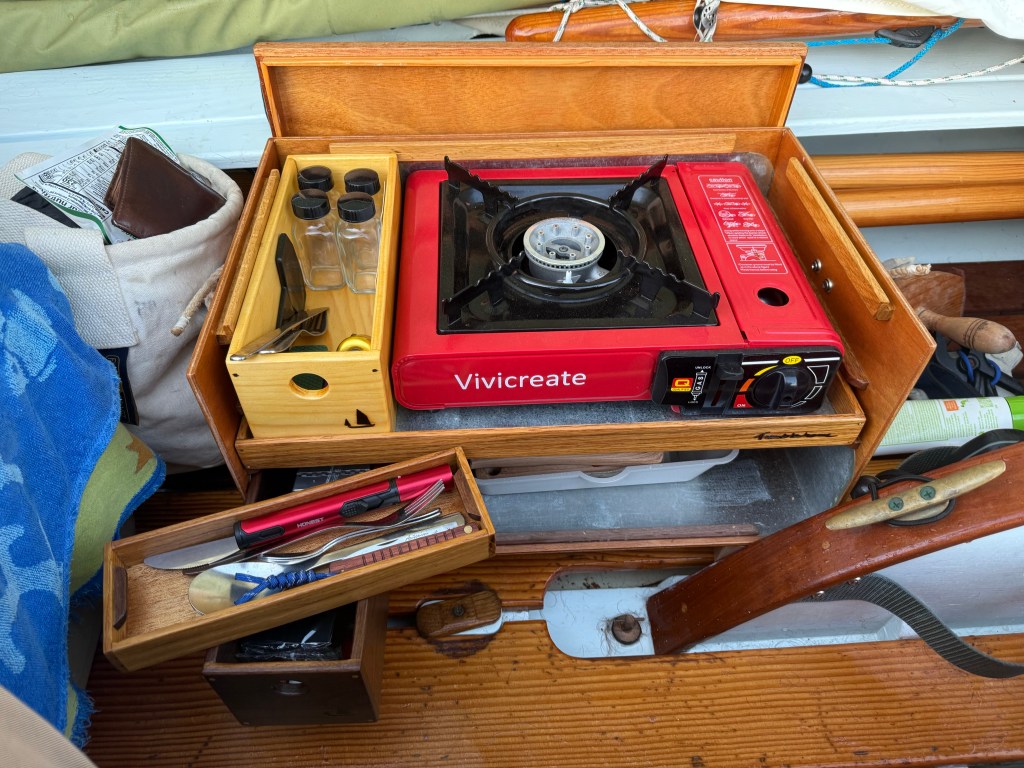
  12. Galley box 3.0.

I feel like I’ve a new boat now! Will report on the success/ failure after our journey. Pics below-

Water and Windows

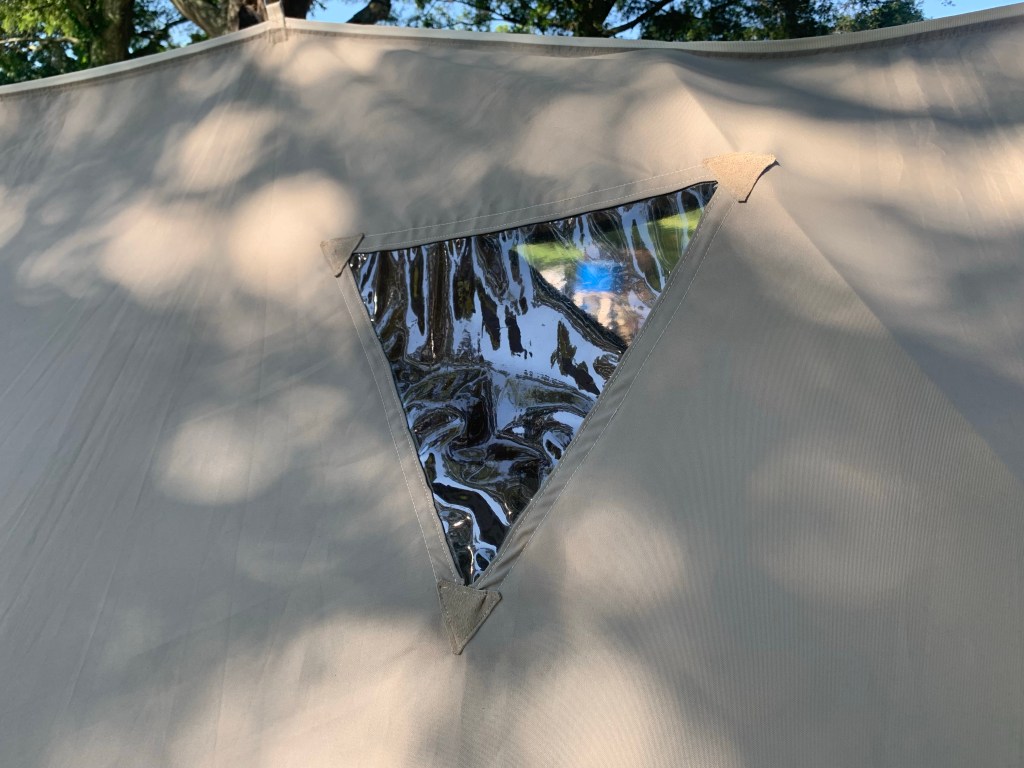
Tent with hoop and halyard support

UNA has been sailing for 10 seasons since that “leaky” maiden trip. Back then I had planned on tent windows, but didn’t put them in. There have been windy nights I’ve reluctantly stuck my head out in the driving rain to confirm the anchor’s hold.

Yesterday I put those windows in. I followed Sailrite’s video. I confess I was only partially successful. Sewing remains a mystery to me. Perhaps it is mostly a lack of patience? In any event the task is done. I believe the wrinkles in the ports are largely due to the stretchiness of the WeatherMax fabric. I did not cut the fabric until after the window and backing were sewn in. While it is lighter than Sunbrella, I’m not sure I can recommend it. Maybe this is all a dry run. I must say even without the mizzen deployed, the boat and tent weathervane quite well even without the bow canvass, the tent stands up to 40+ mph winds. I’ve yet to have a midnight fire drill with it.

It looks better at night.

UNA is now back in the garage. Putting lead in the centerboard and a road cover are the next projects in line. 10 years should be plenty of time to complete them.

Battery Box

At our last OBC gathering, one of the fellows, let’s call him “Rob”, showed up with a 100 Ah LiFePo battery in a fabricated plywood box with USB and 12v outlets. Yes, 100 amp hours! That’s enough to charge your mobile phone and cameras for life. Not satisfied there, he is now considering adding a solar panel to keep his new found electrical wealth (and ballast) topped off. I must confess, I was envious. None of the small LiPo charge banks I’ve purchased have lasted nor delivered enough juice over a week’s cruise. I’ve a small foldable small solar panel too, but it has always been lacking. After years of bumming additional charges and cords, I got tired of being electron poor. Now I have my own bank using an old ammo box, a 50Ah batt, a couple outlets and wood scraps. The battery is centered in the box for ease of lifting and carrying. A remainder space offers storage for extra cords, phone, iPod, etc. AUW is 15 pounds. Light enough. Though not waterproof, the setup is quite water resistant, portable and can be readily positioned about the boat, or, used elsewhere. A printed chart equates battery capacity to voltage which is read off the USB outlet. We’re set now. Onwards and upwards!

I hear some of you, “What’s next? Widescreen TV?! Inverter? Blender?” Hmm, now you have me thinking. Margaritas anyone?

The UNA Roll

In construction she got 2 coats of each: epoxy, primer and paint. After now over 9 years since launch and many miles under her keel, UNA is ready for a refresh. Despite all her bumps and scrapes, she is still beautiful! Iain Oughtred has an eye for the sweet line.

I doubled over two 4″ wide x 30′ nylon straps, shackled the massive “D” rings overhead and fastened the opposite end with jury rigged block and tackle to hoist the old girl, remove the trailer and substitute long saw horses. Then with safety lines to control the rotation, a come-along strung across the garage allowed for a manageable flip.

The worst of the wear is at the keel and bow stem where the naval brass half oval is just shy of covering the timber. We’ll need to rethink whether to replace the brass with wider bits. That will be a heavier look.

Now the fun begins-

Back in The Box


While we’re noting changes, my galley box is updated. I was prompted by, I won’t say whom, a fellow sailer who nearly turned his double ender into a Viking funeral pyre! Yep. He scorched his floor boards while cooking another five course meal. Apparently a three foot diameter iron skillet can generate and reflect enough heat to warrant a fire extinguisher.

As they say, the best experience is someone else’s. So, I screwed copper to the back of my box and added stainless to the bottom making a safer windscreen. Plastic laminate was glued to the removable shelf. A small wooden box holds utensils. Raised rubber disc tile added to the exterior top and bottom protects surfaces from getting scratched and sliding about. Lastly, a new butane stove replaces the old leaking one. Hopefully we’ve avoided more uncontrolled pyrotechnics. Just doing our part.

Shelved It

The list of UNA projects never seems to deplete. That’s not a complaint, but the simple recognition of the “laws” of boat ownership. Each sail offers feedback toward improvements. One item is a road cover. For now, drop cloths serve while garaged. A weighted centerboard is high on the to-dos. Though not adjustable, a knotted loop of shock cord now suffices. That too will wait. Instead, I chose to build a small shelf under the starboard cockpit seat. That seat has been a nightstand, but things can roll off into the bilge. (Ah, another on the list! Removable for boards. The shallow space there can neither be cleaned nor accessed without much finagling. See what I mean?) Focus! Shelf: How involved could it be? Cardboard, pencil, utility knife and hot glue defined the template. Both the side of the hull and the seat edge are curved. After numerous test fits scrap okoume was cut and fine-tuned. A teak fiddle removed from Chickadee was cut for reuse. Two coats of primer, paint and three of Epifanes Rapidclear (goes on thick) and we have a “simple” shelf. If I put my phone or knife there, now I will find them at night. Another added bonus is both oars now stack to port so there’s no need to remove the starboard to port each night. Those long 9’-8” sticks take some maneuvering to relocate. Now they’ll stay lashed for actual use. Oh, and now I’ve two more ties.

Much ado about nothing I suppose. UNA is a finer ship though. Later-

Mounting Frustrations

Sailing has been happening. Mostly in my “wife’s” Beetle Cat. More on that sweet boat later. A few small projects have been done there after pulling it from the barn this Spring.

With an Old Bay gathering on the horizon, I wanted to finish my third engine mount iteration in order to continue acceptance by the local TSCA motor squadron. Honesty, I hate the idea. It’s contrary to the sailing I built UNA for, but asking for a tow is a pain for both ends of the line and I don’t like missing dinner or cocktails.

A little history: two summers ago I lost a brand-new Honda 2.3 at the pier in 12′ of Rockland, ME water. That was a chilly retrieval. and I was cussing above and below water. The teak motor “thwart” I configured had cracked, racked and gone for a swim. And, I was about to tether the engine too! The engine was washed and left in the truck for a great week’s sail. Once back home, I made what I believed was a good fix and had several windless outings. Then on last Fall’s cruise to the Chippoke, I almost duplicated my previous snafu when my motor shaft struck something under water that didn’t want to give way. Tree stump perhaps? Anyway, the fix broke, but we were tethered this time thankfully. However, as frustrations mounted, I was determined the next solution would be my last or the entire aft end of the boat will be torn off before the engine takes a swim.

I gave a plywood mock-up and drawing to a metal fabricator. Stainless plates were crudely welded. I then eased edges, rounded corners and drilled holes for a solid chunk of chestnut oak. Pig leather was cemented to the inside face of the metal resting on the gunnel and to a shaped wood block pressing against the hull. I reused the bolt gunnel insert from the “thwart”. The result is a beast. 10# maybe. Lightening holes in the broad face of the steel will help some. Or, add a bucket of lead to port? Boat soup will suffice as a finish. This week we’ll take UNA will go for a spin.

For the record, some may recognize different engines posted here. My 40 year old Honda finally quit. All its bolts were rusted beyond extraction. A new Honda was bought before the “baptism”. Ended selling it after getting it running for more than purchased sale price. I bought a new, quieter, water-cooled Suzuki and still had a few pennies left over. No killer whales choked on engine parts in this small endeavor, and the lobsters continue to thrive.

Not proud of what I’ve done here, (but I can make things). I’m now beyond guilt by association. I’m one of them now!

“Lightening” holes added

Mending a Break

Some trips are not so kind to UNA. No sooner had we left the pier at Smith Mountain Lake when the motor faltered. Sail and oar you say? To stay off the lee shore we hurriedly dropped the anchor, and, so too the tiller. That quickly swept aft to jam between the rudder and stem. In horsing the stick loose, I cracked the tiller arm in good fashion. Choice words were spoken … several times. Twine and duct tape managed a temporary repair to sail the next day.

Once home, the fix involved removing the bronze joint bushing, replacing bad wood with a solid piece of cherry, inserting bamboo dowels and gluing it all with epoxy. That likely would have sufficed, but I added several windings of tarred twine as a safeguard. The crack had gone almost 12” up the arm.

Our next task? Devising an easy way to remove the floor boards so that the bilges can be cleaned readily and those frequently lost items can be found.

Tiller and arm reconnected.

Snow is on the ground, but Spring will be here … hopefully soon.

Across the Great Divide

There is no love lost between sailors and powerboaters (forget jet skeeters). And so I know this post will be met with some derision by the purists. I get it, but how much sailing do they enjoy from their armchairs anyway?

UNA has been, and remains, my favorite boat. So little air moves her. Still, there are slick calm periods that can take the shine off a cruise. Long distances can become infinite when the wind quits. Perhaps my oars aren’t as optimal as they could be. I suspect I didn’t slim the shafts down for enough flex. That can be corrected. To date my average rowing speed for any length of time been sub 2 knots. UNA is a sailboat first. Most of those I sail with have motors, are determined to get to “point B” and relying on a cordial tow when the wind quits can try all involved. I either lose friends, find some pure sail-and-oar guys or find a compromise.

You see where this is going? Yep, I designed and built a motor mount for UNA. The plans showed a motor well. I elected not to build that early on. What started as a sketch melded into a plywood prototype that was adjusted and trimmed. A final piece was tooled in teak (I was confident in the solution).

IMG_4940
plans

IMG_4941
section

Last week’s test run worked flawlessly.

IMG_4923
prototype


IMG_4922
stowed under seat

Advantages: there’s no well taking up storage aft or creating turbulence to an otherwise  smooth bottom. This engine “strut” follows the curve of the hull and can be stored against it in the gap outboard of the side seat or under the seat itself. Also, the engine can remain on the strut when anchored without interfering with my tent. And, once removed the threaded inserts do not snag anything. Leather pads under the thread protect the gunnel finish.

Disadvantages: a well keeps the prop in the water at all times. A good wake can create enough roll to lift the prop out of the water with the strut. To be used primarily in light to no wind conditions, this rarely is a problem.

IMG_4925
engine on proto

Here’s the end result at 1/2 throttle and 5 knots. Nice and easy.

I’m happy with the results. Forgive me.

A Sticky Situation

A couple years ago I watched UNA’s foremast roll off the boat and land heel first on the concrete garage floor. There was a, “Crack”. Never good. Initial examination revealed nothing. I secured the pole back on the trailer. Not long thereafter when putting the boat away, I heard a rattle when I set the mast down before setting, I hear a rattle. This time I discovered a 18″ split between 2 of the staves where the mast was solid. At the time I decided to monitor it and ordered a fiberglass sock to repair the damage, but didn’t.

Many sails later, I found myself holding onto UNA with two-reefs and needing a third. We were bashing against wind, current and seas to gain shelter in Pulpit Harbor on Deer Island. That split was front and center in my thoughts. Thankfully UNA came through, but I had haunting doubts next time. I needed to fix the mast.

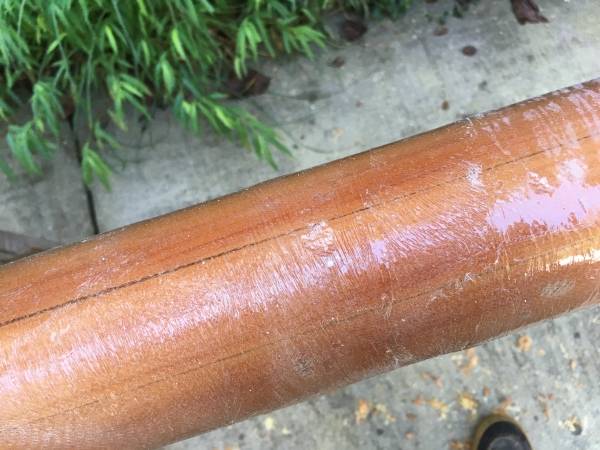
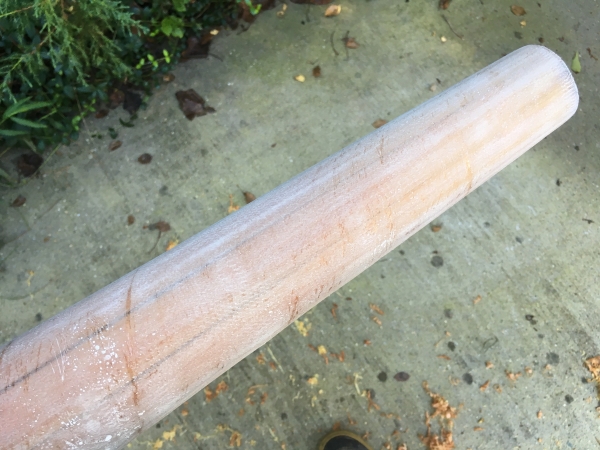
Once home, it was obvious the crack had lengthened. Another problem was the mast would swell and stick in the step on occasion demanding wrestling and wiggling to unstep. Putting a plastic bag on the foot had solved that hassle for too long. So, I hand planed the heel and sanded the problem section with the ROS and 80 grit to 16″ above the deck. The stick was then saturated the wood with straight epoxy and 2 layers of the fiberglass sock were snugged on. Epoxy splashed everywhere. The 90 degree heat rapidly accelerated the epoxy’s flash point. I panicked and ran for packaging tape and saran wrap to hold the works in check.

img_4956.jpg
plastic wrapped and encapsulated goo

After an overnight set, I cut and peeled the plastic off. Some had doubled onto itself and became embedded in the epoxy. There were also a few air bubble craters.

IMG_4958
Most of plastic removed

img_4959.jpg
Some rapped plastic and pitting

Alternating stints with the belt and ROS sanders got things back smooth, though I questioned how presentable the fix would be.

IMG_4960
Initial sanding. The itching begins.

img_4961.jpg
Snow on Labor Day?


Glad I donned a mask. Dust was everywhere. Wish I had worn long sleeves. The itching began. After wet sanding (kept dust down), the results improved. I thought I’d have to paint the mast.

IMG_4962
Wet sanding gave hope for a varnish finish.


Some of the outside layer of fiberglass was sanded off, but only slightly. Most of the dust was resin. One more coat of epoxy, a quick light sanding and 3 coats of varnish gets us whole again. Glad to cross this one off the list and now I have more confidence in UNA’s defense against the next blow.

img_4964.jpg
finished