Galley In A Box

Had hoped to sneak in a sail yesterday, but winds were gusting to 38 mph. Chickened out. Today there is no wind. Hopefully there will be some nice days soon.

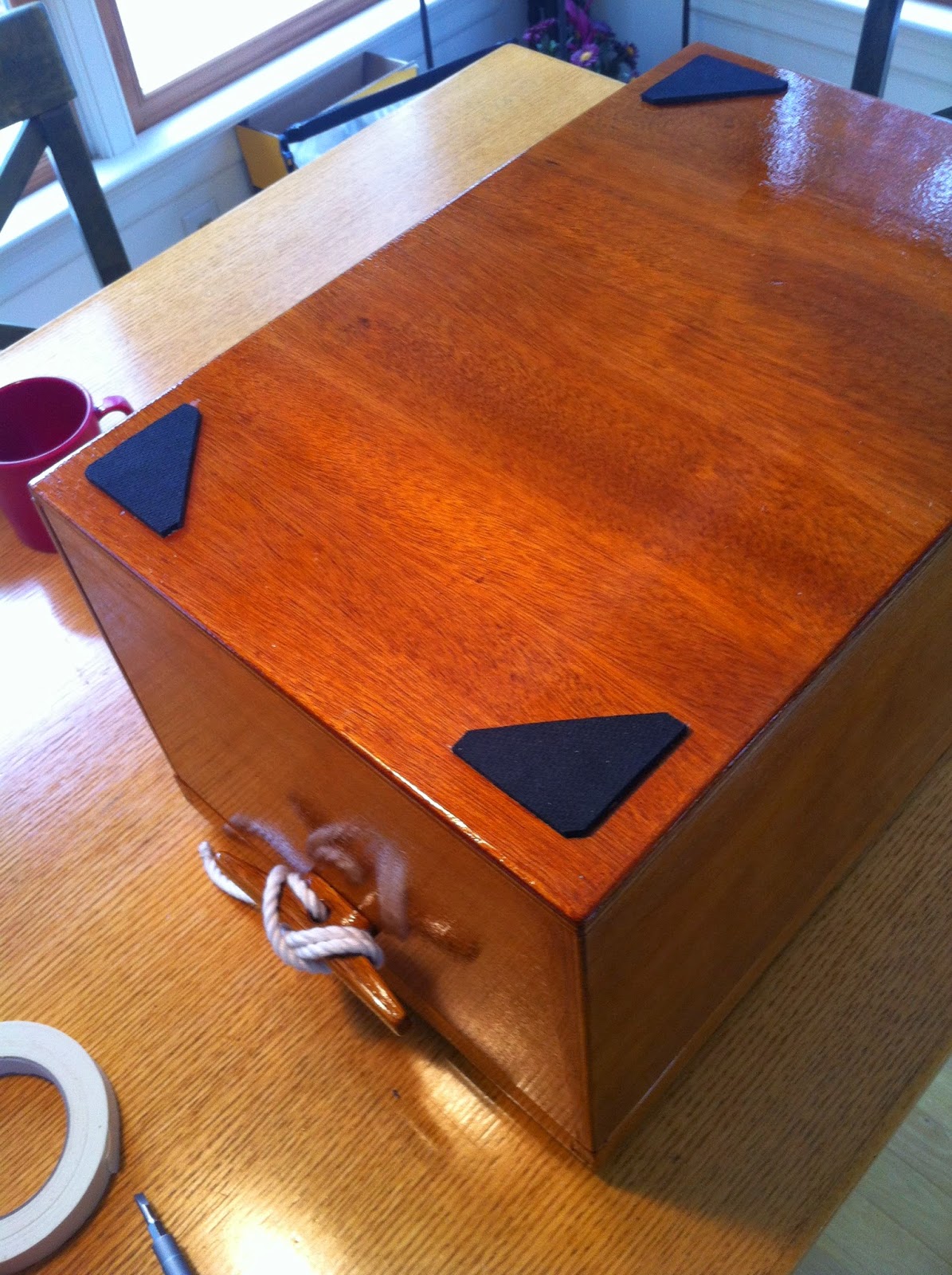
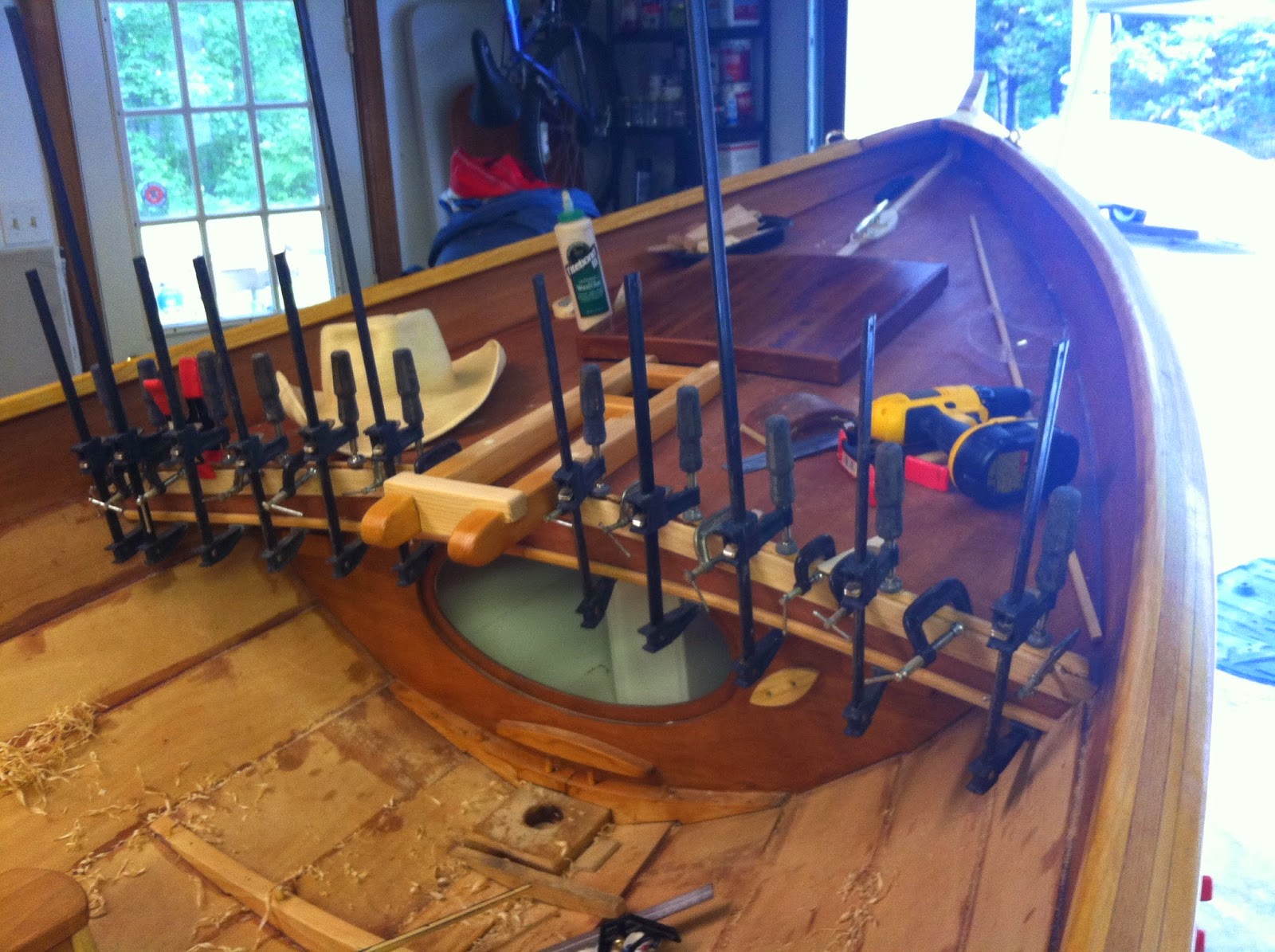
The last boat camp trip may have spoiled us. Meals cooked at camp on our small butane stove top opened up a whole new menu. Though the gimballed cup stove still has a place under way, taking every meal in a 20 oz cup might get old fast.  Chris Cunningham at Small Boats Monthly had a box for his galley kit. John Hartman on WFB had his boxes. So, after studying those and many camp cook boxes out there I decided to design my own.

First I wanted it as compact as possible while keeping all the galley necessaries inside it. The final box ended with these specs:

  • 18″L x 12″D x 10″H
  • 8mm okoume plywood sides and interior oak rails.
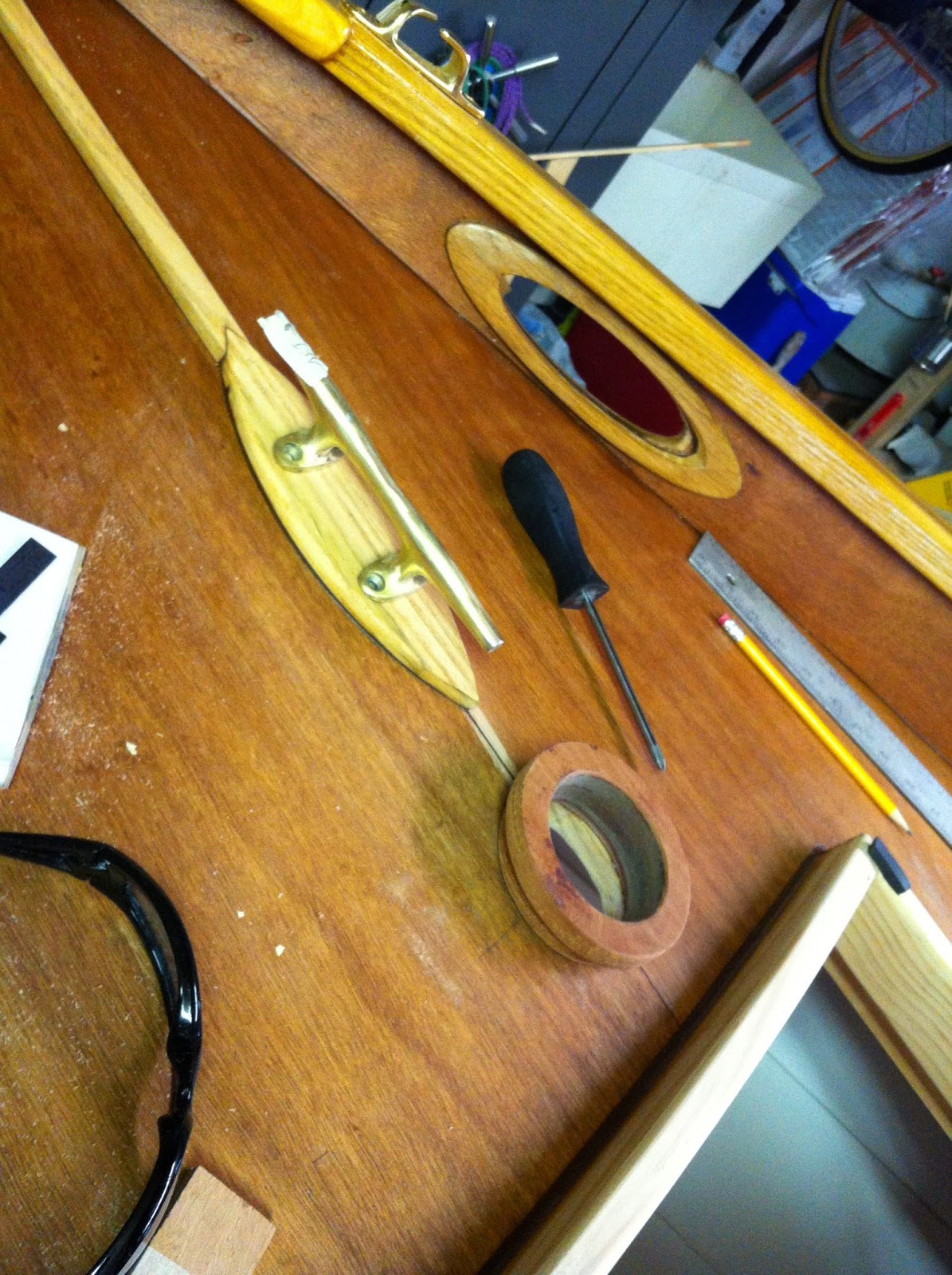
  • oak cleat/handles
  • neoprene rubber feet
  • removable platform/ storage divider
  • interior paint matches UNA’s hull
closed box

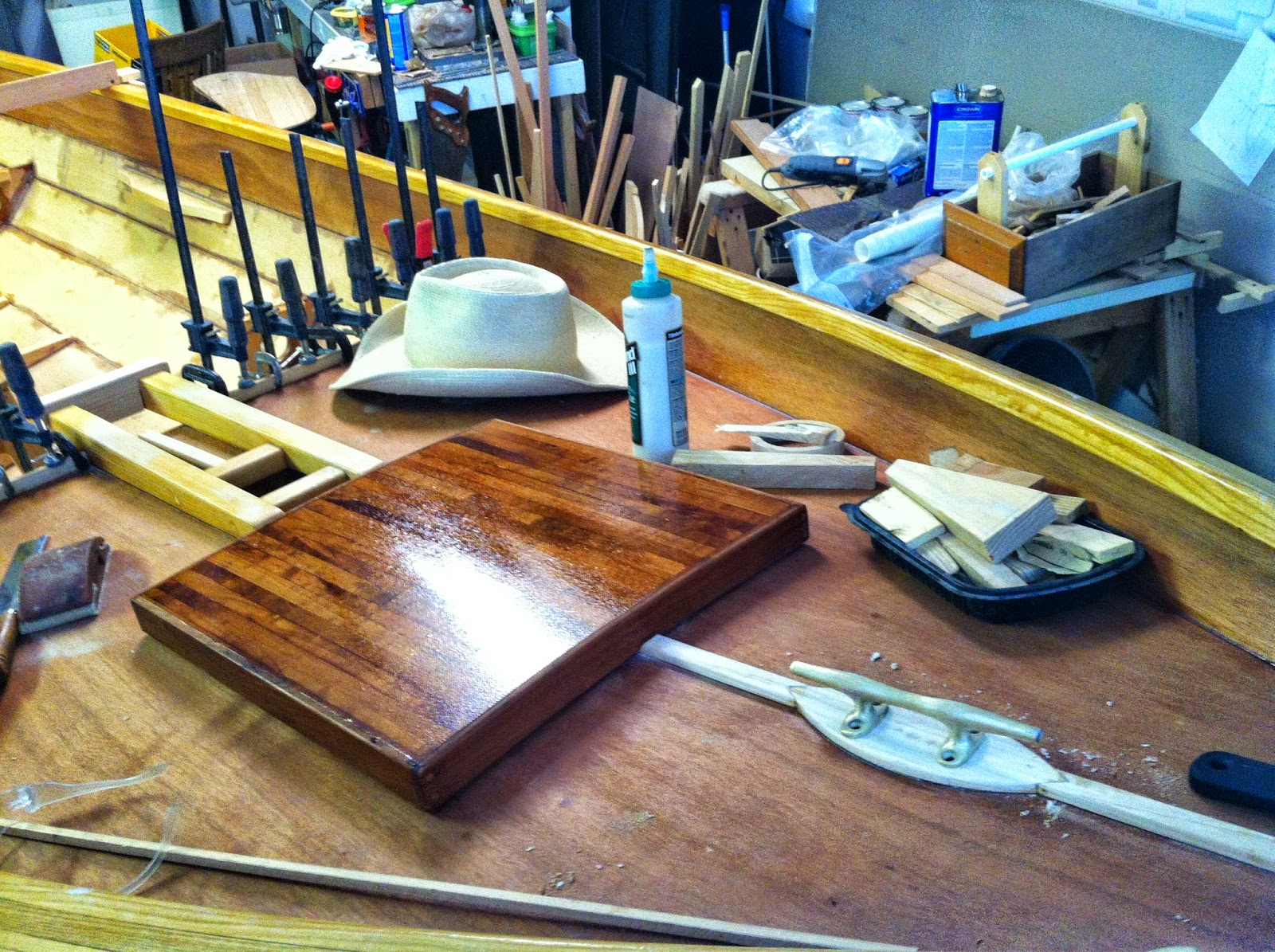
Box was shellacked for color and varnished to protect it. Rope tie-downs keep the lid on.

feet
handles with cleated lid
“Rubber” feet protect the boat and offer an anti-skid box. Cleats will help secure box in the boat too.
opened box with stores


divider/platform removed for wind screen
stove in place


The box is sturdy enough to serve as a seat in camp. A pot, some mugs, a few utensils, and spices need to be added, but all that should fit easily. Joined with a cooler, canned and dry goods, and we are ready for the next trip.
Now on to figuring out the tent scenario …

The Promise of a Voyage

We are resolved to take the first overnight sail this coming weekend. Expectation is as high as a Christmas morn (maybe bigger). Sailing this past weekend was a mixed bag. Day one had no wind and rain, but pleasant temps. Day two offered a steady breeze and sunshine,  as perfect a day as you could ask for. Heck, as the saying goes … even bad days can be made right in a boat and that’s where we were.

Last Sunday’s sunrise.

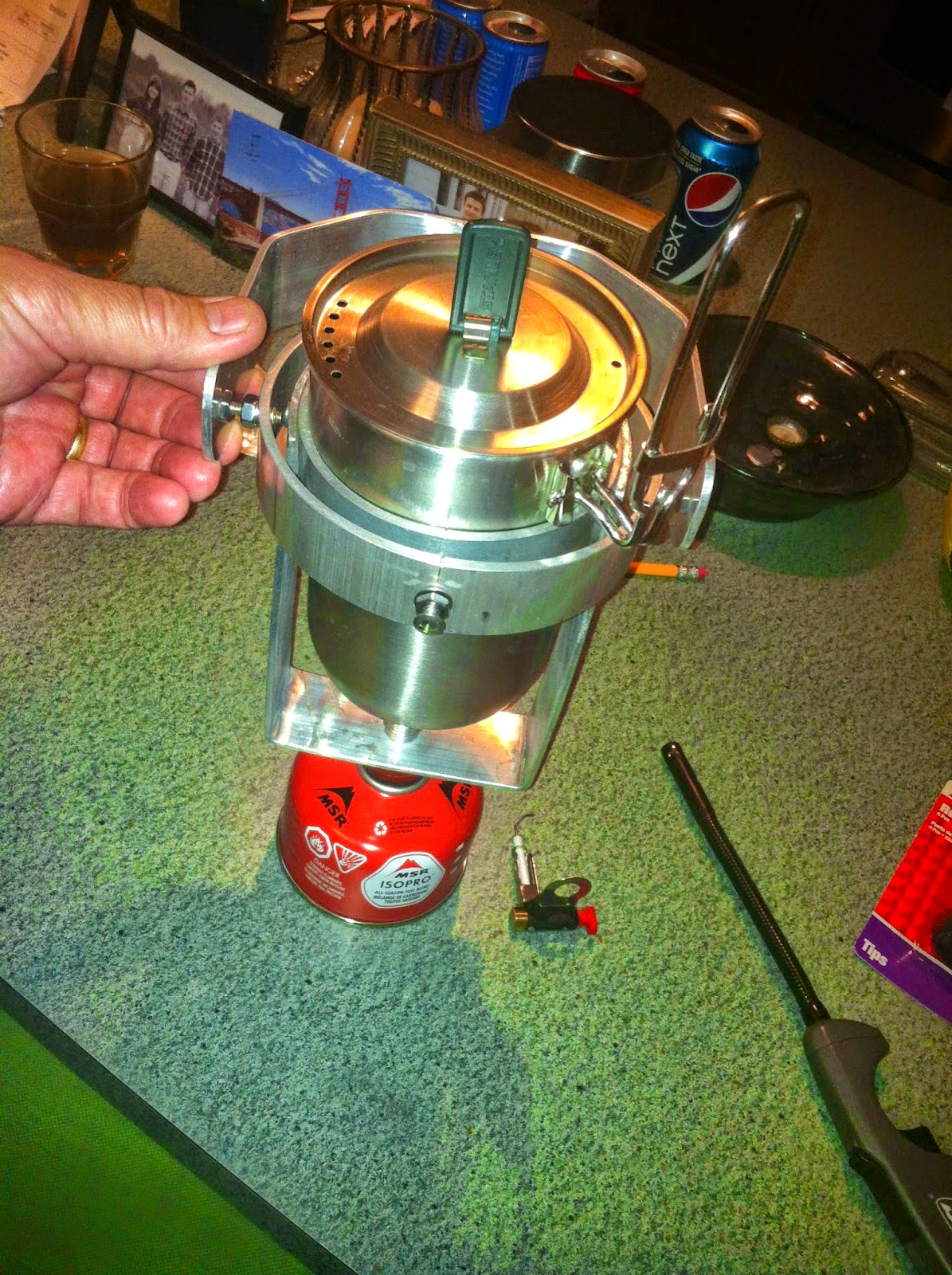
So, there are some things to do or make right before shoving off this weekend’s shake down. There are also some items needing attention that I’ve delayed. One was taken care of a while ago: I’ve modified a gimballed butane stove. The fabrication is from aluminum tubes and bar. It was designed to fit a Coleman SS camp cup (24 oz). The burner came from a cannibalized $1 eBay purchase. I’ve yet to add the strap that will secure it to the thwart in similar fashion to the compass arrangement, but I will.

Gimballed stove.

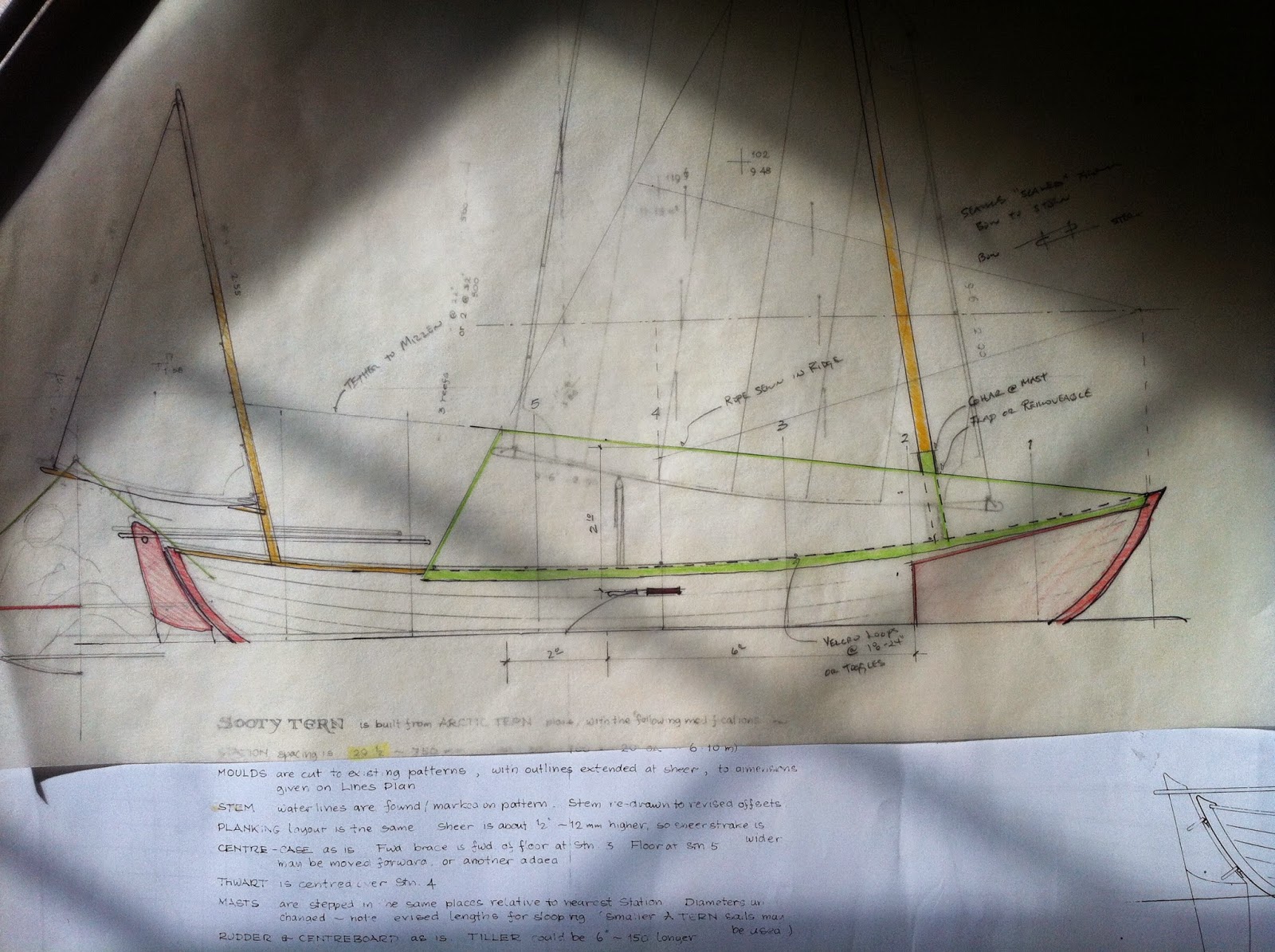
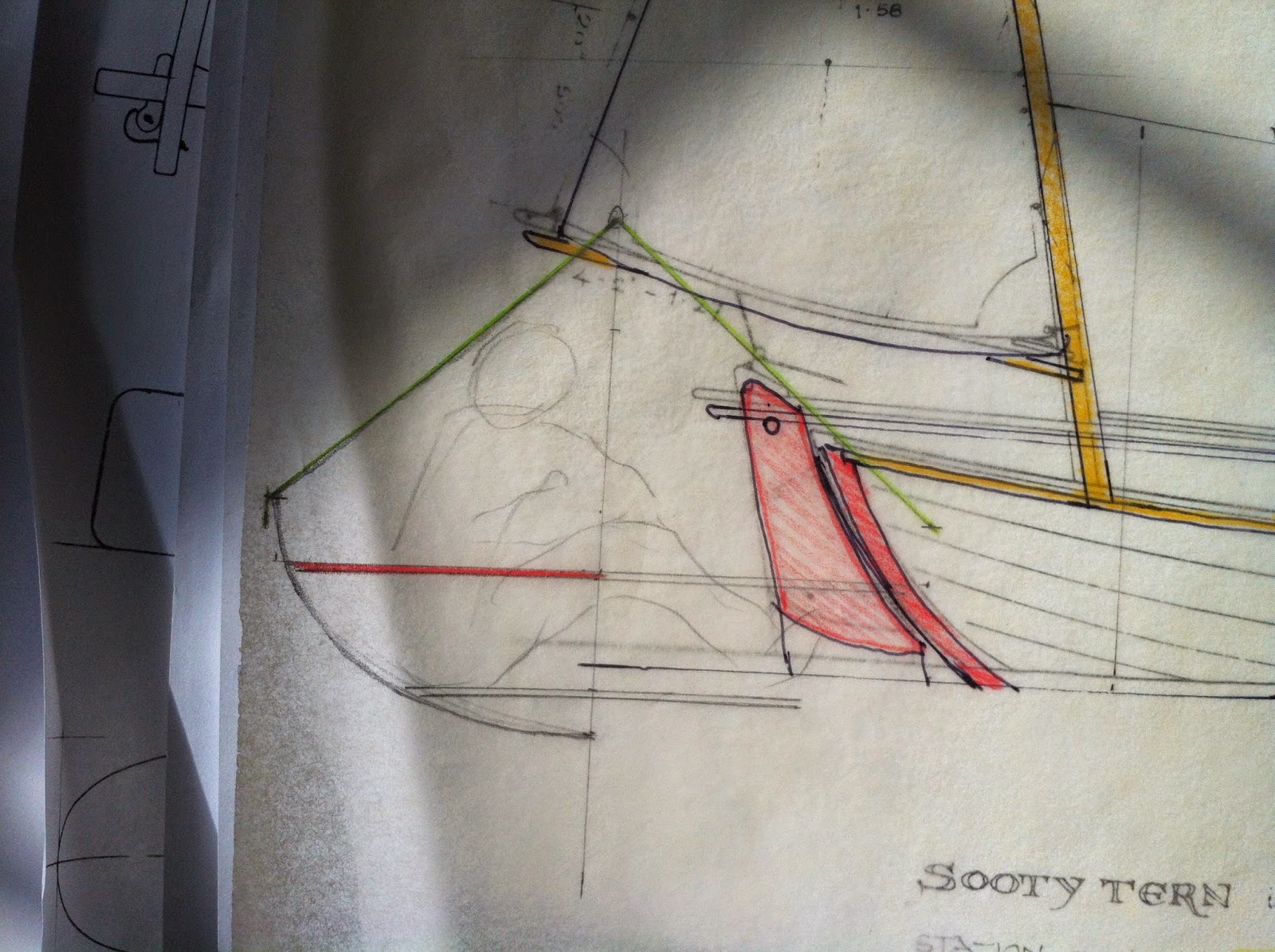
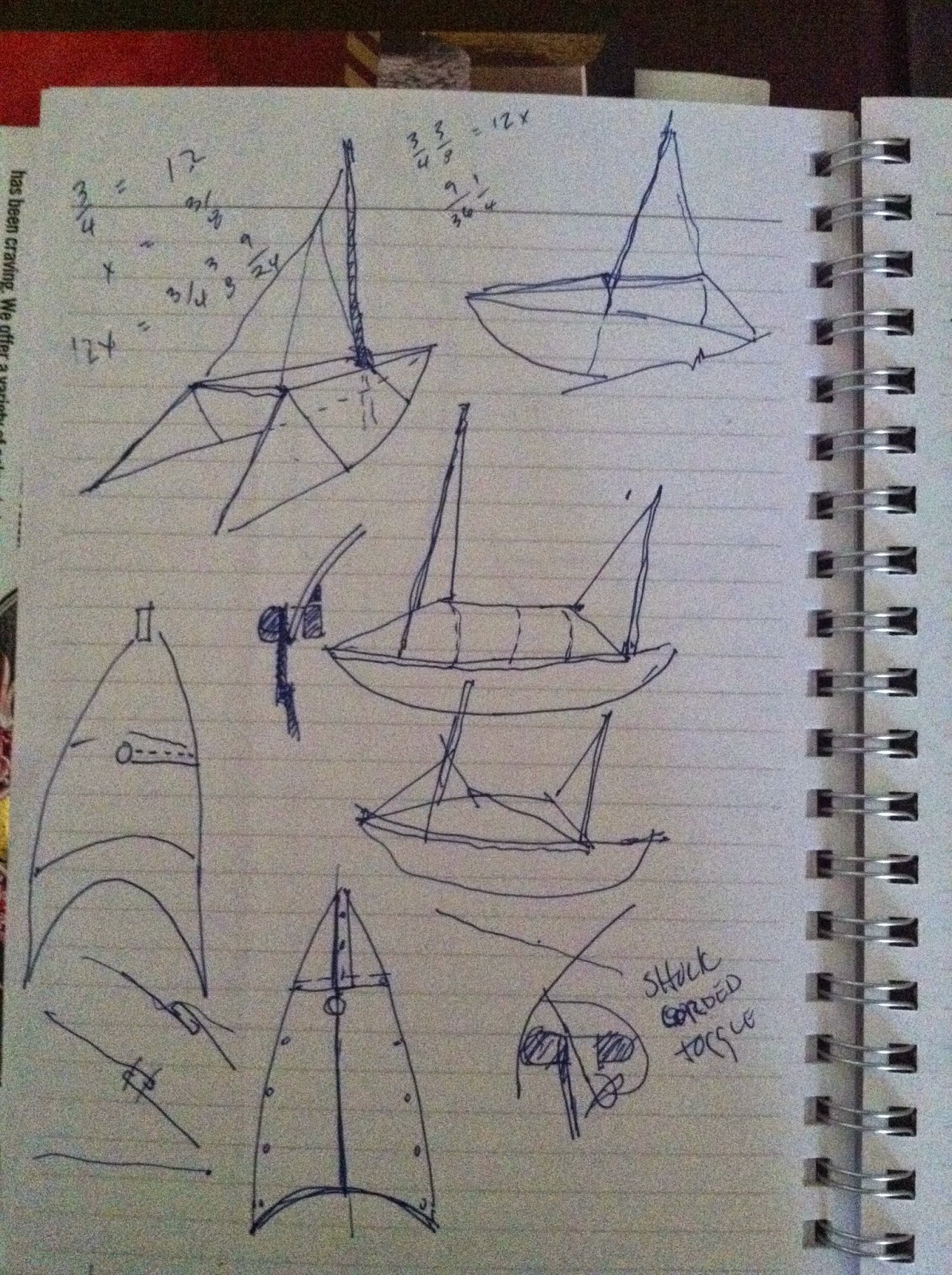
The biggest item to solve, and it remains so, is the tent/awning. I’ve done quite a bit of sketching and after today’s experiments, I’m still not settled on the solution.

Tent outline in green.

Cross section with ghost of person.
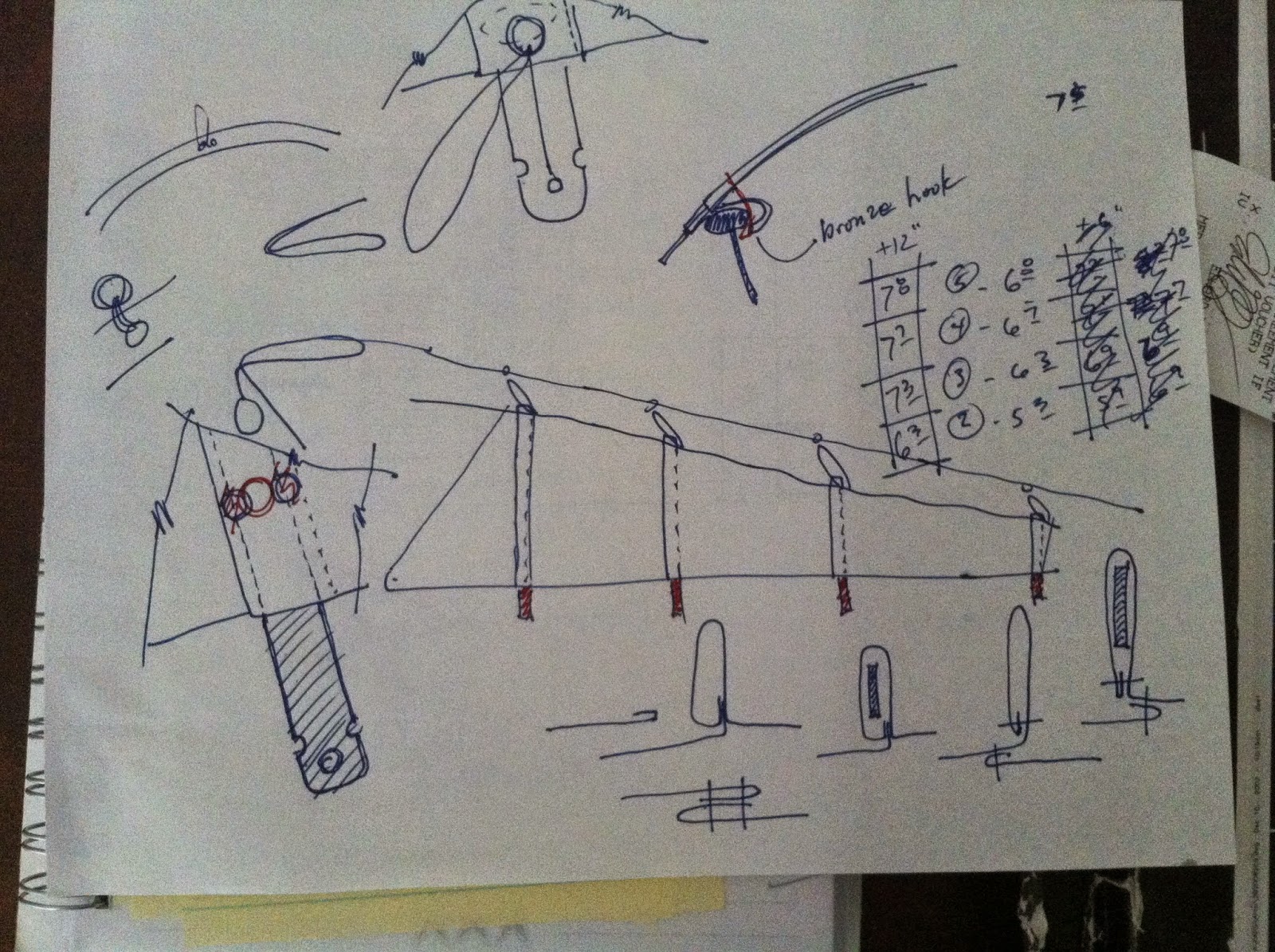
My initial take was to have an aerodynamic wedge of a tent by using a ridge line between masts. I need to see if leaving the masts up at anchor is best. My instinct tells me this will dampen the boat’s rolling effect. If not, the main mast could be a ridge pole. A straight tent, while simple, does limit the volume. One idea I have uses wood battens that hang vertically in section from a ridge line and acts as an awning. Once the battens are horizontal and bowed, they would form a “Conestoga” tent. The whole could all be rolled up and lashed under the side seat when not in use.
Batten details.

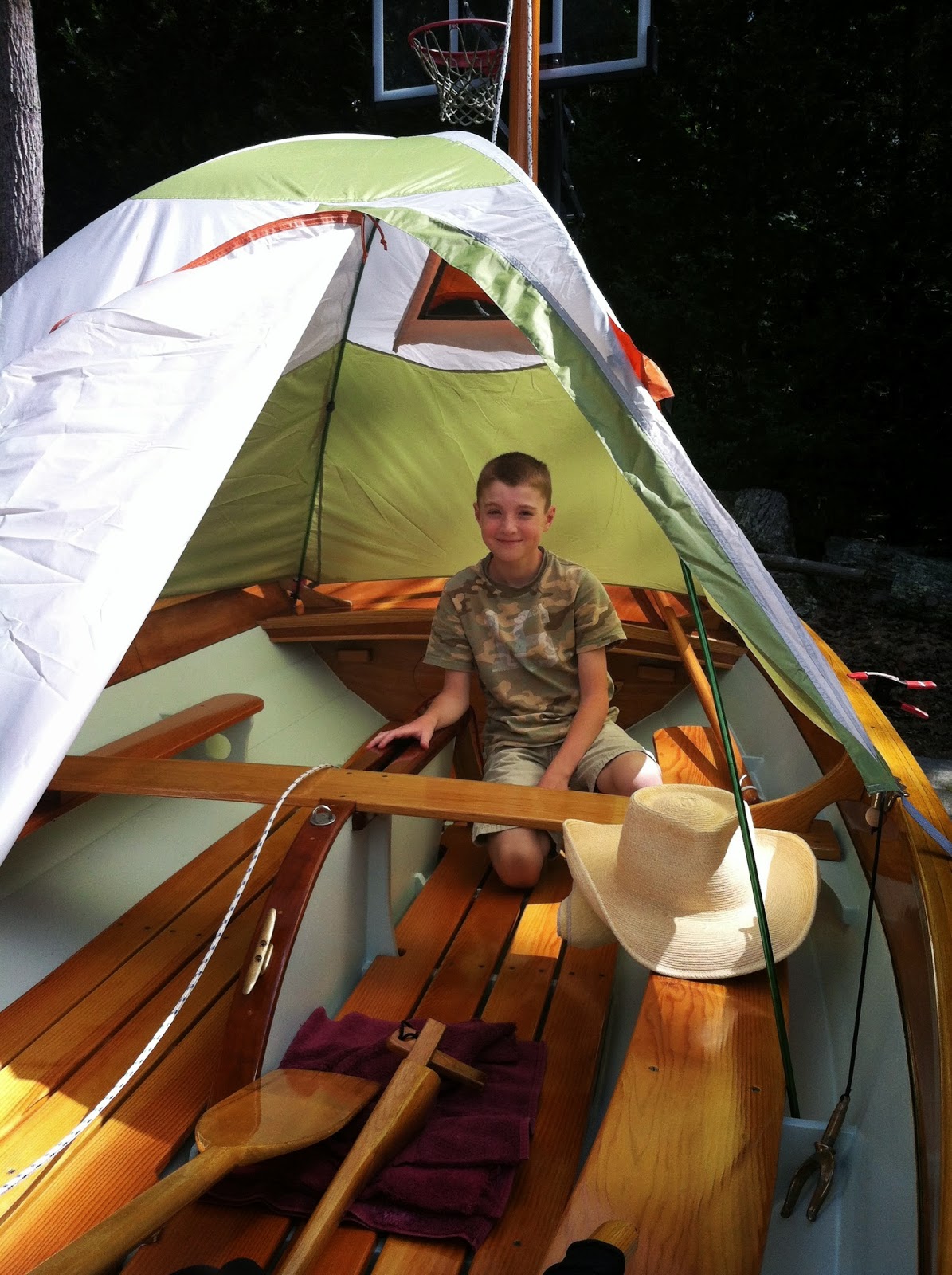
However, to make a quick answer for this weekend, I pulled out the rain flies from a couple 2 man tents we have and one fit rather nicely. It is just shy of reaching the gunwales, but could serve well for now and offer a good template for a final version.
Added rain fly.

Just shy of reaching the gunwales.
A fit for this guy.
Aside from life jackets, we are now focused on the FOOD. Hearty grub will have to come from a 24 oz. galley. Looking forward to this voyage immensely. Will report back later-

Compass Points, a Stitch In Time.

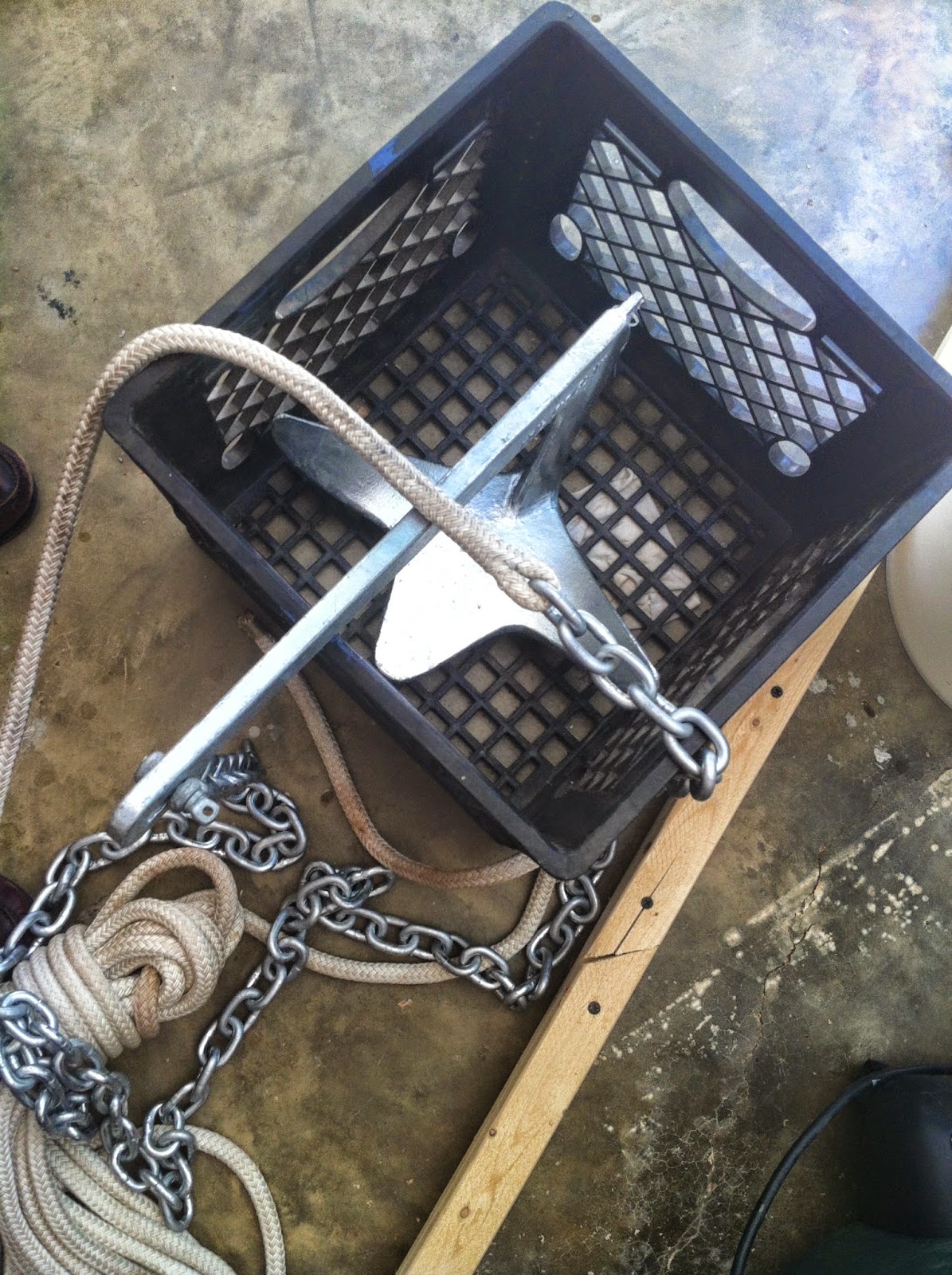
As the heat of the summer here dissipates, I have begun to focus on a few small projects to make sailing easier. One made the tiller push stick to tiller arm connection more rigid. I wasn’t happy with the rope connection. Perhaps I’ll post that solution later. Another task involved splicing anchor rode to chain for my 11# Lewmar claw (Bruce design) and a lighter 6# aluminum Danforth style anchor that will be kept in the aft lazarette for back up. Both have 10′ of chain spliced to quality 3/8″ twisted nylon.

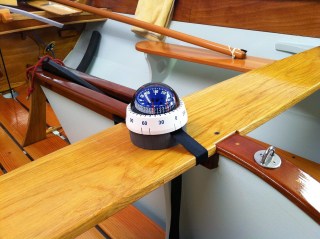
The recent task I am most satisfied with is a mount for the compass my father gave me as a “well done” congratulatory gift. It is a Ritchie Tactical compass which is the perfect size for Una and much appreciated.
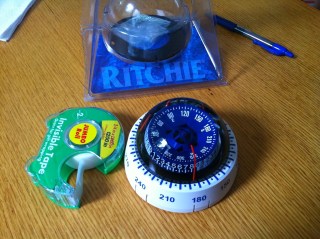
Ritchie Tactical Compass

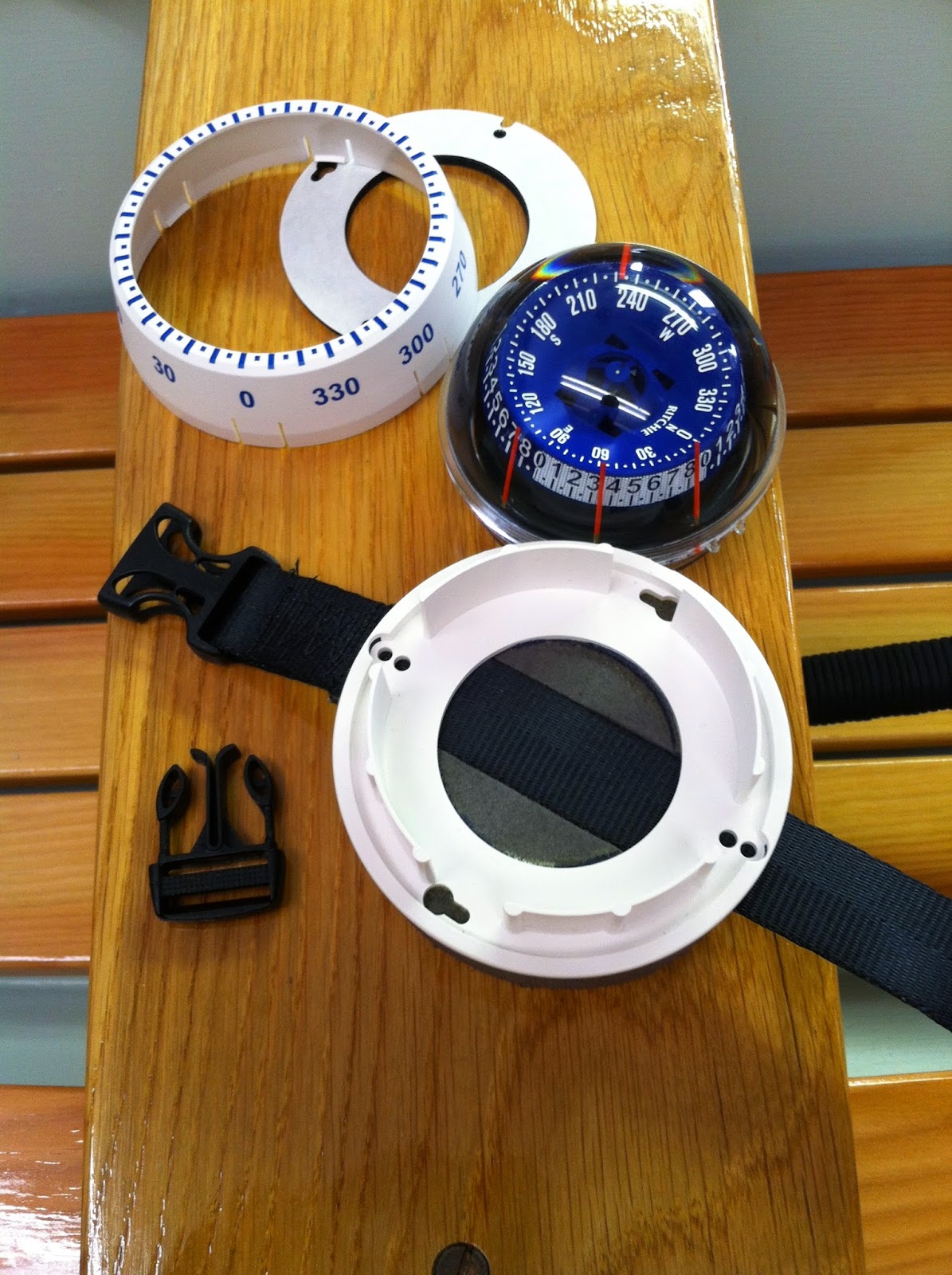
Wanting to be able to use the compass with my kayaks. It had to be removeable. Positioning the compass where it could be left in place and offer good viewing from port and starboard didn’t prove possible. Centered on the thwart is ideal for sailing, but not for rowing. I considered mounting the bezel on a thin board held down with wing nuts or dogs. That proved too elaborate. A simpler and I believe more satisfactory answer was to trace the compass base on mini cell foam, cut out a puck using my small band saw ( I finally found a suitable use for it) and contact cement the foam to the base. A small 1″ wide channel was let into the foam for a tubular strap to pass through. Plastic buckles hold the works in place.
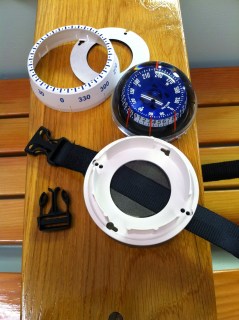
Pieces. Bezel detaches.

Puck glued in place.

Strapped under thwart. Very secure.

Once strapped down the mini cell grips the thwart. While not rigid, the whole rig sits tight and is relatively fixed. I’m looking forward to an in-the-water test.

Now it seems like forever ago, but about a month ago I did truck Una south to sail on the Lafayette River where I grew up in Norfolk, VA. With light 3-5 kt winds, she ghosted along one evening. What better way is there to enjoy a Friday night? Wonderful memories evoked countless nights of sailing as a teenager. Add to that, my father joined us for a sail back down the river that Sunday. Una gains looks and comments everywhere she goes. What a joy this boat has been and we’re just getting started! I can’t wait to get her back out soon. I’ve yet to sail in anything more than maybe 8 kts.
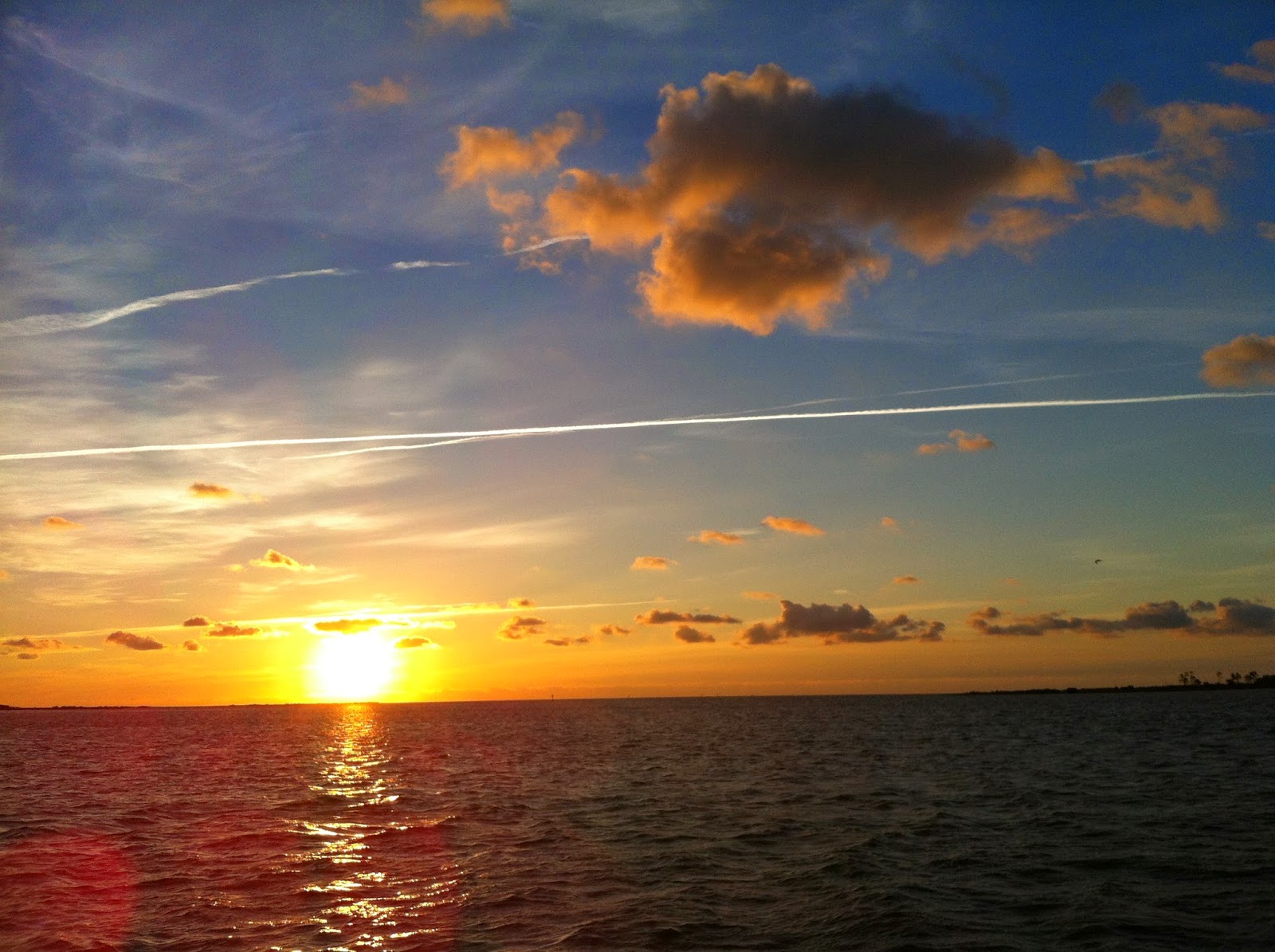
Sunset colors. Barely a breath.

Ghosting toward Granby Street Bridge.
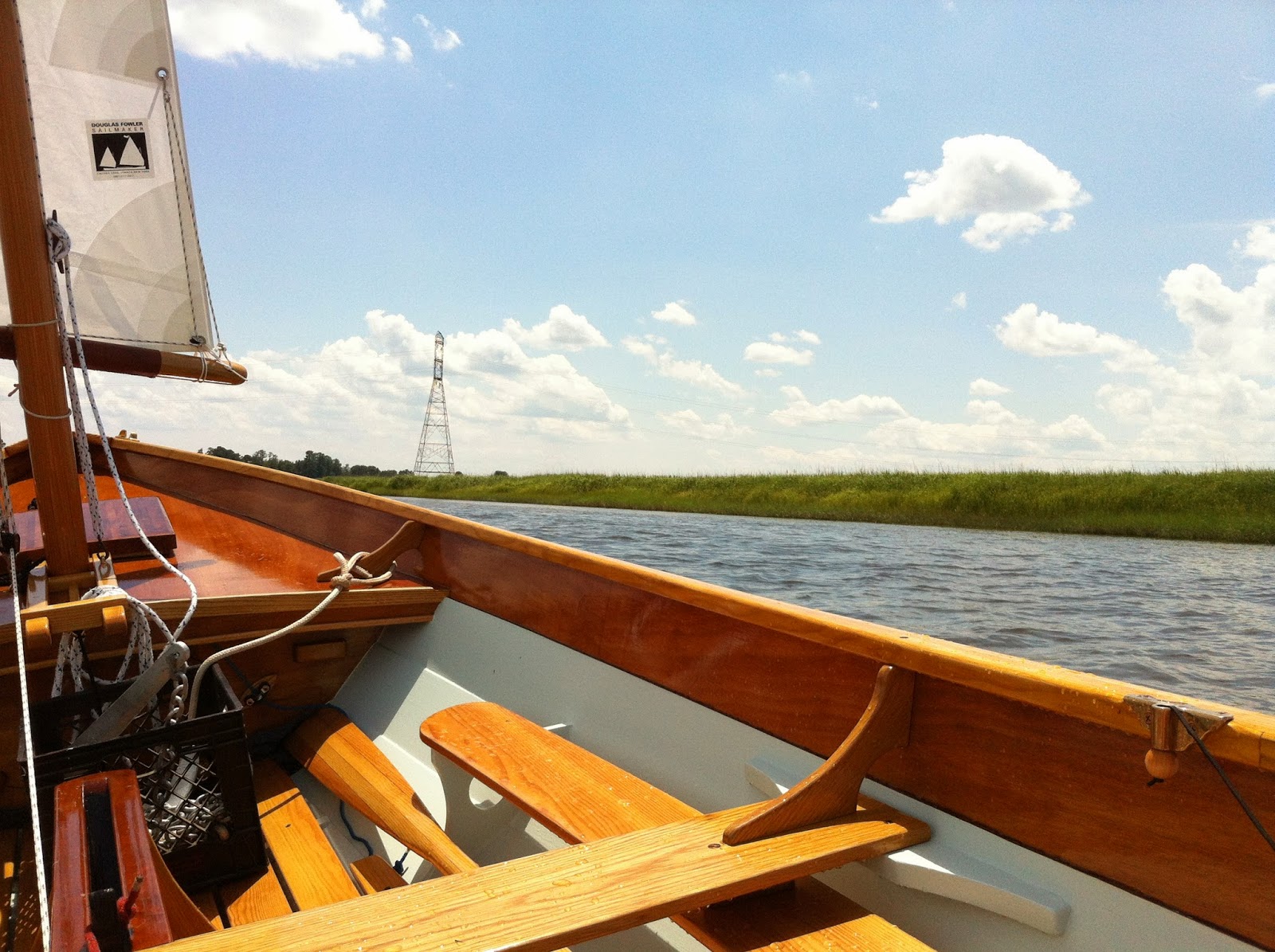
Otherwise, I’ve been collecting gear for an upcoming overnighter. This list includes everything from food knives, tools, line and lights. Add to that list is an awning/tent I’ve designed and want to make. I had bought an old sewing machine last Fall thinking I’d build some sails, but I’m very glad I went with Doug Fowler’s craftsmanship. Very well cut and detailed. I highly recommend his work.
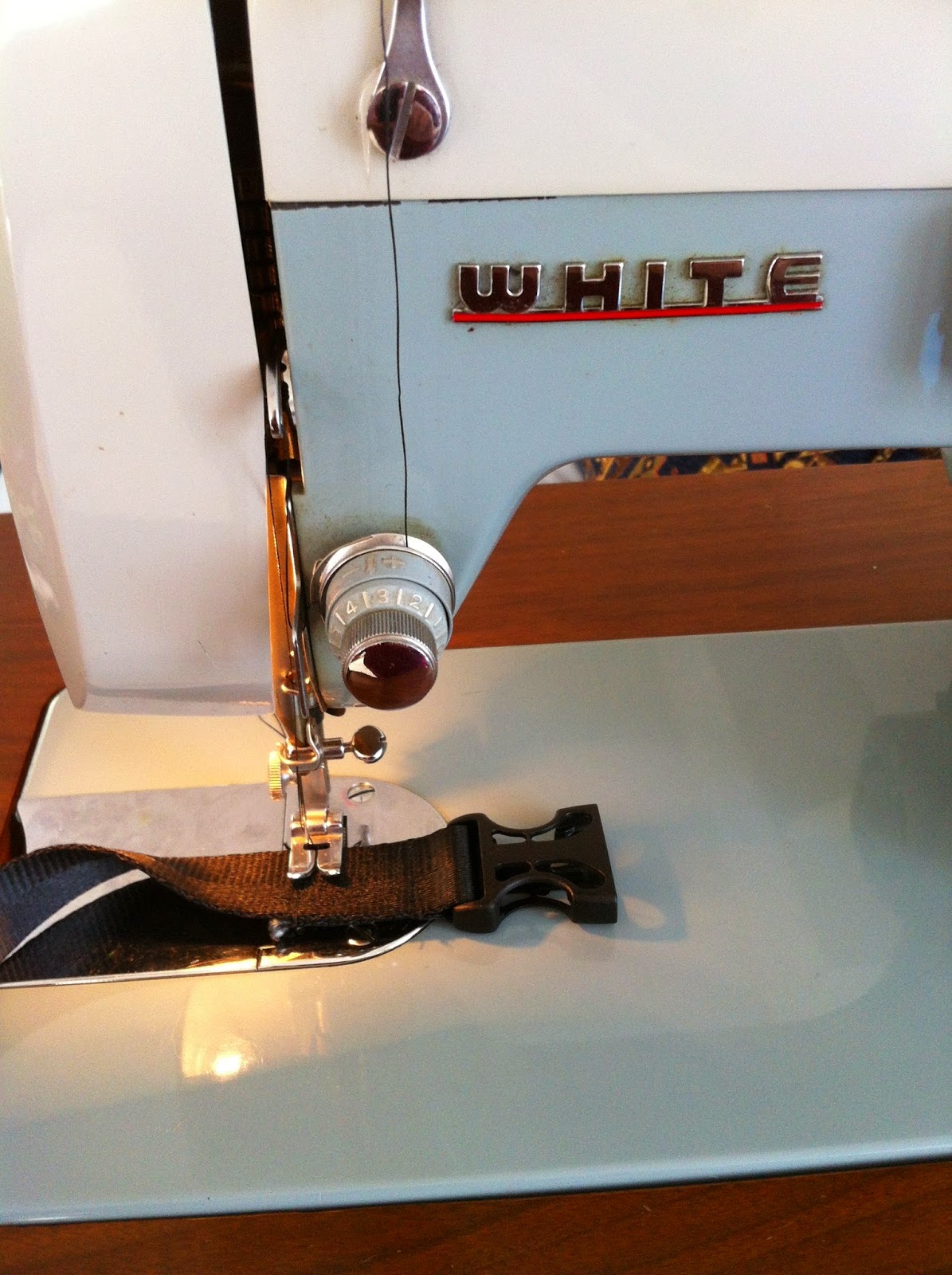
However, I still have the machine. It is a very well made “tank” and seems to bulldoze through sailcloth and denim without hesitation. It isn’t industrial, but built to last … a White model 2134 from the early ’60s I’m told. While I’ve tons to learn in its operation (it took me over 1.5 hours to understand how to thread the sucker), it made sewing the buckles on the compass strap was a breeze. I’ll tackle a ditty bag before the awning. In the meantime I’ve a couple light tents. I’ll throw one in the lazarette. Perhaps the tent fly will readily string between the masts. 
C’est tout.

A Dream Becomes A Delight

Approximately 560 man hours over a 10 month time frame ended this morning with a sail. And I didn’t miss any of the TV most people were watching.
What else can I say? Too much to tell, but a dream from boyhood and satisfaction from labor was realized on the Mattaponi River at West Point, VA. How can I report on this maiden voyage? There is so much to tell and then so much that simply can’t be relayed. Suffice it to say that Una floats like a feather, moves with grace, and slips along on a breath of air. She is, quite simply, a delight.

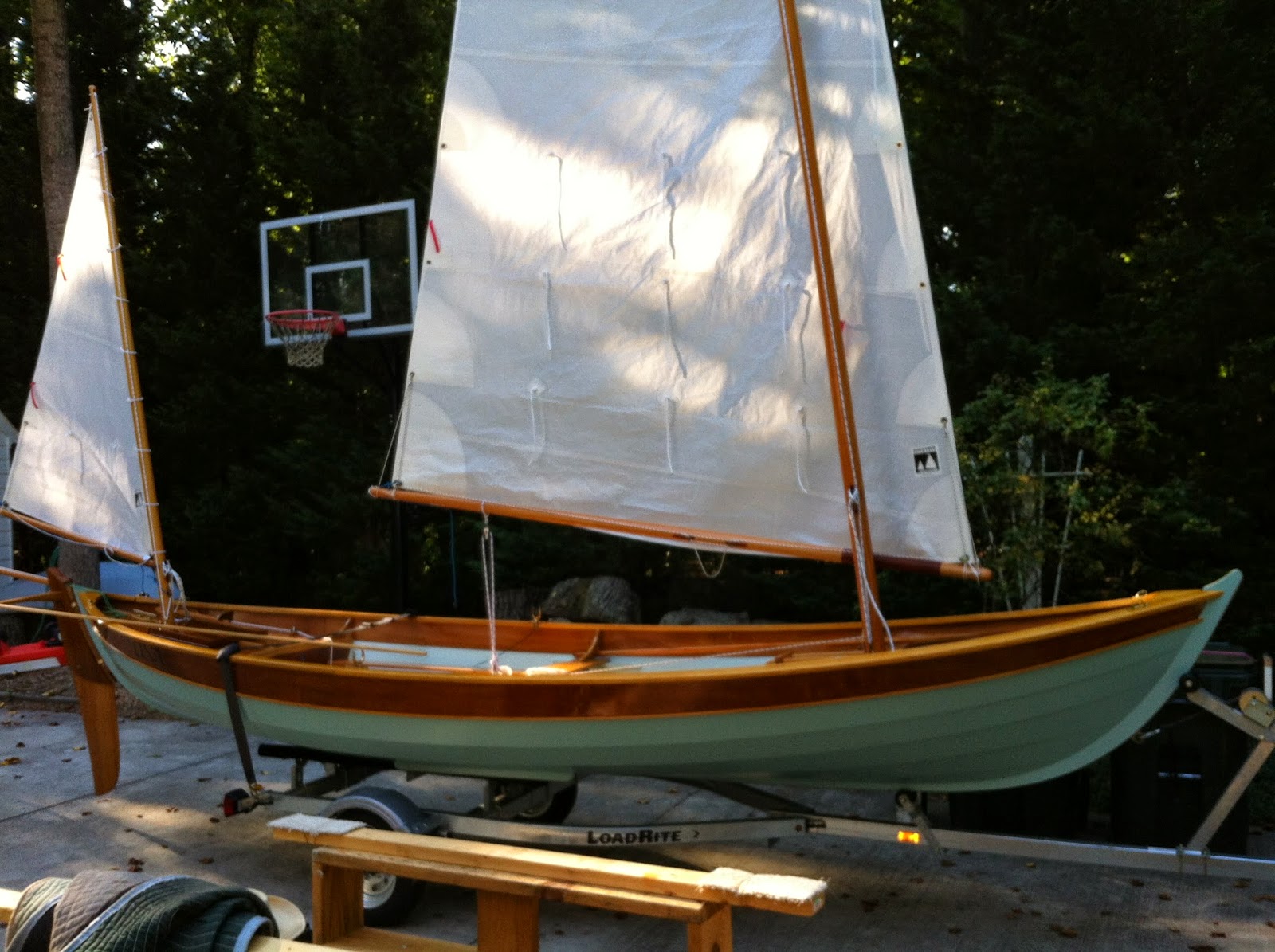
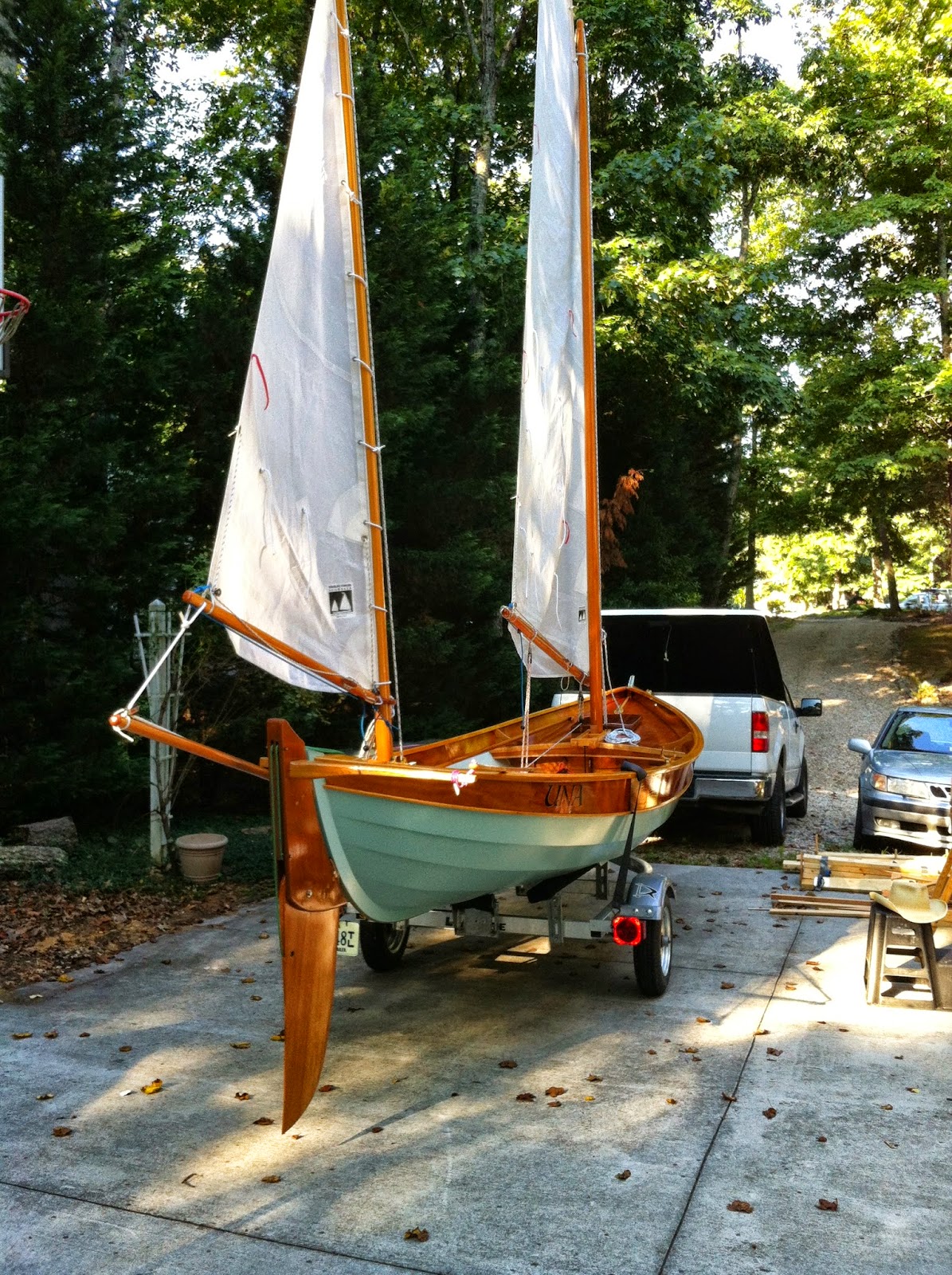
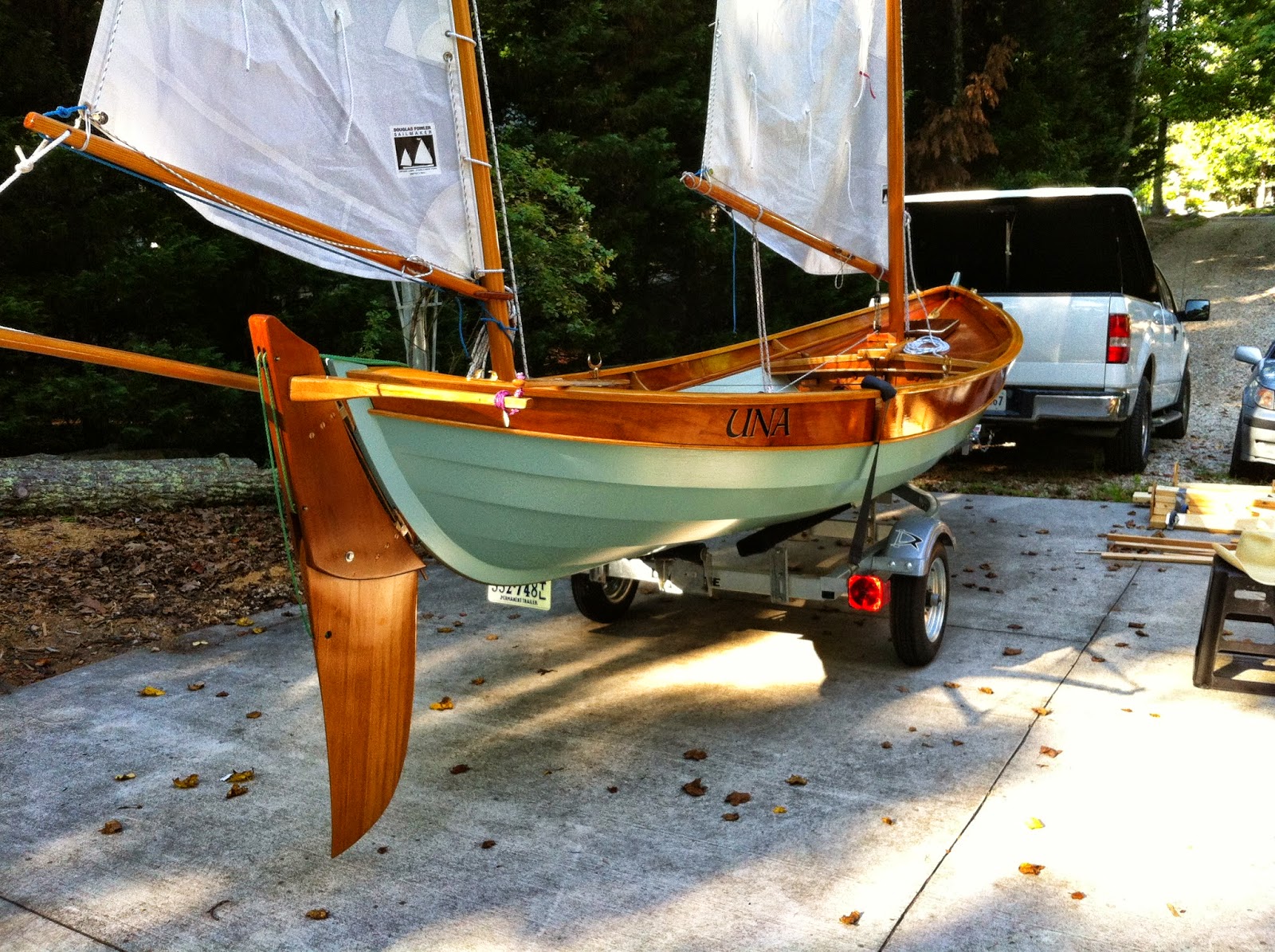
Iain Oughtred designed a superb little vessel. I took the better part of the morning rigging Una to confirm I had all the pieces. I dreamt I left the mast last night. Almost left the mizzen. Here are the beauty shots before travels, before I wacked her with the anchor after telling myself I couldn’t, and before she rubbed a pier. Now she is seasoned and ready for adventures.

Rigged for confirmation.


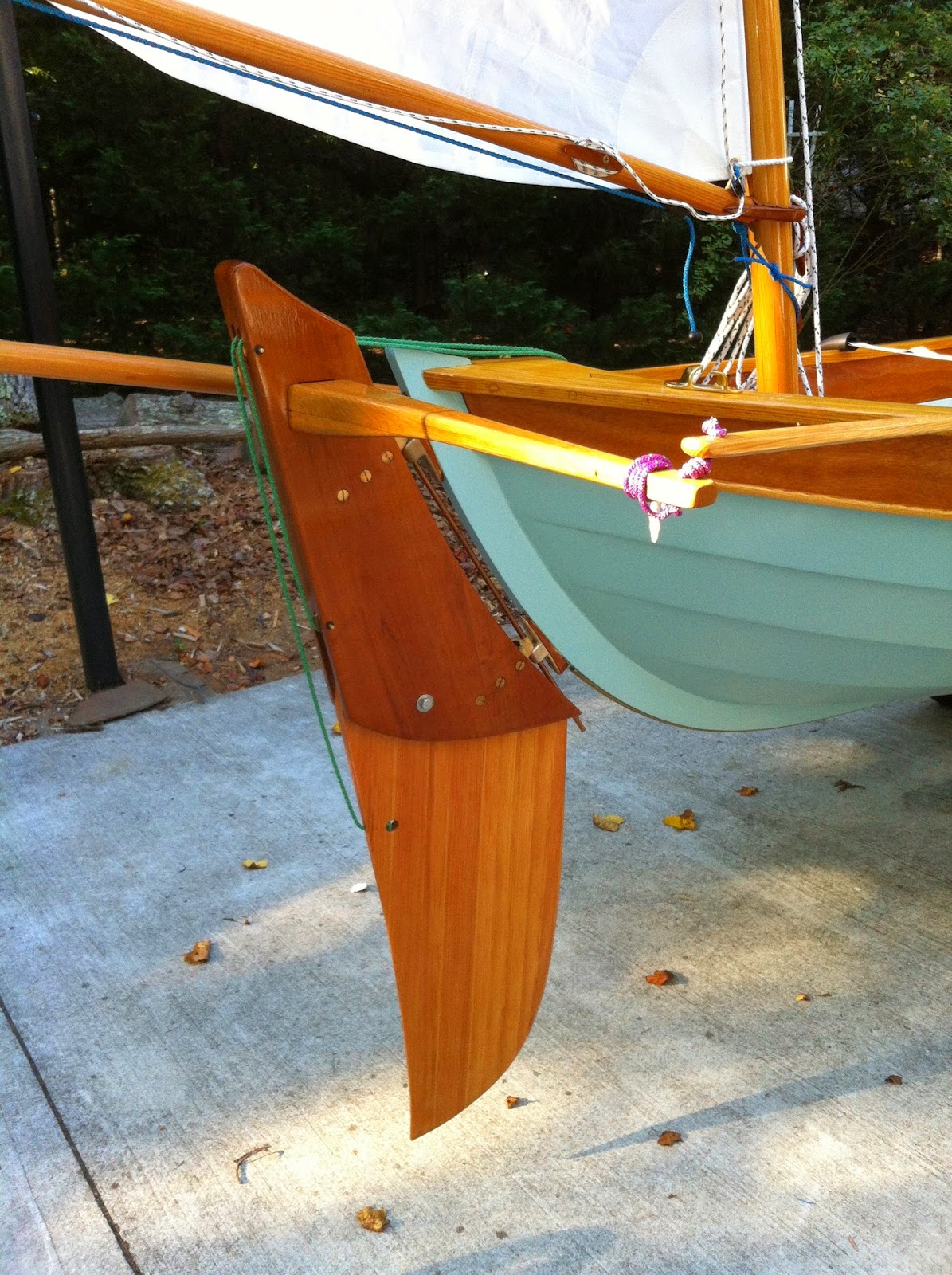
Rudder sheave pins still to be finalized.


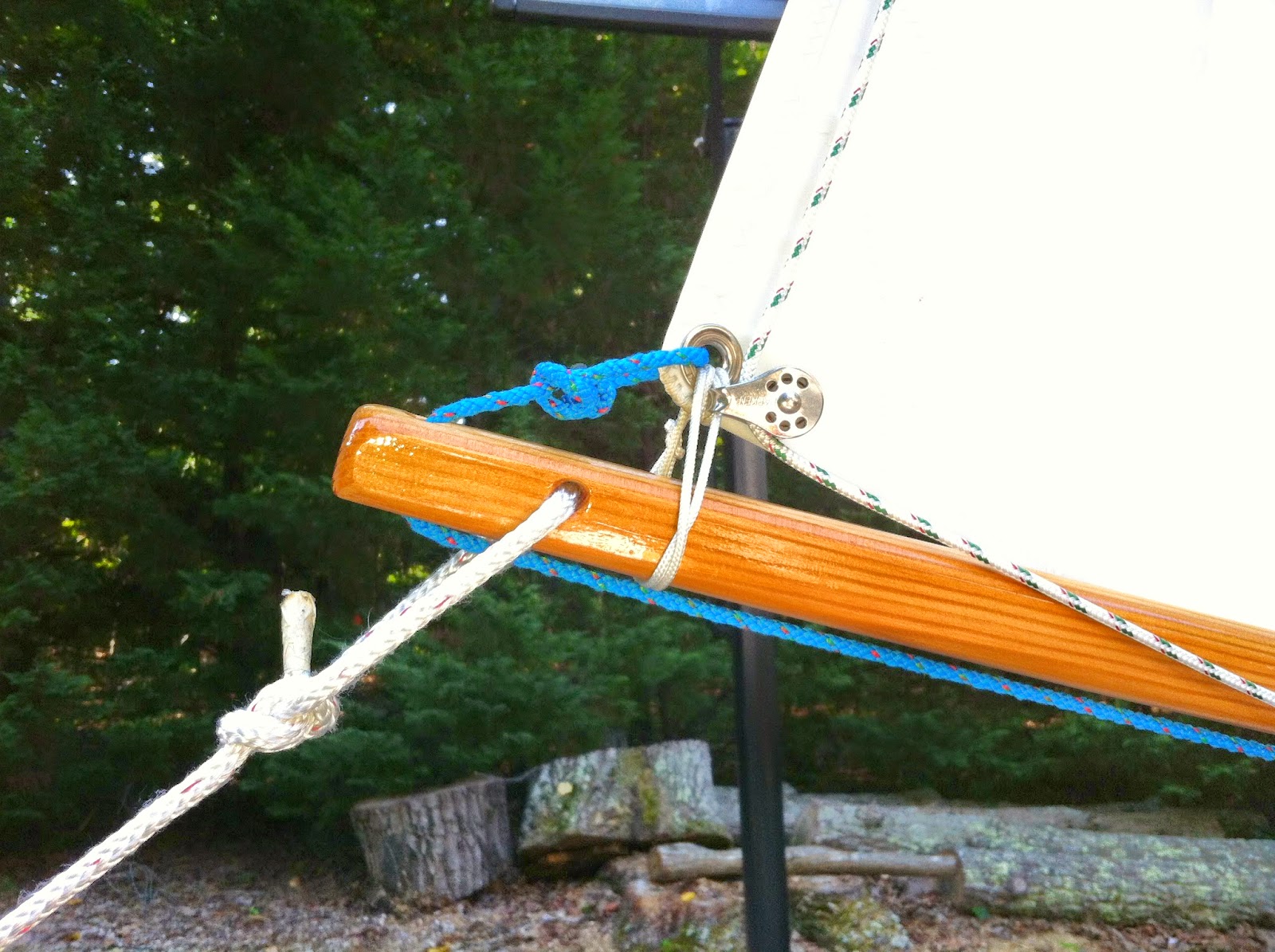
Mizzen boom at clew.


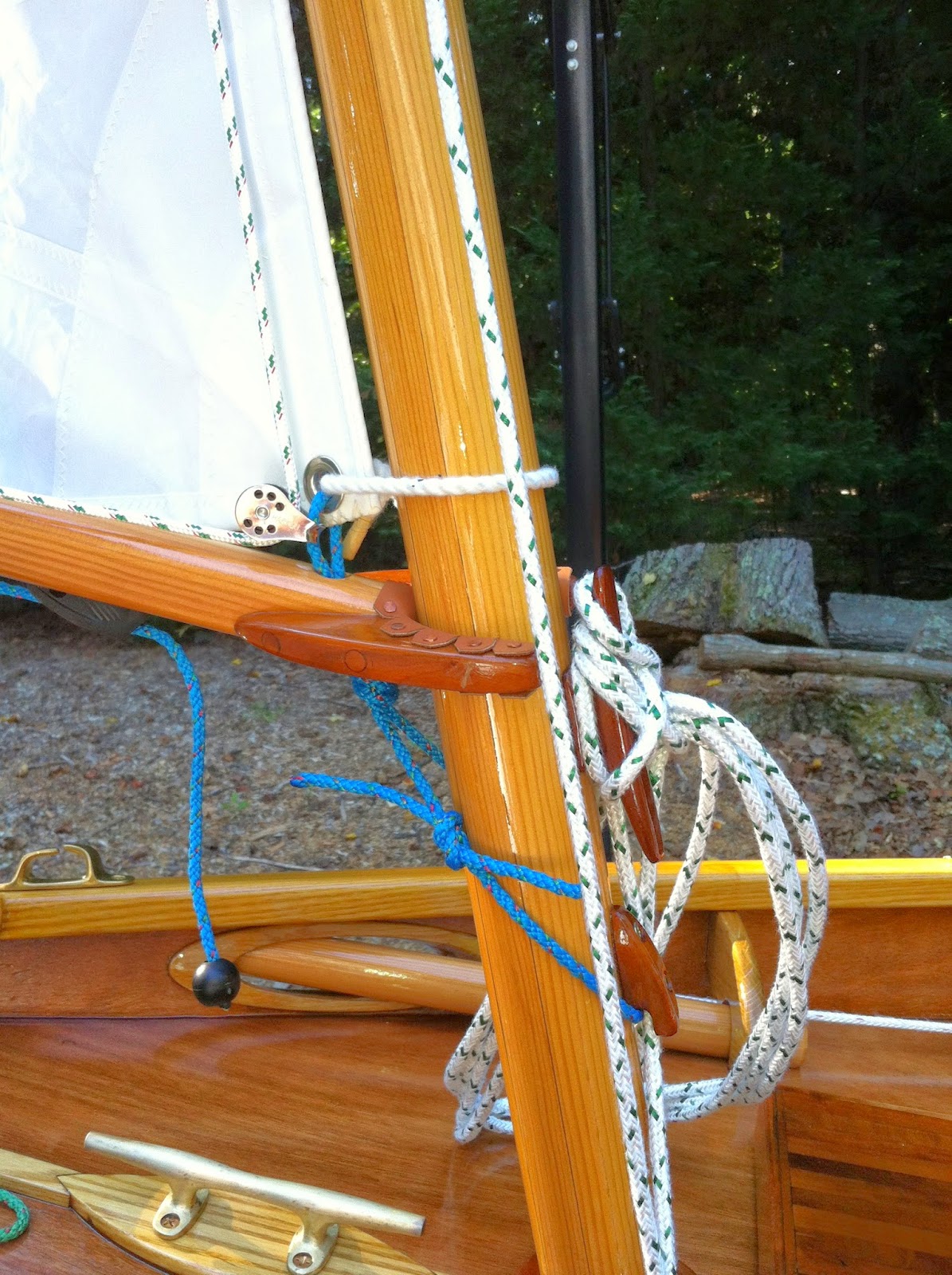
Mizzen at tack/goose neck.


Downhaul


Ready to roll.

The trip to West Point was uneventful. I didn’t notice the trailer was following though I stopped twice on the interstate shoulder to satisfy myself that all was AOK.

At the ramp, the traffic was constant with boats coming and going. Re-rigging took maybe 20 minutes. I had to back the trailer until the brake lights were submerged. We’ll see how long they last. On Off Center Harbor Geeoff Kerr has his lights on a 2x strapped on top of the boat. That is more visible from the rear and keeps the lights out of the water. We’ll wait on that alteration.
So, I rowed out into the river, set the anchor (16# Bruce with 10′ chain), and raised the mizzen, sheeted it hard, and then raised the main. All was simple and worked like a charm until I worked the shear while raising the anchor. Now the boat is christened.
There wasn’t much wind. Hardly any most of the time, but puffs came and went to experience th boat’s potential. Since the main extends only 2/3 of the way aft in the cockpit you can stand up with the push stick and slide along. The stick was counter intuitive after years of dinghy sailing, but by the end of the sail it was almost second nature (until I swapped hands, but that will come too).
I’ve a laundry list of “improvements” for Una. Some are finicky. Others are necessary and known, but not deciphered until she hit the water. Perhaps I’ll elaborate at a later time … or not. I expect to be sailing a lot over the next few months into the Fall. What a boat! I’ll leave you with a few pics from the water. Adios-


What’s In A Name?


Boats can be very personal things. Some, of course, are utilitarian vehicles. A jon boat may perform with or without identity. (I do wonder if it might receive better care and attention if given a name.) Other boats are very much vessels for dreams and adventures. These become part of your life. Why else for eons have sailors referred to ships as “she”? 

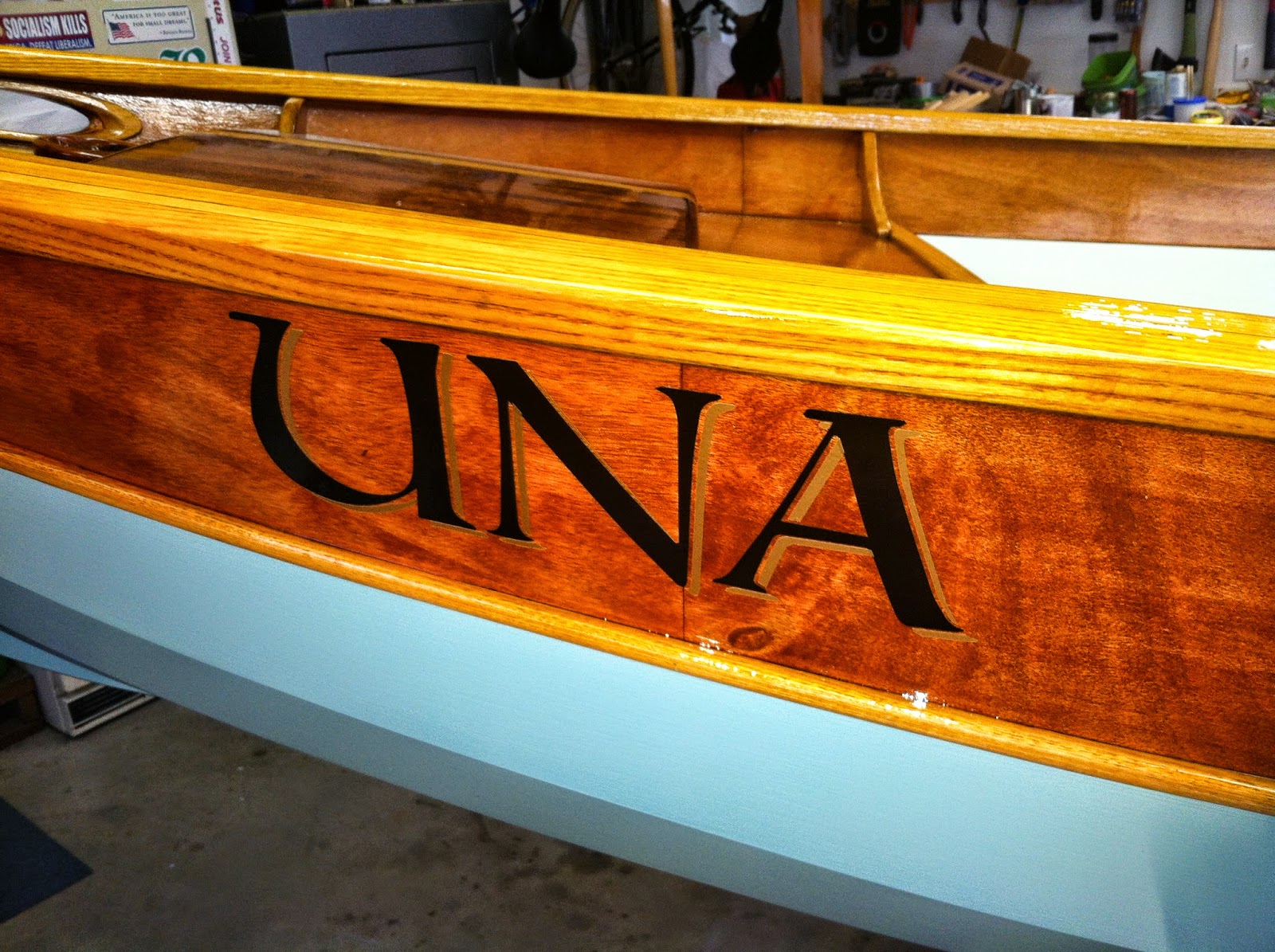
So, after almost 11 months invested in this bateau, how can “she” go without a name? I half thought about reusing my recently sold Moth boat’s “Chica,” a short, cute, affectionate, and unassuming appellation for a sweet little boat. However, Chica was her own “person” and to reuse the name would betray memories with her. She was a lovely boat and part of her does in a sense live in this new boat. 

A pretty boat deserves a pretty name. Oughtred’s design has classic lines derived across centuries. Its ancestors sailed in waters from Norway to Denmark, Scotland to Ireland. This heritage prompted me to look for a Gaelic name. A simple name. A pretty name.

I began with “Oonagh” which is Scottish, Irish, or Gaelic. The spelling did not appear pretty and I was certain some would pronounce it “Oonagg”, not so lovely. Instead, I settled on the Latin variant, “Una” meaning “one, pure, holy”. Other meanings imply “unity and truth”. The Gaelic meaning even implies “hunger”. These deeper meanings may saddle the boat with too much. Of course people have to know them. I prefer the broader and more general meanings. 

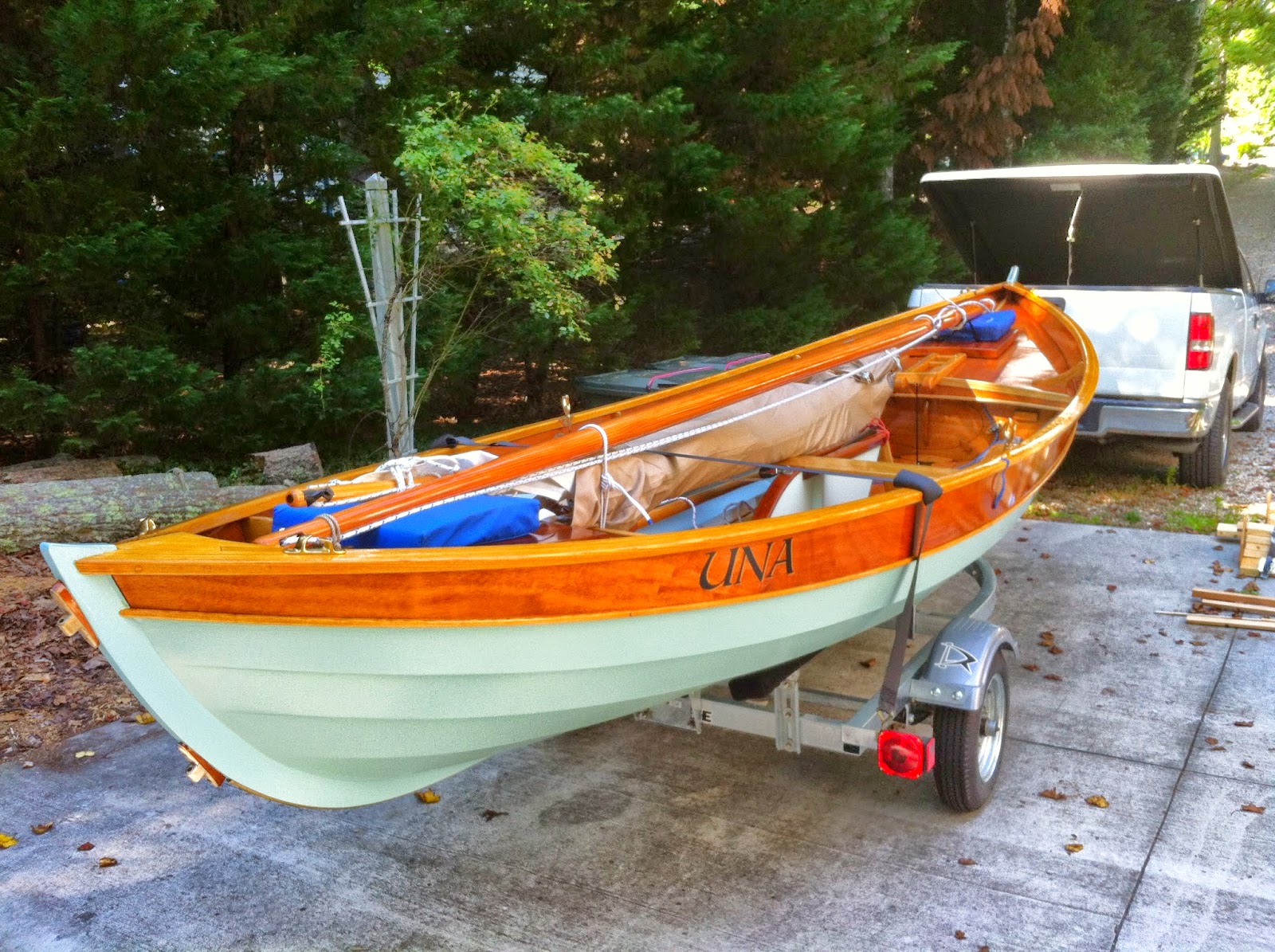
Now I have a simple, pretty, and feminine boat. She’s very near completion. On the eve of her maiden, I give you …


Little remains to be done: One last trip to the hardware store remains for some stainless screws, the trailer has been fitted, and the interior parts are installed. We’re going sailing this week.

    
Bow shot.


Stern quarter.
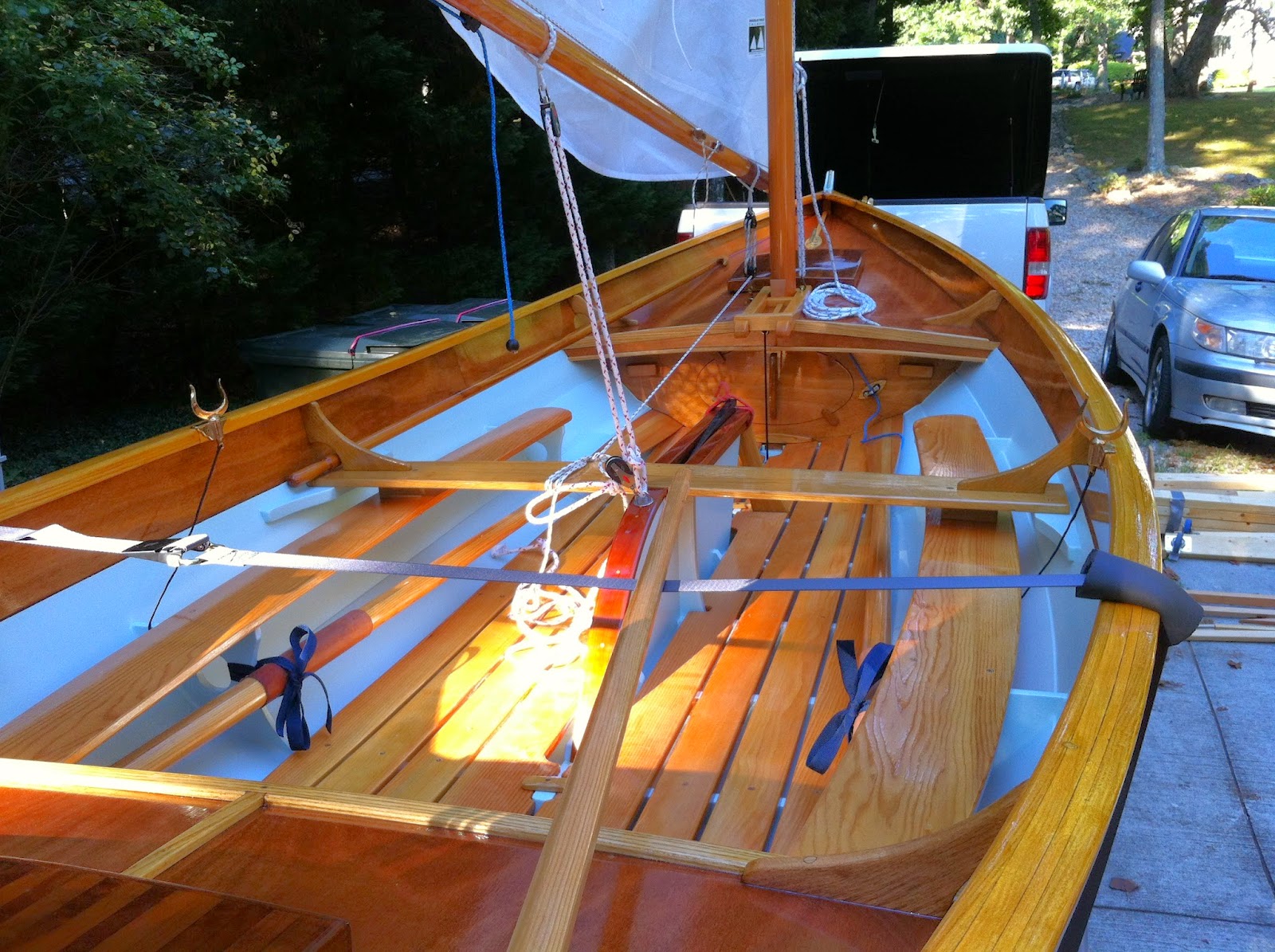
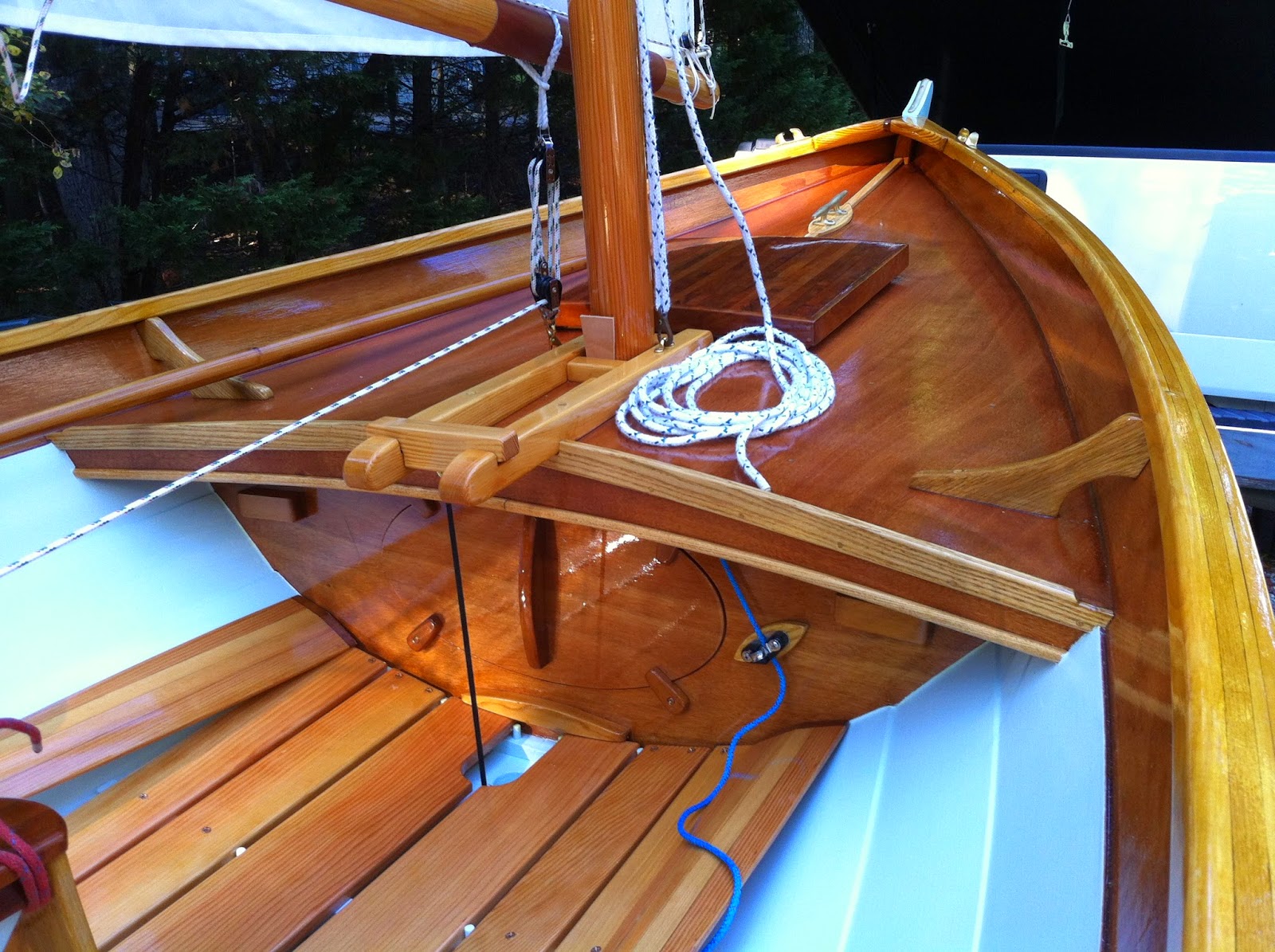
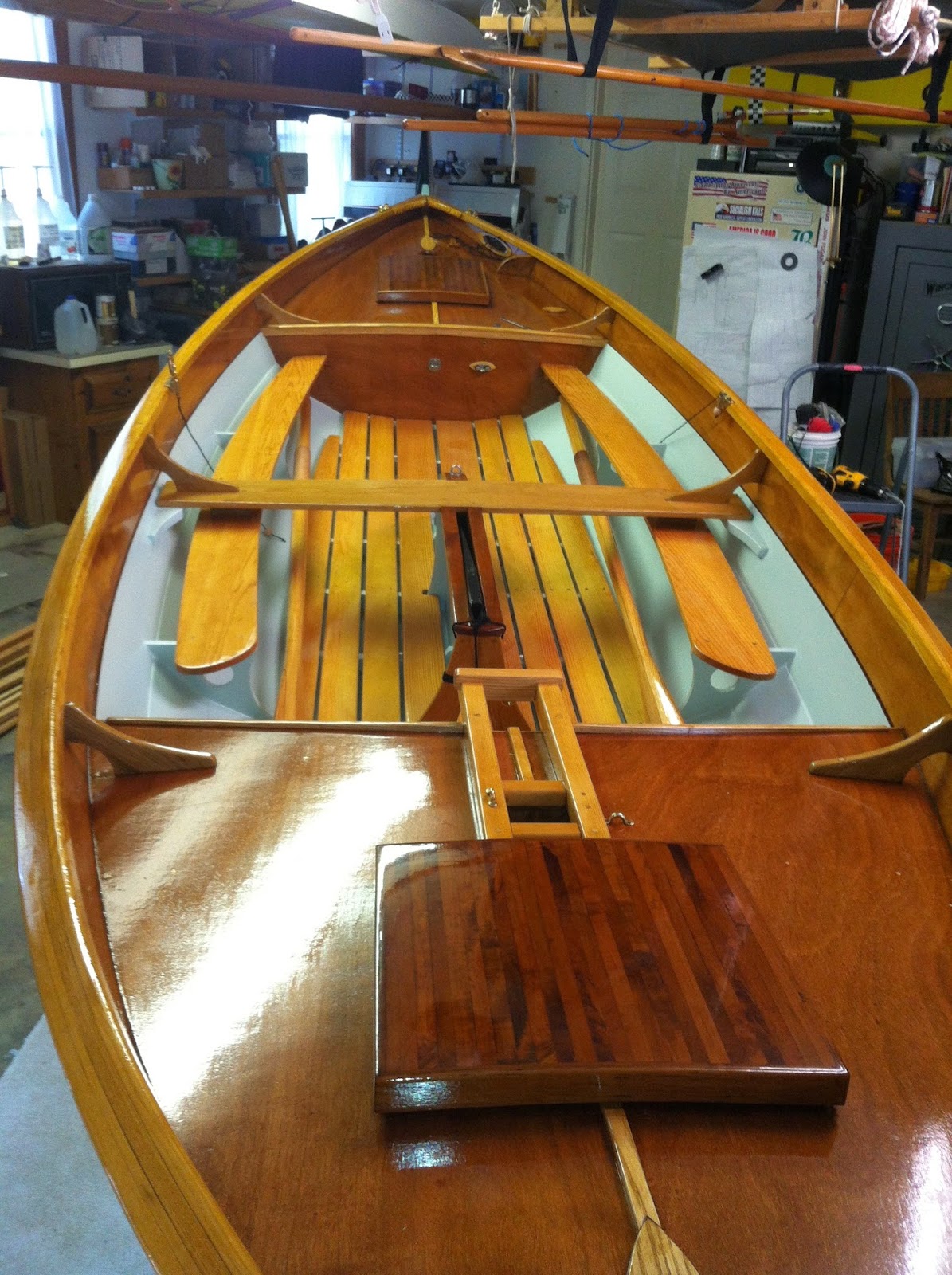
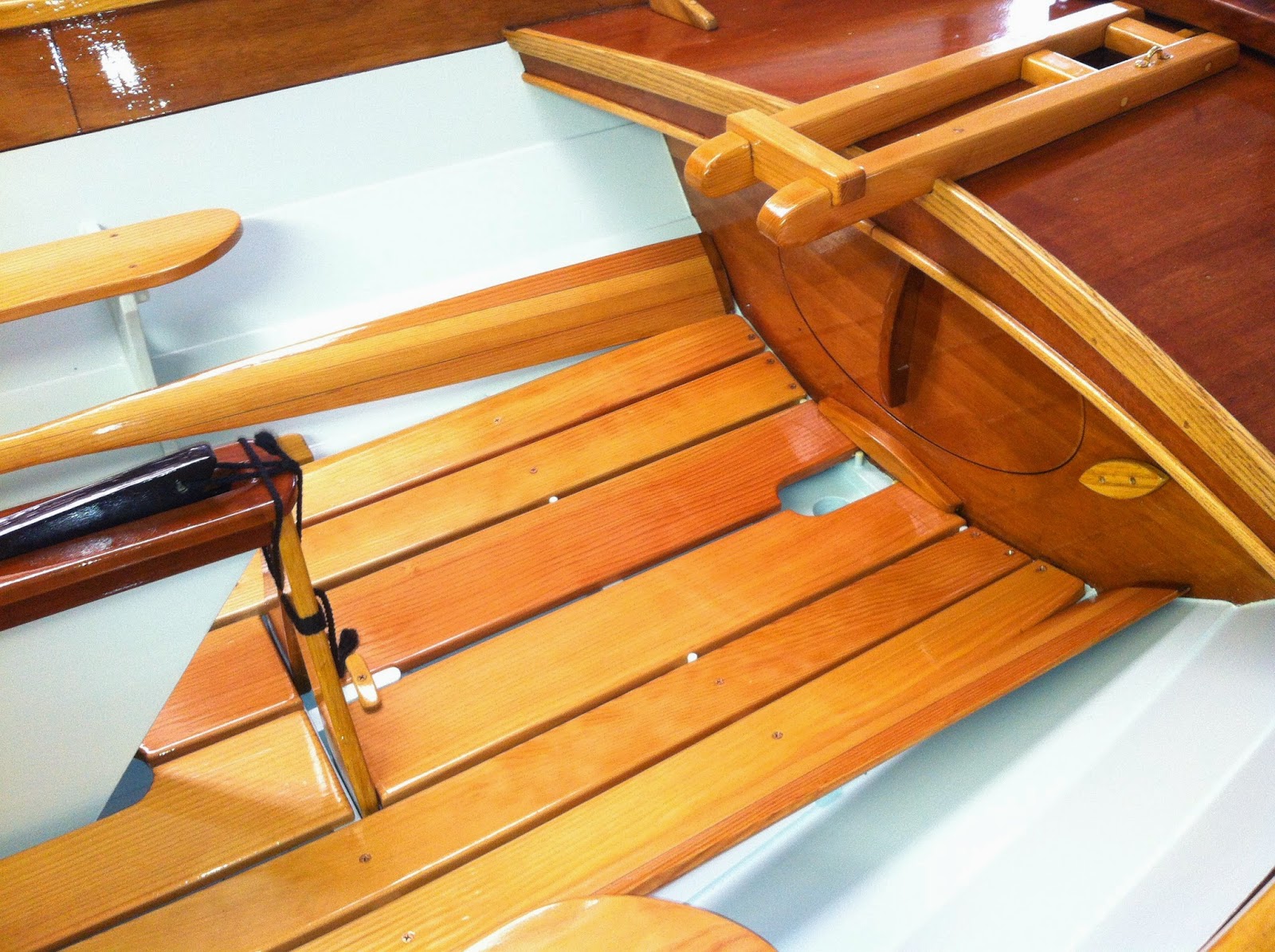
Forward bulkhead and nestled oars blades.

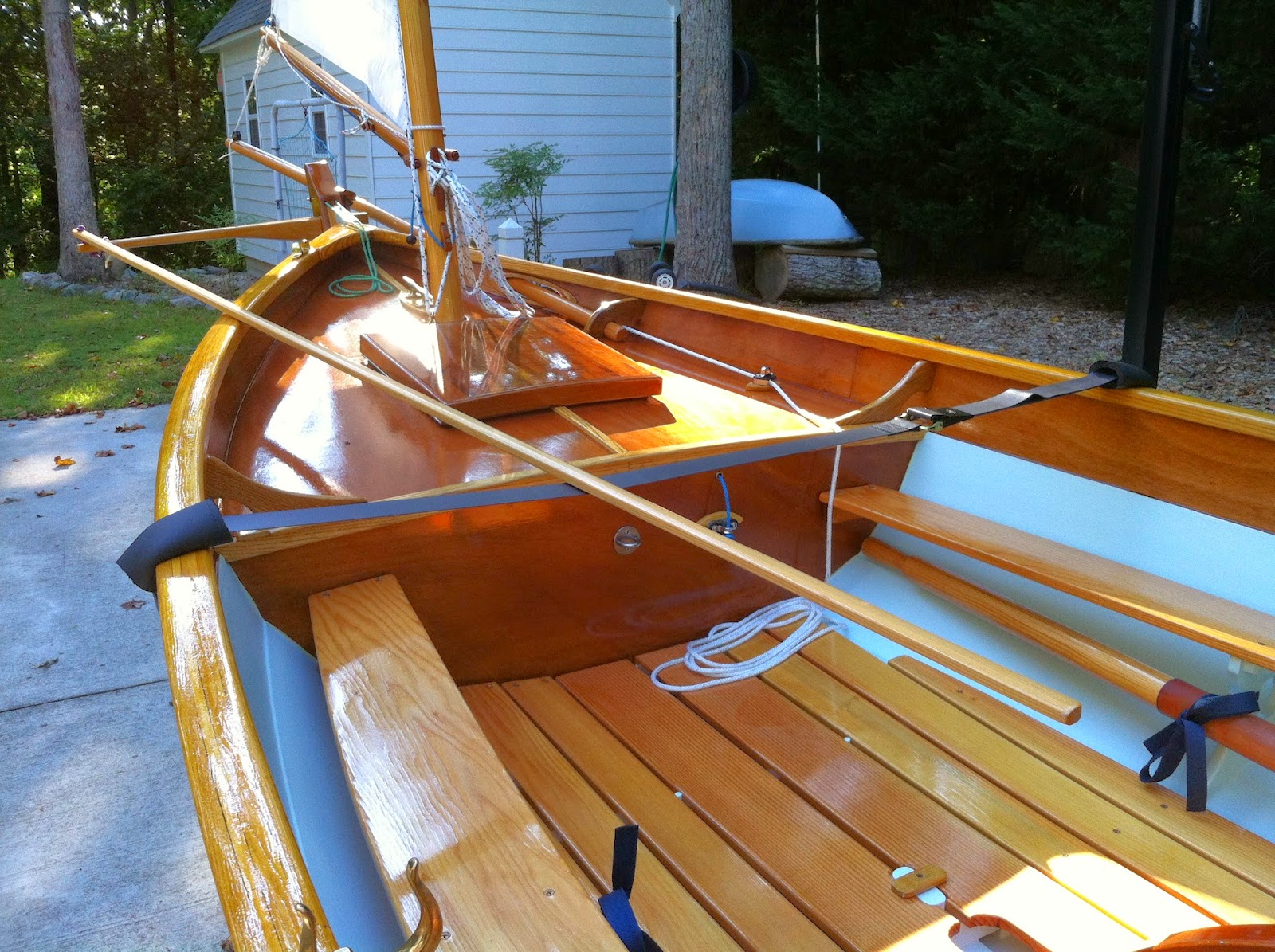
Not the oarlock detail. Not wanting to lose them overboard or have them rattle while hanging on chains against the hull, I yanked the core out of some paracord and put on a wood bead as a stop. The cord is sewn on the oarlock and is just long enough to allow the oarlock to rest on the seat brace. We’ll see how it works. Another option is to place a leather pocket or strap under the seat edge.

Brass Bling and Splicing

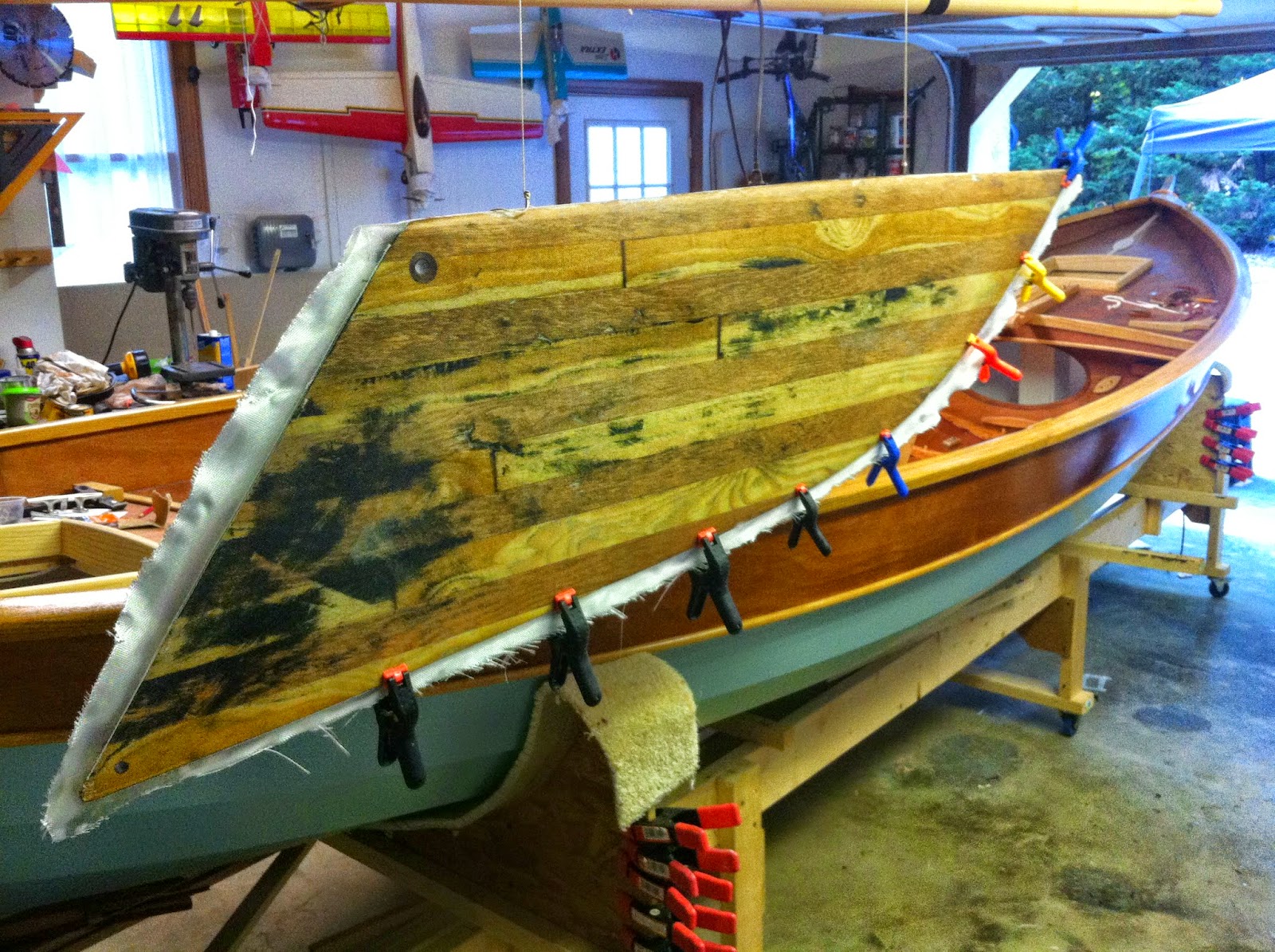
Got the crew in the driveway the other morning to flip the hull. Devising a mattress of old tires and moving quilts to roll the boat made me just nervous enough. Dropping the project at this stage would not be good.

Adding brass.

Mounting the brass really puts a finished look to the boat. It will be removed for one last (third) coat of paint. I may add some varnish on the interior as the chance of dust settling on the surface is reduced.

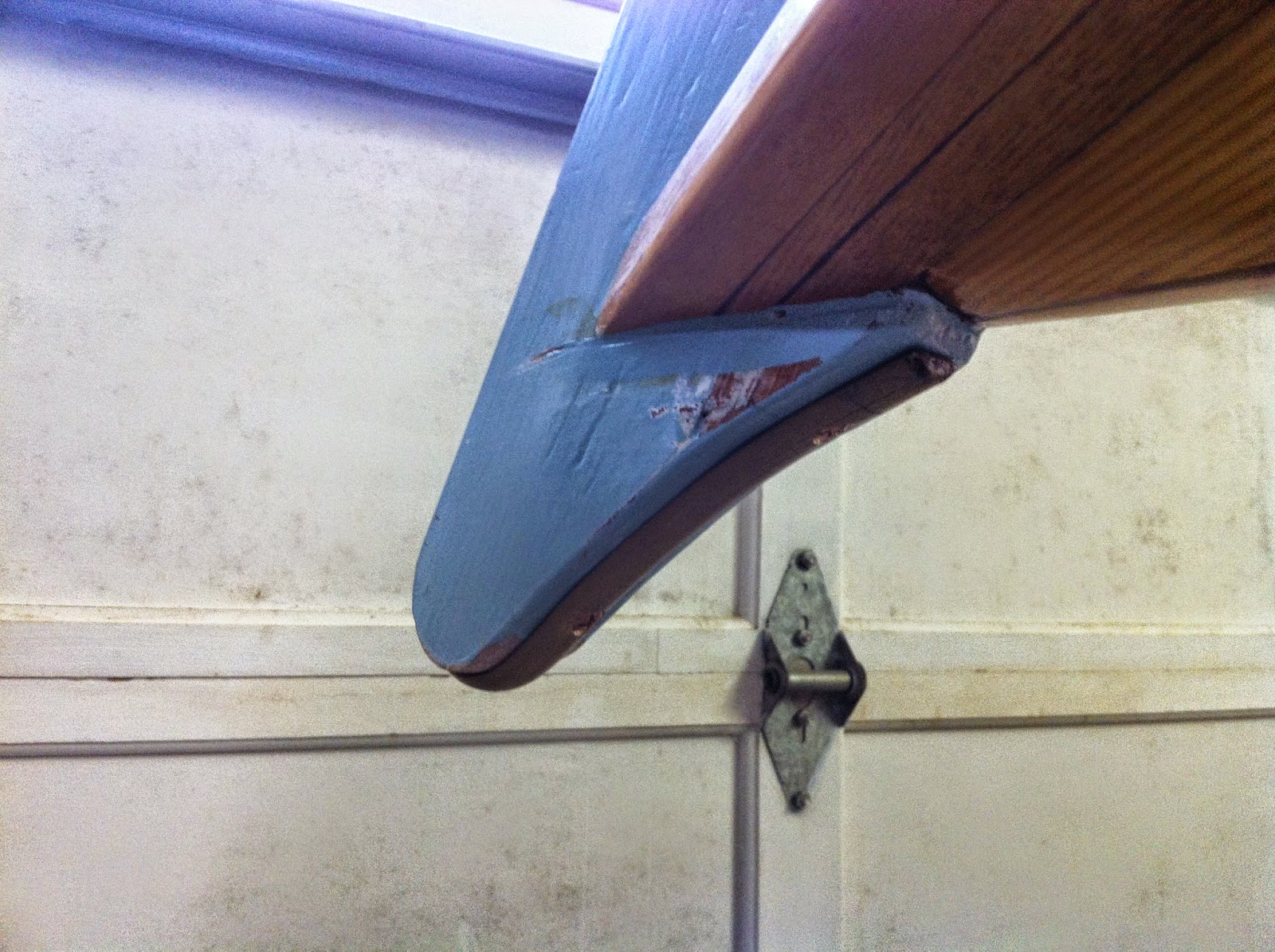
Bow stem bending.
Transom gudgeon.


End to be tapered.
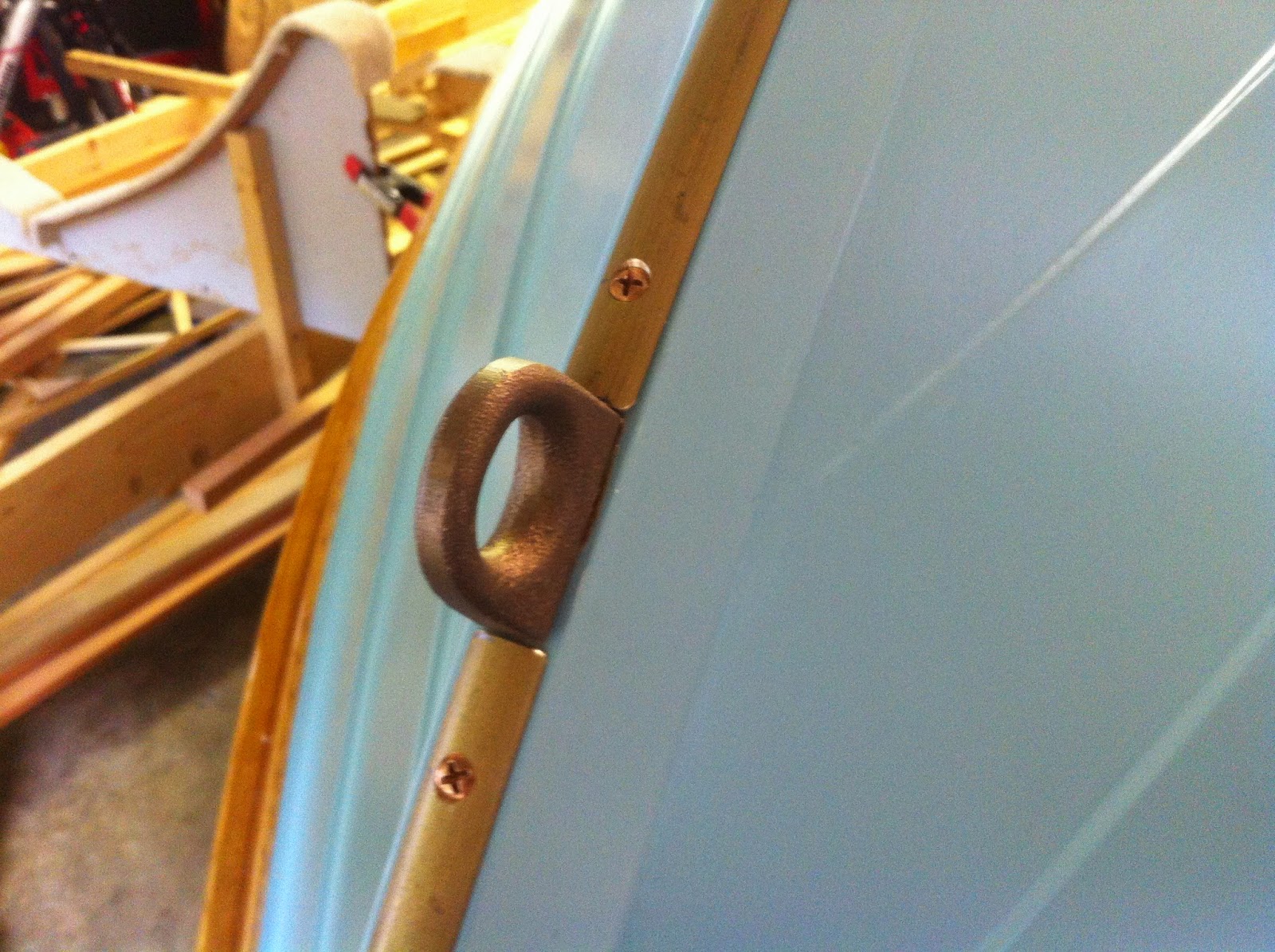
Bow eye.


Bow stem conformed.

Bends in the brass were achieved by brute force, a smooth faced hammer, a woodworker’s vice, and blocks of hardwood. There is simply many test fittings and a tad sanding on the stem to get a good fit. You must be careful not to bend on one of the screw holes. There the half oval will fold (Ah, experience).

I will file round and tapered the few ends that are exposed.

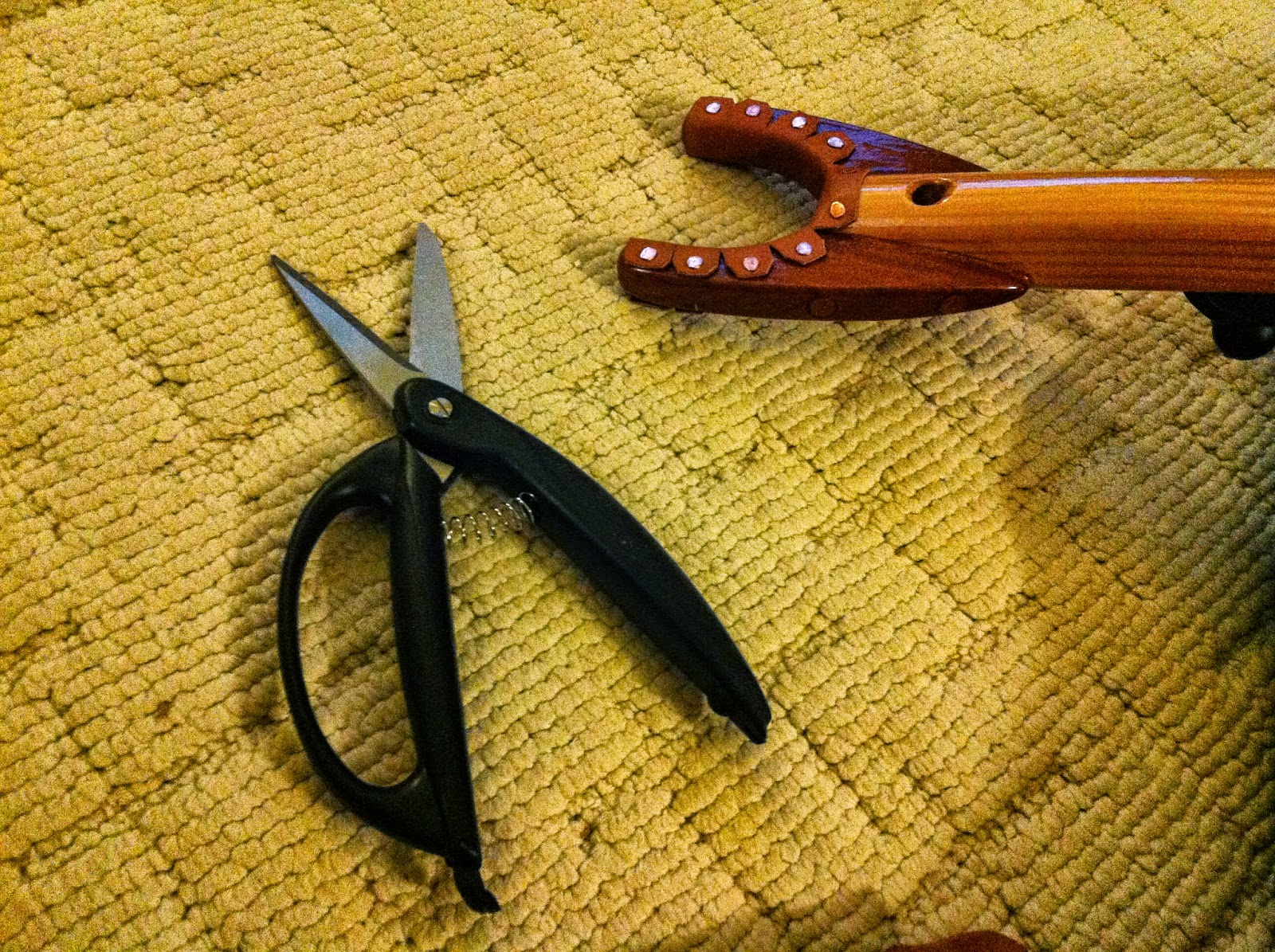
Got the mizzen boom jaw leathered. I could have stitched the protection on, but elected to use copper tacks.

Jaw leather.
Great scissors.

When I bought extra thick leather for the oars, I grabbed these super scissors. Cuts leather like paper. Always helps to have the right tool. I still wish for a bandsaw.

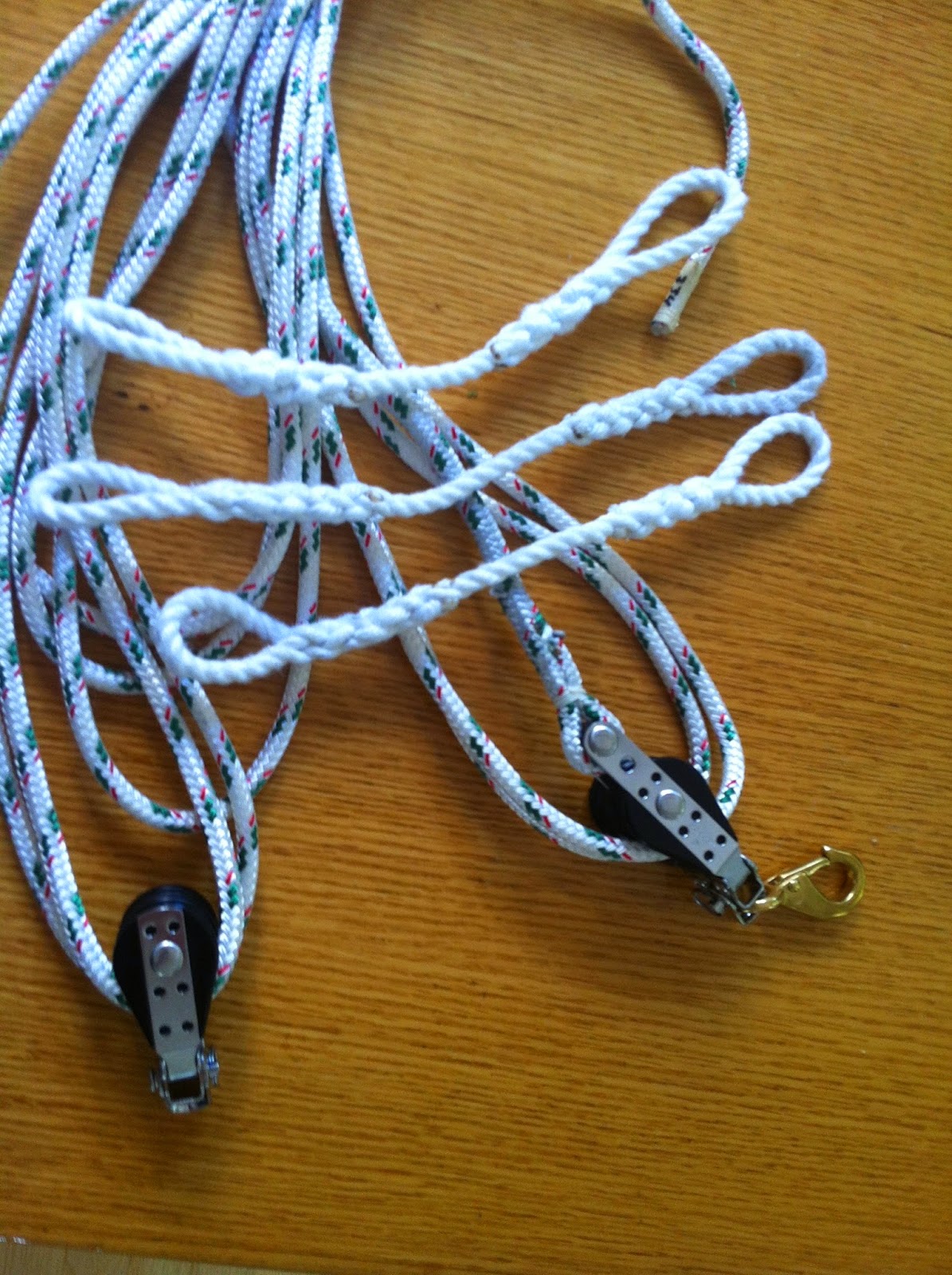
Lastly, did up a few splices: some 3 strand loops for boom and yard fittings, the double braid down haul, and anchor rode. Some are better than others. Later-


In a State of Varnish

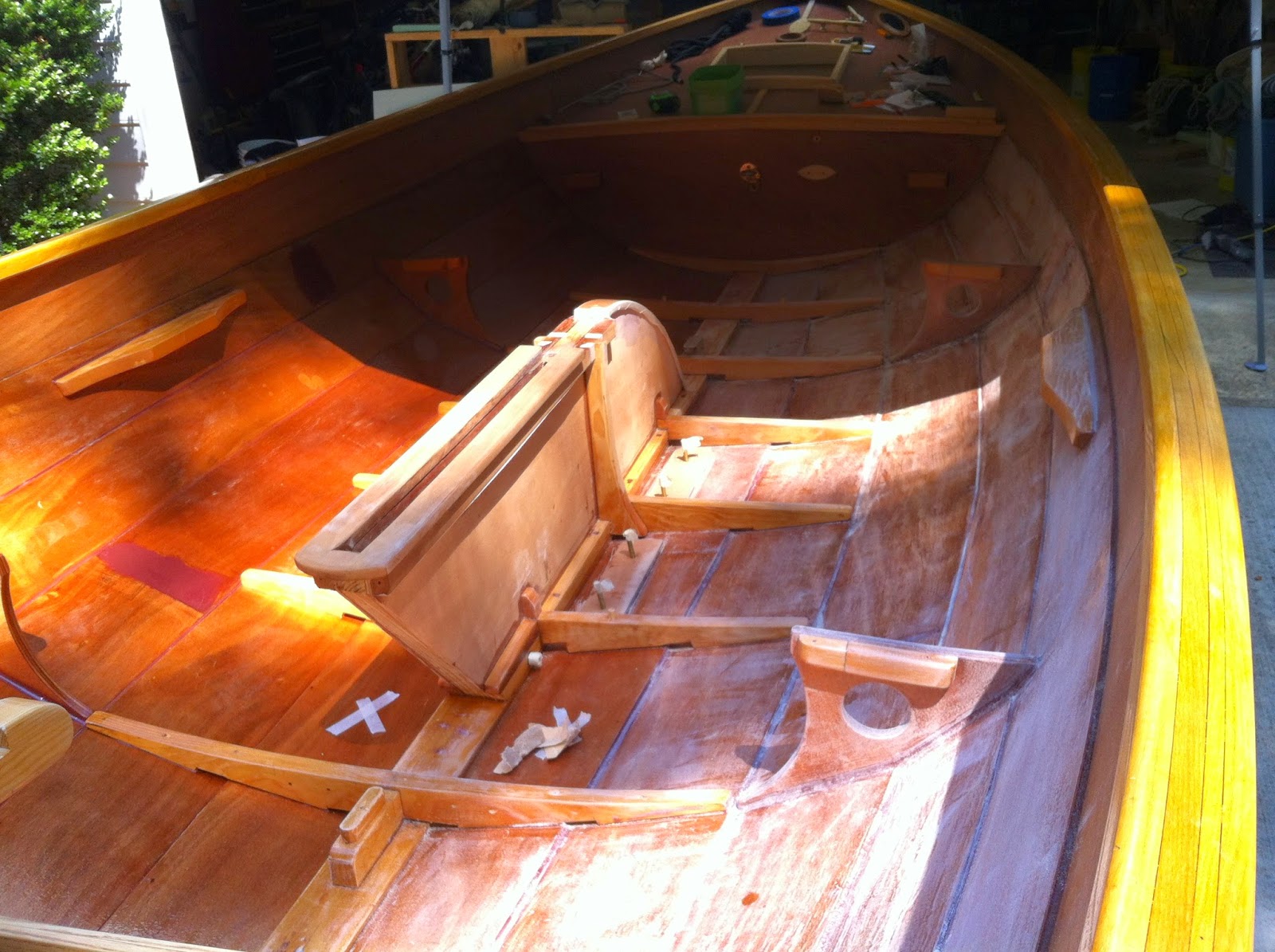
Now there are no more pieces to fabricate. The last 2 knees have been installed, bunged, and shellac coated for varnish (and, of course, more varnish). Such is the state of the build. Paint is looking better and better as an alternative, but the additional coats of varnish just make the boat glow more. I’m shooting for 4-5 on everything for this go-round. It will be a short season, but I do plan on a good shake down into the Fall. I’ve had no intention of making a piece of furniture, but the floor boards have looked good stacked in the living room.

I’ve decided that many details simply can’t be resolved properly until the boat is sailed. One example is the working of the mainsheet. I question whether a 2 part system is adequate, but several sister boats use such. Not having miles of line in the cockpit is good, but is it adequate purchase as the breeze pipes up? This could aid in prompting a reef. We’ll see. So, I haven’t decided on a second block on the center case or a cleat.

A pair of knees ganged for rough belt sanding.


Plug cutting ash for knees and gunwales.

At this point, I’ve no insight or techniques to offer. My patience is being tried with all the finishing really. I’m ready to sail her. We’re almost there. A few more coats and we can flip, paint the bottom once more and install the rub strakes. So close …

Boomkin supported by screws on manning bench for varnishing.


Long shot. Floor boards resting.

Tinting the white interior paint with the hull green works to kill the brightness. I would rather have floors with an oiled finish, but I don’t think douglas fir is that wood. The local cypress was of poor quality and teak too dear at the moment.

Oars.


Aft deck. Painted underside of hatch.

There you have it. Another coat on the spars and we can leather where appropriate. We’re getting there (maybe sooner than expected). Stay tuned!

Small Triumphs

I met with some success this weekend.

1st: After attacking the warped centerboard with the heat gun and scraper, the board seemed to relax and straightened a bit. Some judicious clamping over a board and pouring boiling water on the concave side helped further. Finally, I set an old boat battery on the board while suspended at either end overnight. This action and drying brought it all back into alignment. With some sanding and glassing on both sides simultaneously, we are back on track.

Ugly, but corrected and straight.

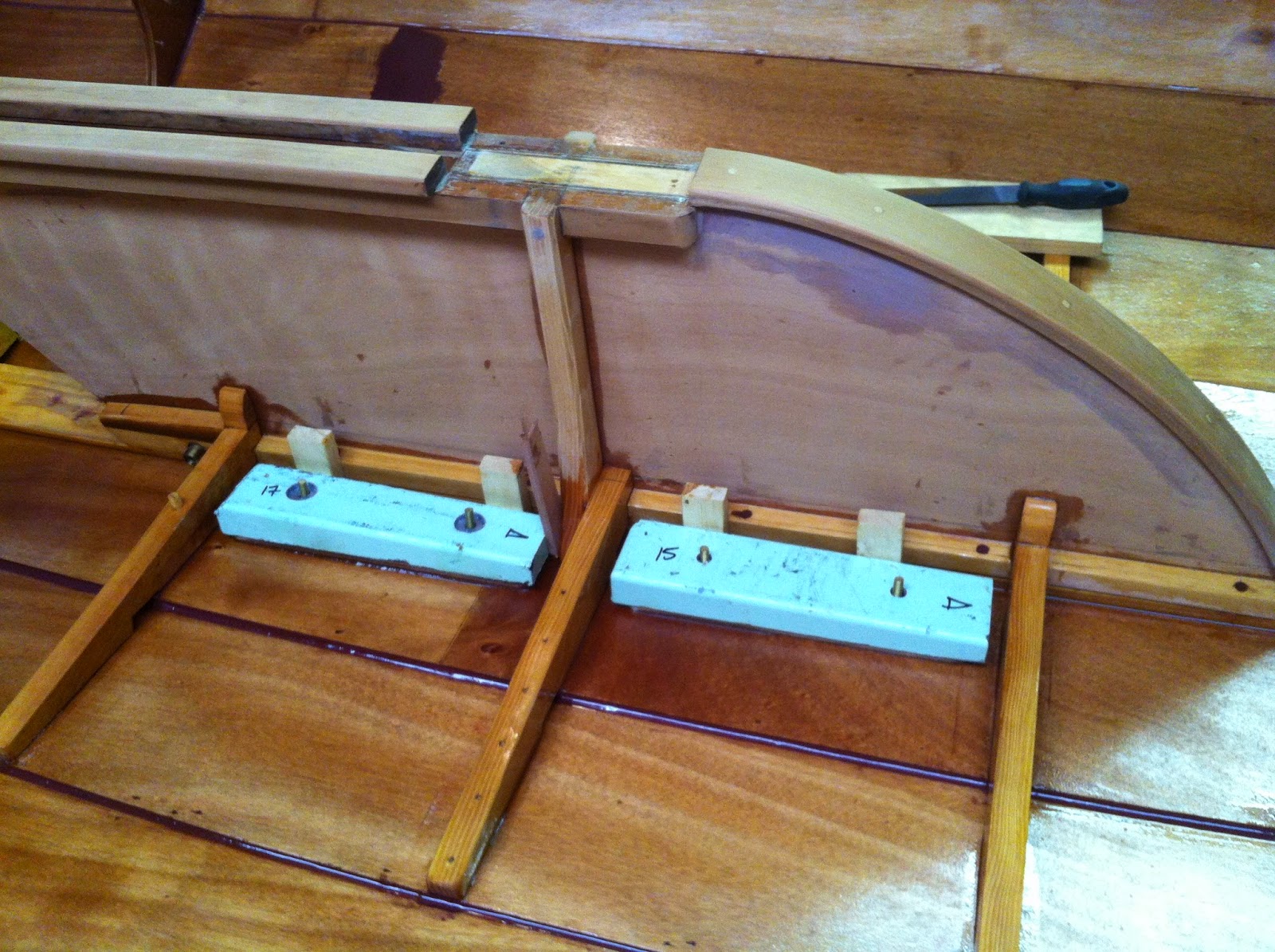
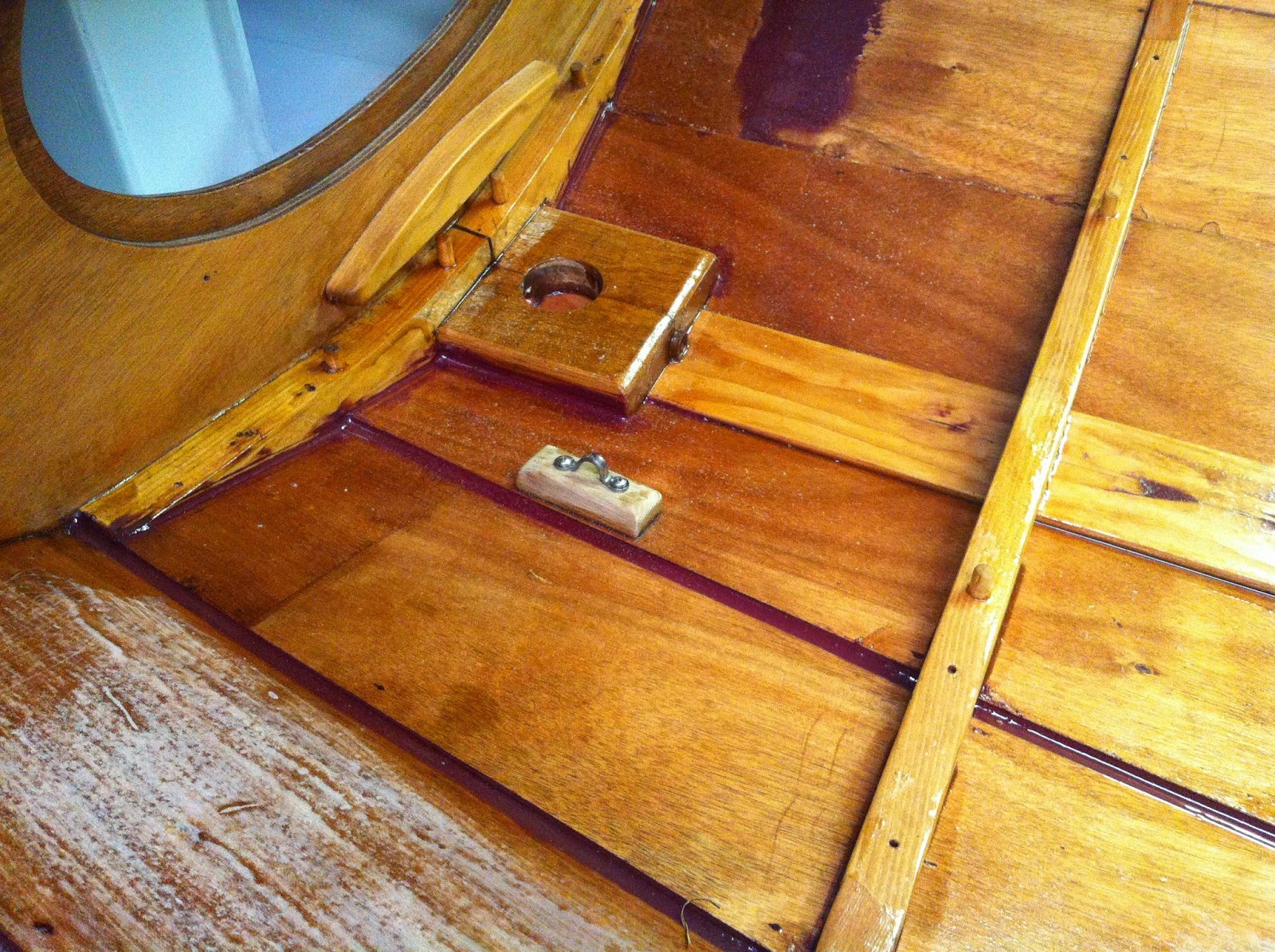
2nd: ballast installation detail is worked out and 50% fabricated. I have six pieces of lead. In pairs, they are 15#, 17#, and 19#. I will have 6 spots around the center case for moving the extra weights fore and aft as required to place boat on its lines. Each piece of ballast was drilled with 2 holes to receive the brass toilet tank bolts which were cut to stay below the floor boards. A paddle bit and drill press made  a countersunk recess to keep the nuts and keeper washers low enough. The bolts went through a plywood backer plate glue to the bilge as reinforcement. I will epoxy the bolts to retard any corrosion save for the last 1/2″. I’ll use a piece of rubber rooking to separate the led from the plate once epoxied, primed and painted.

2 of what will be 3 ballast positions per side.

Blocks between ballast and logs were required as plates keep slipping downhill on wet epoxy.

Ballast plates and dreaded sanding begun.

3rd: The interior finishing began. After an epoxy coat, two coats of primer have been placed while sanding in between. We’ll let this sit for a couple days and then fine sand for the finish coats of paint which will be white tinted slightly with the hull “green” to be easier on the glare.

Primed minus ballast areas to be epoxied.

4th: I have the rig and control lines all figured out. I found myself mounting hardware after much study and then coming up with better ideas. So, I’ve a few holes to fill. Once the boat is complete (soon I hope), I’ll take more detailed photos. I expect to be done with painting the interior this week and be moving on to varnishing.
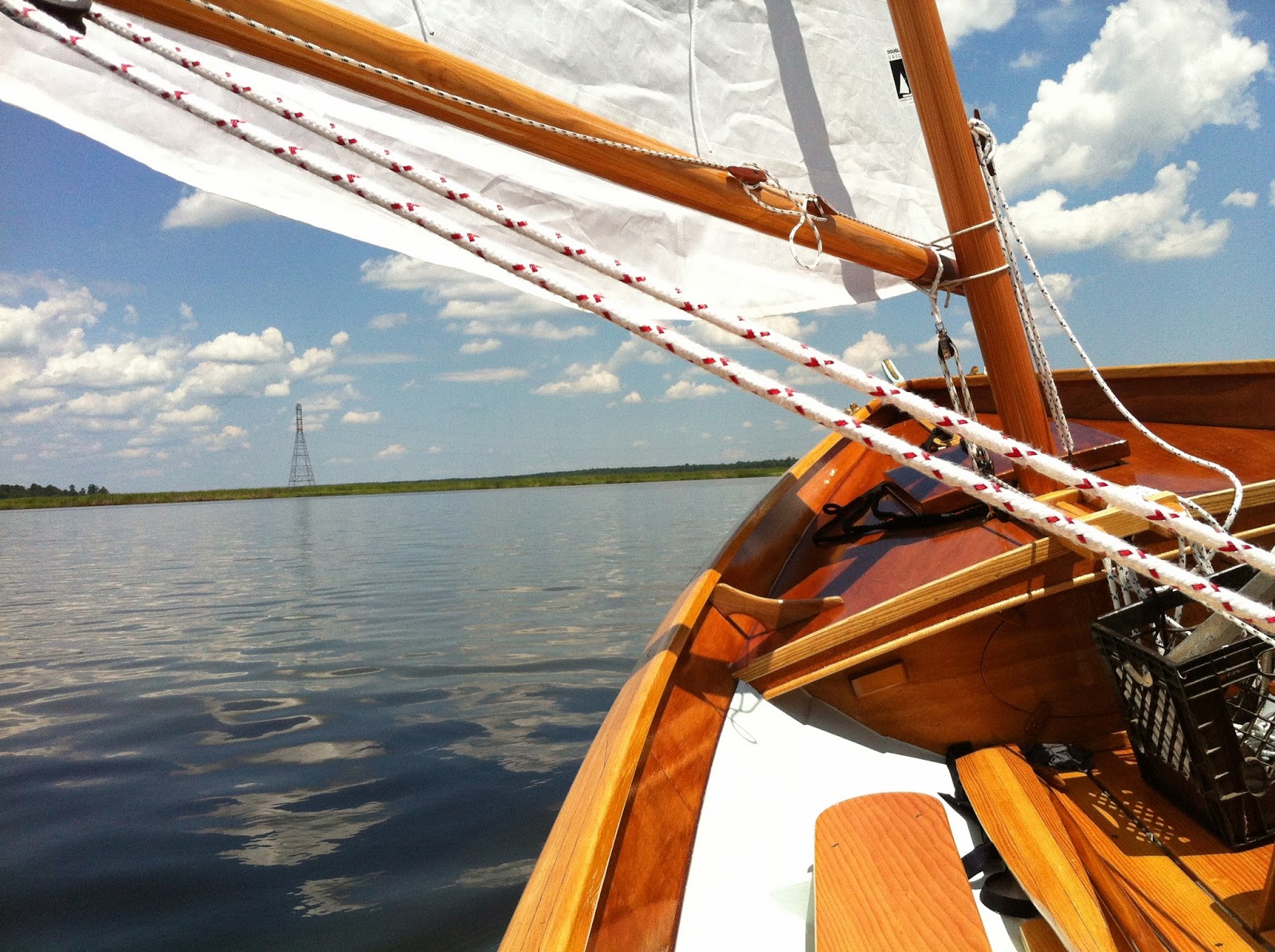
The main only position requires a second attachment for the down haul. I epoxied an ash block in the bilge forward with an eye for securing a rope loop for the down haul. This will sneak up between floor boards.
2nd down haul attachment point.

I still hate sanding. After this weekend, maybe more than before, but progress is evident and getting the rig solved was a boost to buckle down and hit the painting.

My rough estimate of time worked thus far is 470 hrs. I should be done in about 40-50 hours more. Hard to believe. None of this includes the time pondering about what to do while away from the boat. Not sure how that computes. Multiply by three!? Who knows. She will be a great boat for sure and aside from the sanding, it has all been fun.

Where I Dream …

You can have dreams without work, but they will never come to fruition without work.

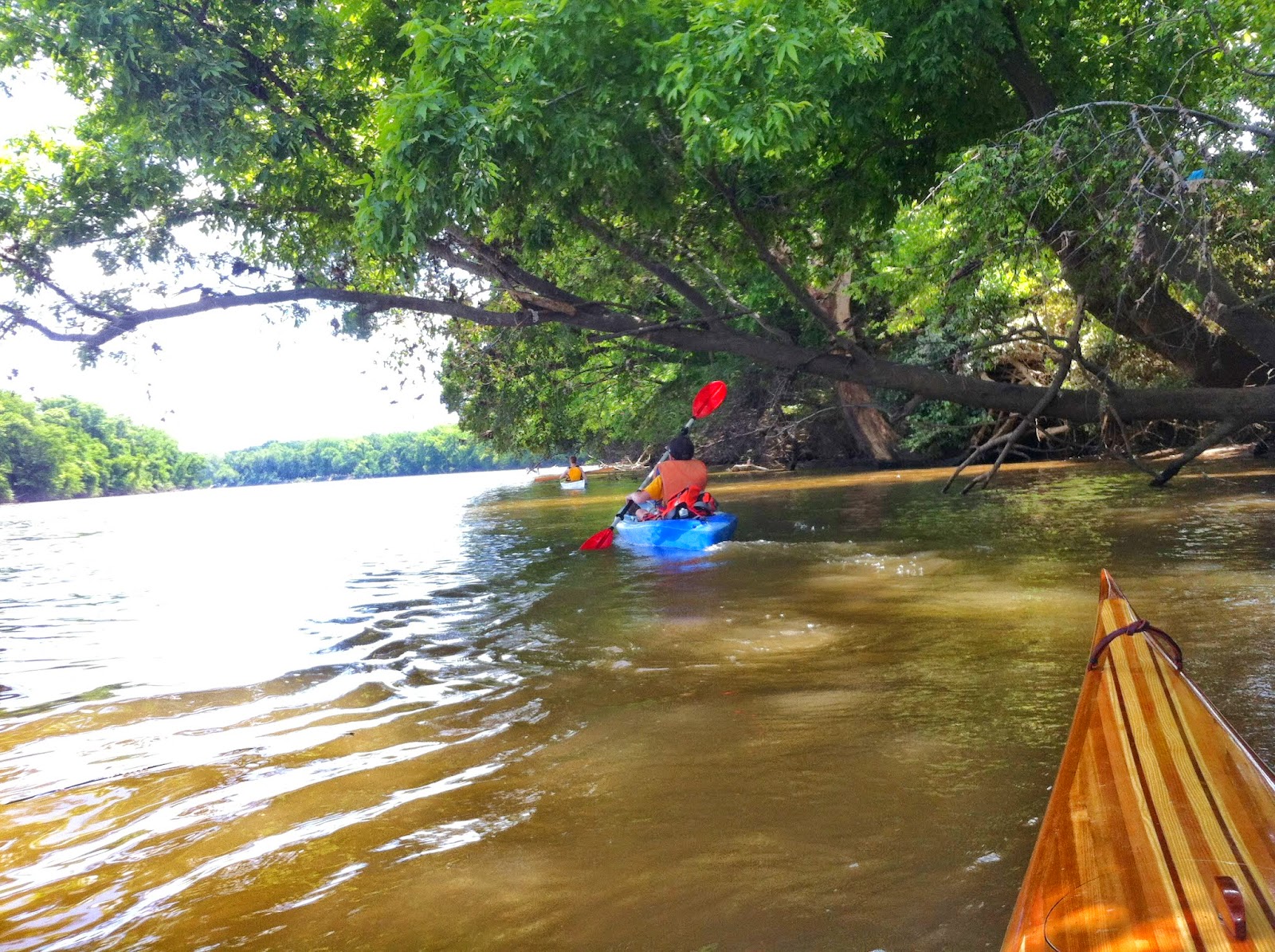
Occasional periods of drudgery have risen throughout this build.  A few days ago I hit one of those “bumps” and had to walk away from the boat for a bit. The sanding and faring was getting to me, but what really slapped me was a warped centerboard. It went from a straight and true foil after glassing one side, but the second side glassing created a potato chip. I had added graphite to the epoxy for lubrication purposes and I expect the black heat sink got too much sun when I turned my back. I’m not sure if I can remove the glass to correct it or more quickly just start over. So, we went for a paddle.

Along the James.

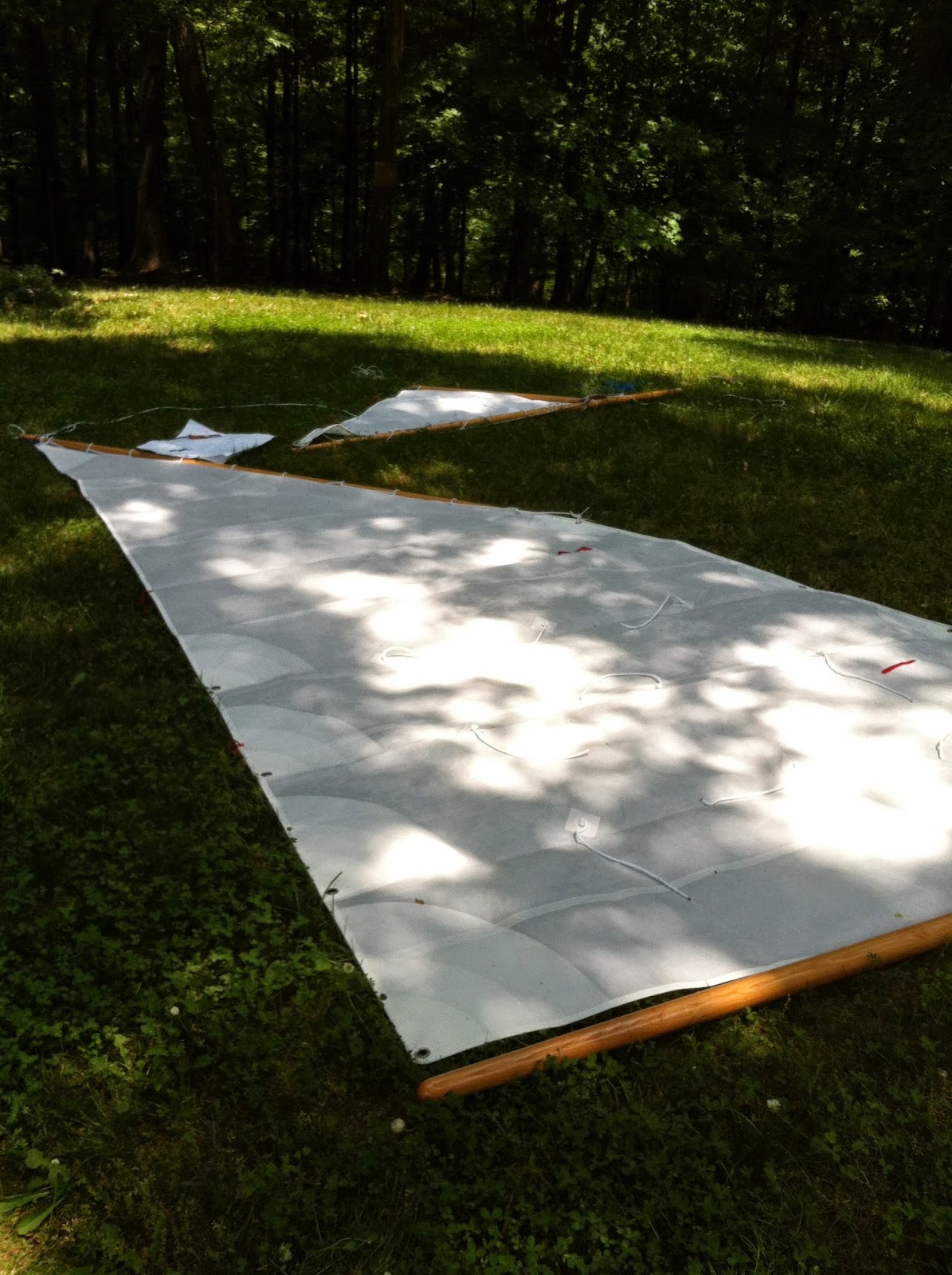
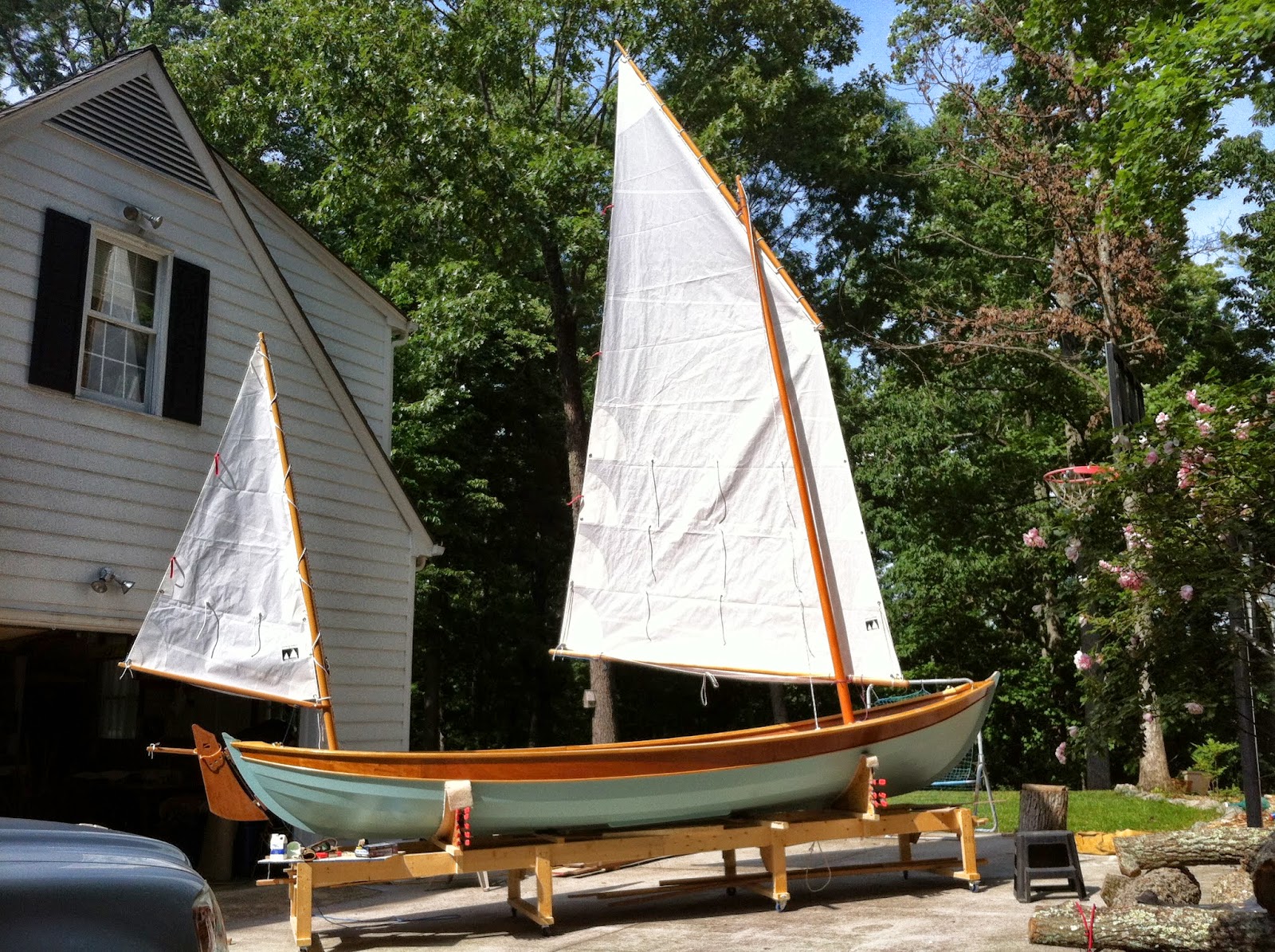
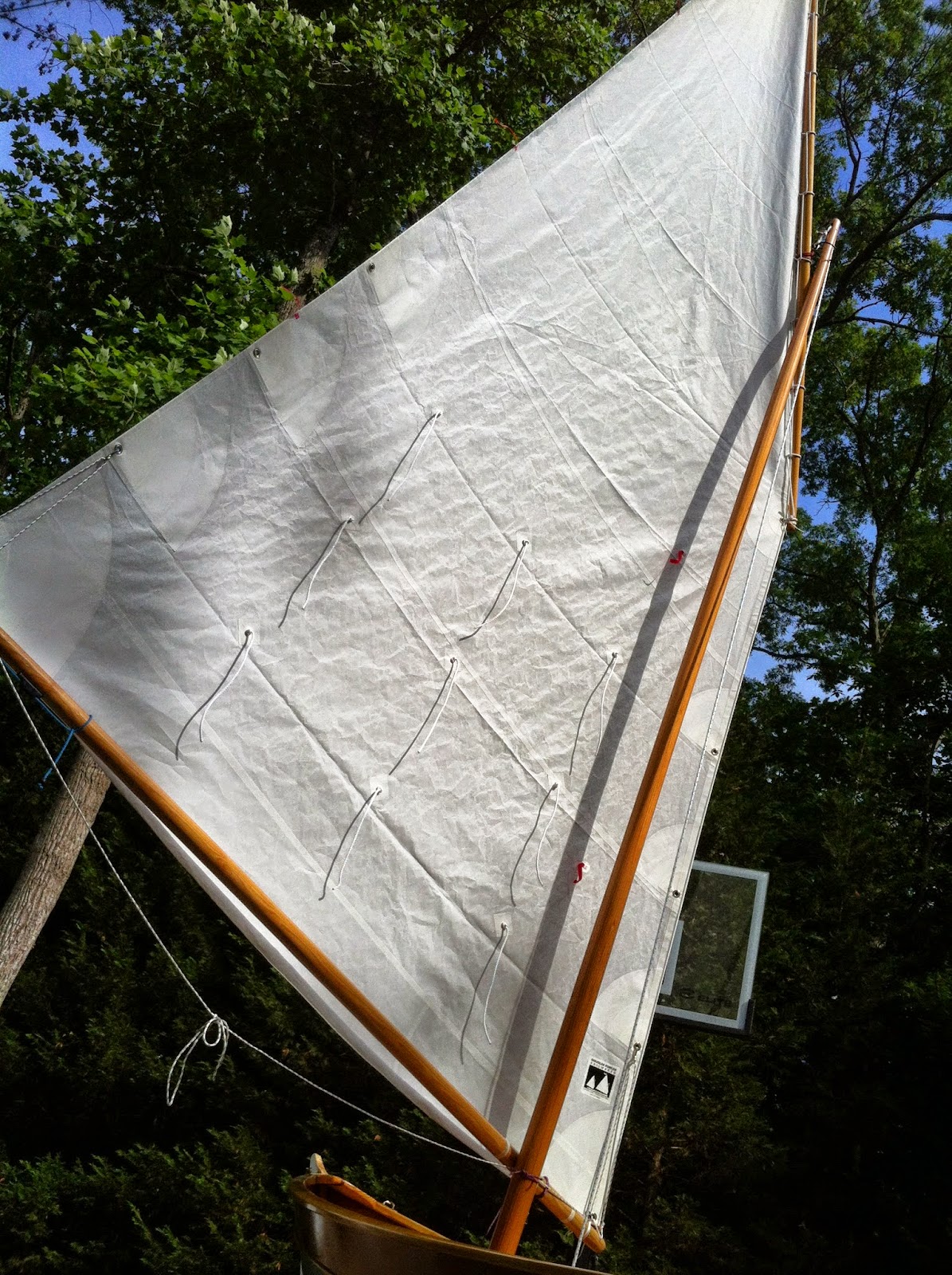
The kayak trip restored a better outlook, but I wasn’t ready for the board or more sanding so, I lay the spars and sails in the backyard, studied how to lace and add controls, and finally raised the sails. That sent me dreaming again. Now I can face the drudgery again.

Laying out.


Needs downhaul tension.


Too tight on yard outhaul.


Mizzen lacing. Boomkin not yet installed.


Trailing wake.


A rose.
 While I did not complete the running rigging entirely, I have got it all figured out. The process was an enjoyable puzzle. And, I really love the simplicity of this rig. I believe she will be light, fast, and responsive.  (A decent centerboard will probably help too.)
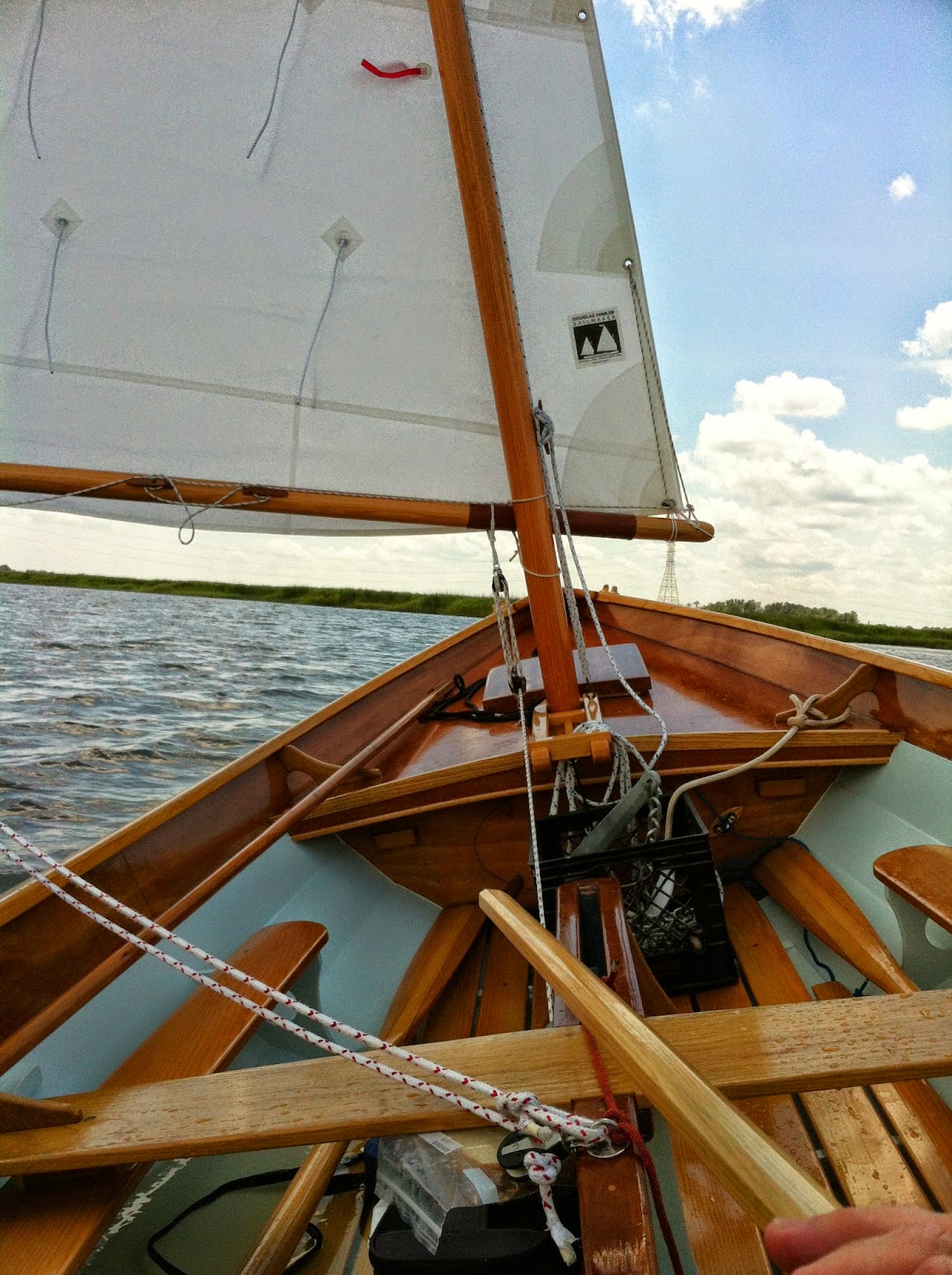
Lastly, I sold my Penguin dinghy yesterday. Watching the new owner haul her out the driveway was a sad moment. She is a boat that’s beautiful from all sides, but her insides and outs needed a new coat of varnish and fresh black paint. The truth is she hadn’t left the shed for maybe 5 years and deserved to be loved better. The proceeds will provide a new trailer for the new love. Selling a boat and a trailer for a trailer somehow doesn’t sound equitable.
Anyhow, here is to “Tar Baby”. Someone told me you couldn’t have a boat named that nowadays. Really? What is the world coming to? Ignorance for all?
Tar Baby!! Moving on a wisp.


Stuck in the 5%

What do they say about the time required for the last 5% of a job? Well, I’m in the thick of it.

Both decks are on. Hatches are glassed inside and out (I feared stepping through the stripped maple).
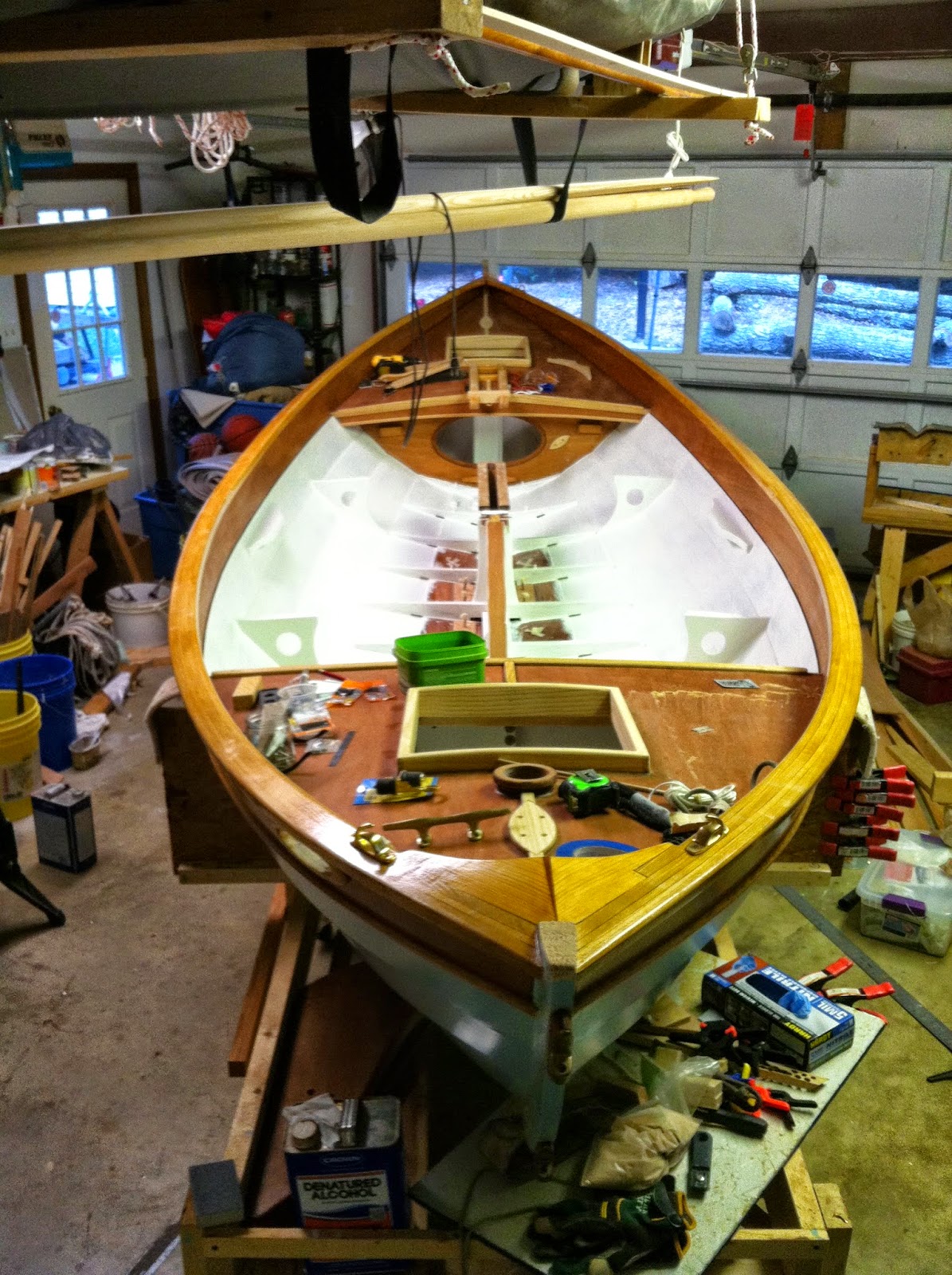
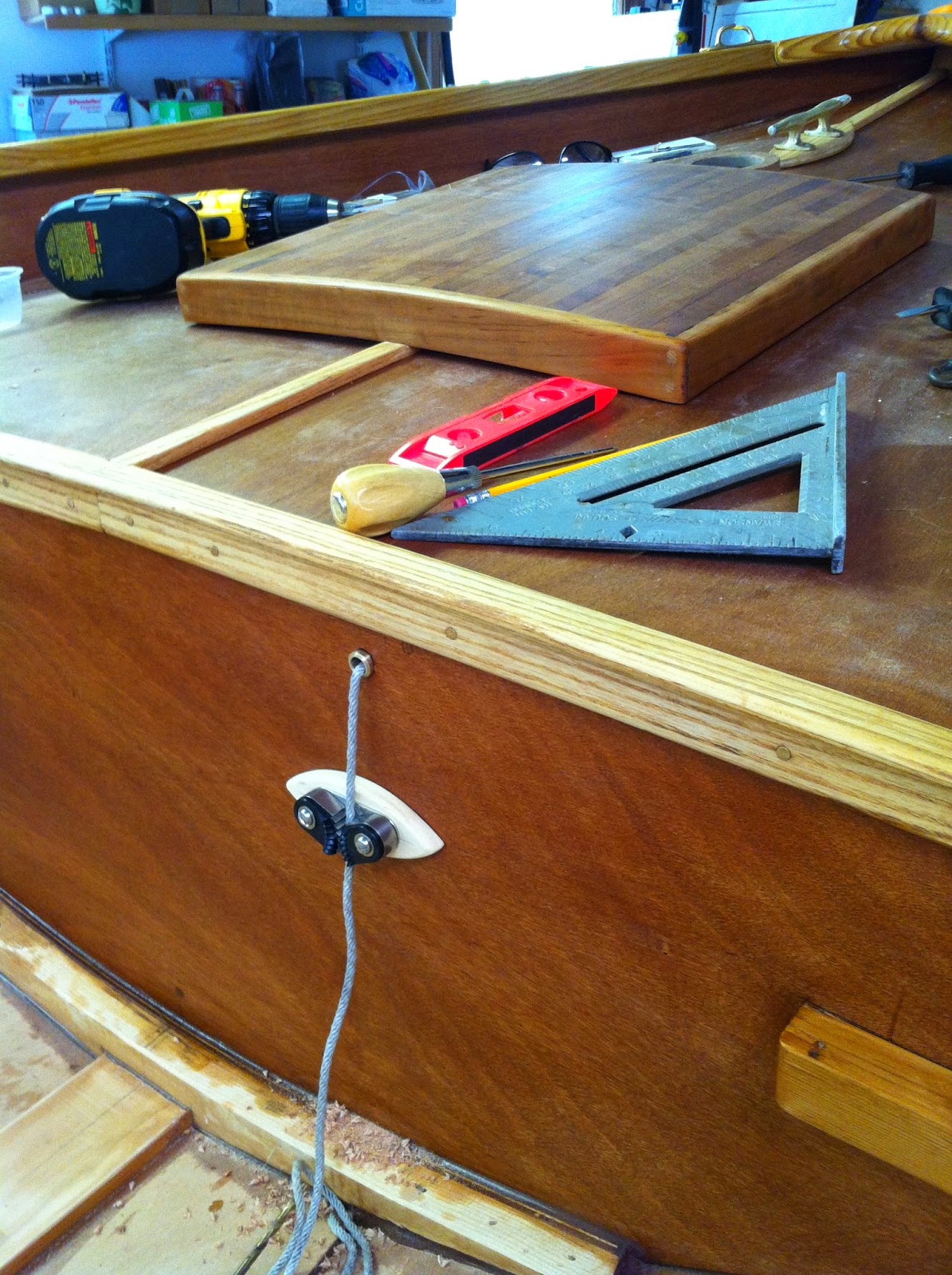
In order to hide a lot of the hardware associated with the hatches, piano hinges are installed and a pull string secures the hatch through a grommet manufactured from a brass hose barb cut and chamfered. I prefer hardware store items over pricey boat store items.


Aft hatch and deck with secure line with cam cleat.
Gasket will be installed to underside of hatch.


Lashing line lead through eye and hole in bulkhead.

The mizzen mast deck collar and cleat bases are epoxied in place. The bases are echoes of the double ender.

Cleat base and collar before epoxy.

Main mast partners and foredeck coaming are now screwed and glued.

Coaming and partners.


Hatch with epoxy glass shine.

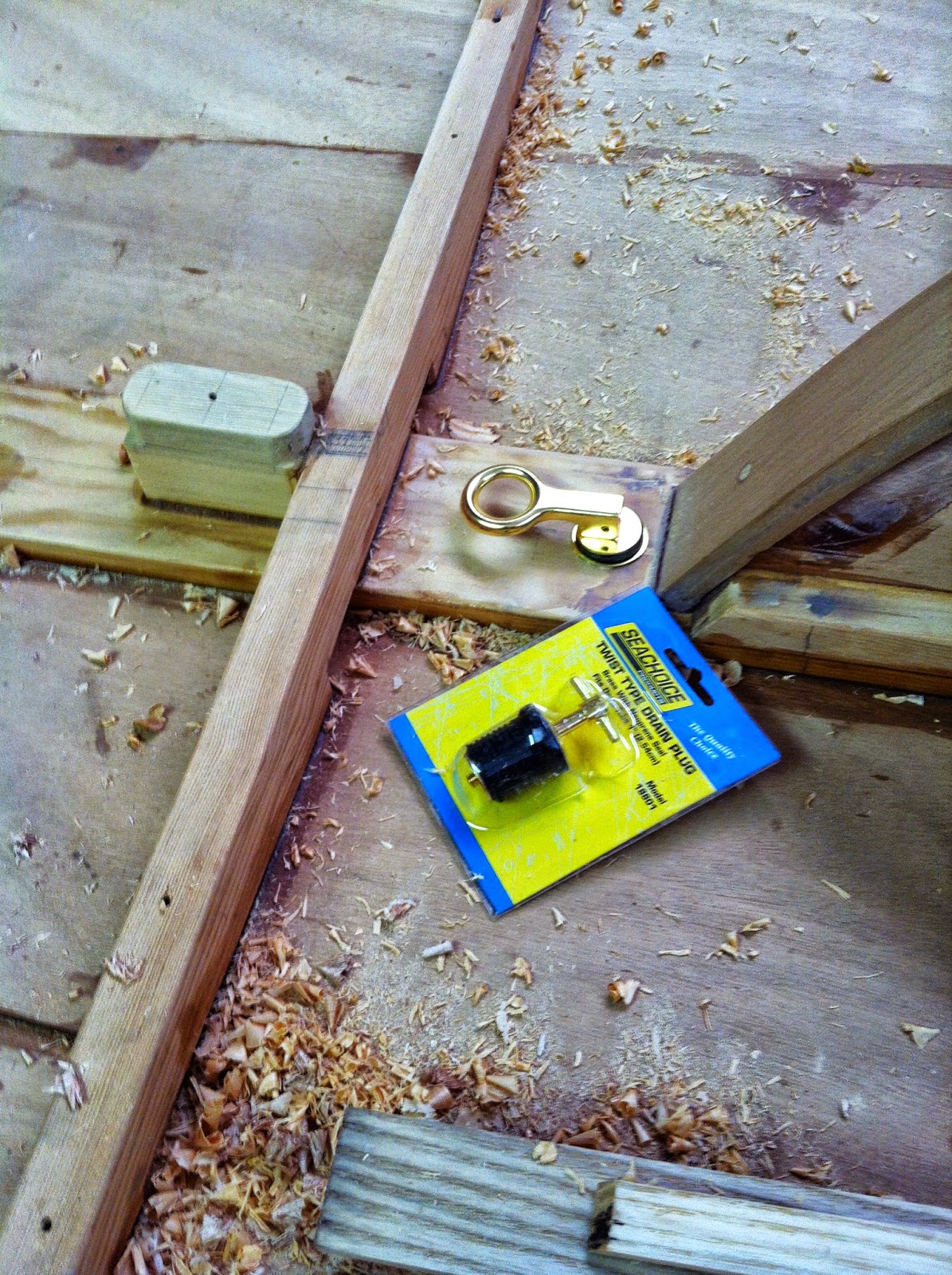
A 1″ drain is now in the bottom of the boat. This will aid in clean up after those future trips. A brass tube is epoxied through the bottom. Two different plugs were purchased. One is a compression lever. The other is a screw fitting. One will serve as a spare.

Drain plugs.


With the arrival of the sails from Douglas Fowler, the subtleties of spar bee holes, thumb cleats, and jamb cleats can be addressed.
A centerboard and a few shear knees are all that remain to be manufactured.
… the beat goes on.