Spring Outfitting

I’ve a trip planned for LUNA either late April or mid May. Duration, 7-10 days. Longer than any trip with her thus far, it will offer a good opportunity to see what she can do. I’d love to sneak up the Eastern Shore through Tangier Sound, through Hoopers Straight and around into the Choptank to visit Oxford, MD and then return down the western shore of the Bay.

To get ready there is a to do list:

  • varnish forward hatch and spars.
  • wash down the interior to kill any mildew.
  • wash both sets of sails.
  • rework the jiffy reefing.

The list may be short, but it represents a lot of time so, we have begun varnishing what we can do at home.

The hatch has been scraped, sanded and given 2 thinned coats so far. The old acrylic port was so checked, a new one wash made complete with stepped edge to match the recess in the hatch. This will be set in Dolphinite and clamped in place with bronze rings on both sides.

The 2 booms have had their hardware removed, have been sanded and a coat of full varnish applied.

To wash the sails, I want to hang a block in a backyard tree to hoist sails via halyard to scrub them.

The reefing set up will take some study and maybe a turning block on the main boom for ease of use.

All of this is more distraction that needed when life has already given enough lists, planned and otherwise. Nonetheless, we’re off and running. The days are getting warmer. Daylight increases. The dream is being stoked.

This slideshow requires JavaScript.

Rozinante Specifications

8c8ec-img_9361

Hull Type: Long Keel Rig Type: Masthead Ketch
LOA: 28.00′ / 8.53m LWL: 24.00′ / 7.32m
Beam: 6.33′ / 1.93m Listed SA: 270 ft2 / 25.08 m2
Draft (max.) 3.75′ / 1.14m Draft (min.)
Displacement: 6550 lbs./ 2971 kgs. Ballast: 3360 lbs. / 1524 kgs.
Sail Area/Disp.1: 12.38 Bal./Disp.: 51.30% Disp./Len.: 211.52
Designer: L. Francis Herreshoff
Construction: Wood or FG
First Built: 1952 (Luna- 1974 at Smith and Rhuland in Nova Scotia)
RIG AND SAIL PARTICULARS
I(IG): 24.00′ / 7.32m J: 8.00′ / 2.44m
P: 27.80′ / 8.47m E: 12.50′ / 3.81m
SA(Fore.): 96.00 ft2 / 8.92 m2 SA(Main): 173.75 ft2 / 16.14 m2
Sail Area (100% fore+main triangles): 269.75 ft2 / 25.06 m2
Sail Area/Disp.2: 12.37 Est. Forestay Length.: 25.30′ / 7.71m

Sooty Tern Specifications

f6763-img_5079

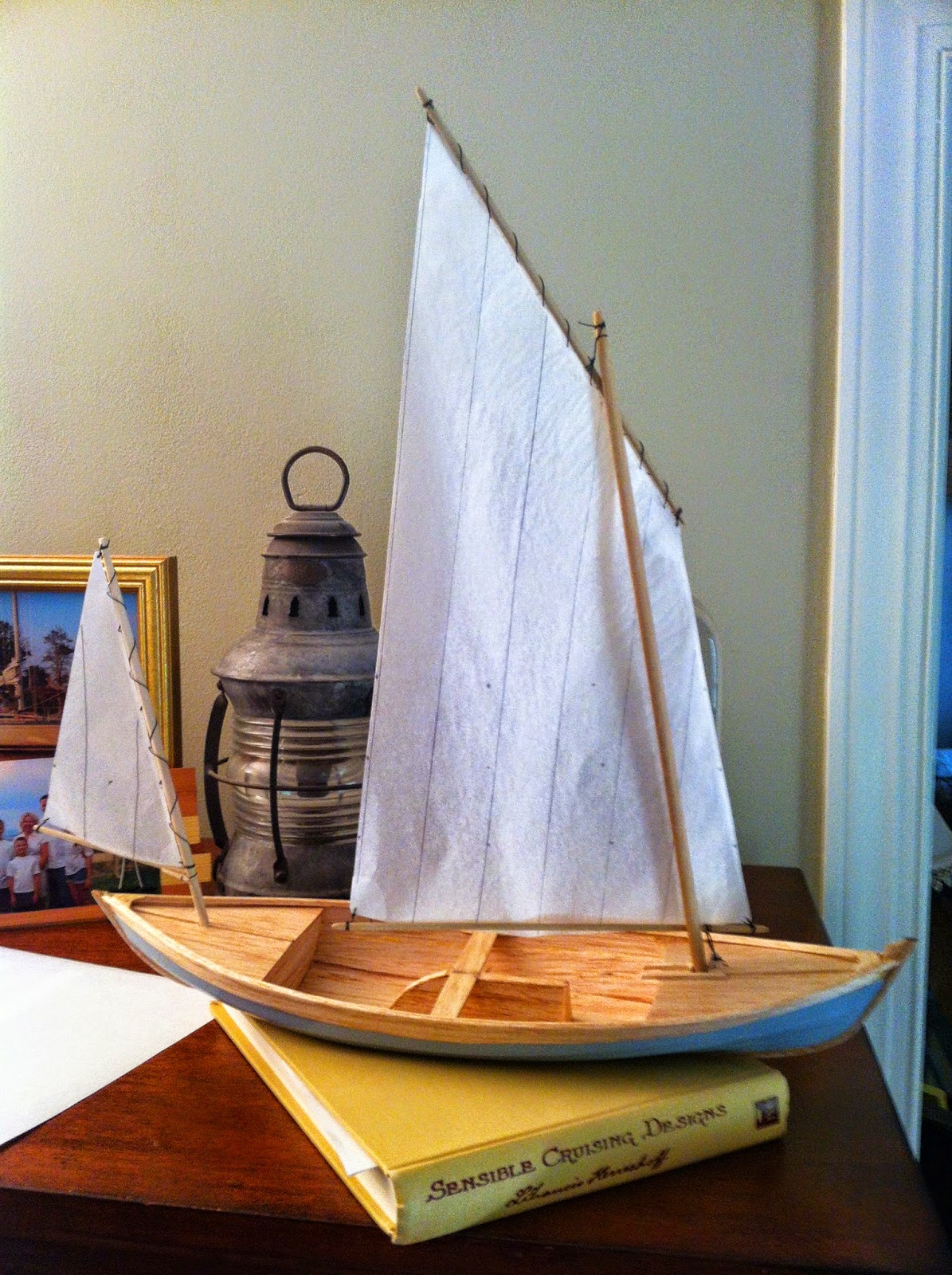
Hull Type: Double Ended Clinker Rig Type: Balanced Lug Yawl
LOA: 19′-8″/ 6.0m LWL: 16′-3″ / 4.95m
Beam: 5′-4 1/2″ / 1.64m Listed SA: 119 ft2 / 11.06 m2
Draft: 21″(bd down.)/ 8″ (bd up.)
Hull Weight: 300 lbs./ 135 kgs. All Up Weight: 400 lbs. / 180 kgs.
Disp. @ DWL: 870 lbs./ 400 kgs.
Designer: Iain Oughtred
Construction: Wood (clinker ply)
RIG AND SAIL PARTICULARS
SA(Fore.): 102 ft2 / 9.47 m2 SA(Mizz.): 17 ft2 / 1.57 m2
Sail Area (100% fore+mizzen): 119 ft2 / 11.06 m2

More Delaware Ducker

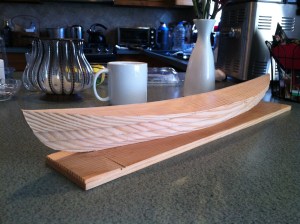
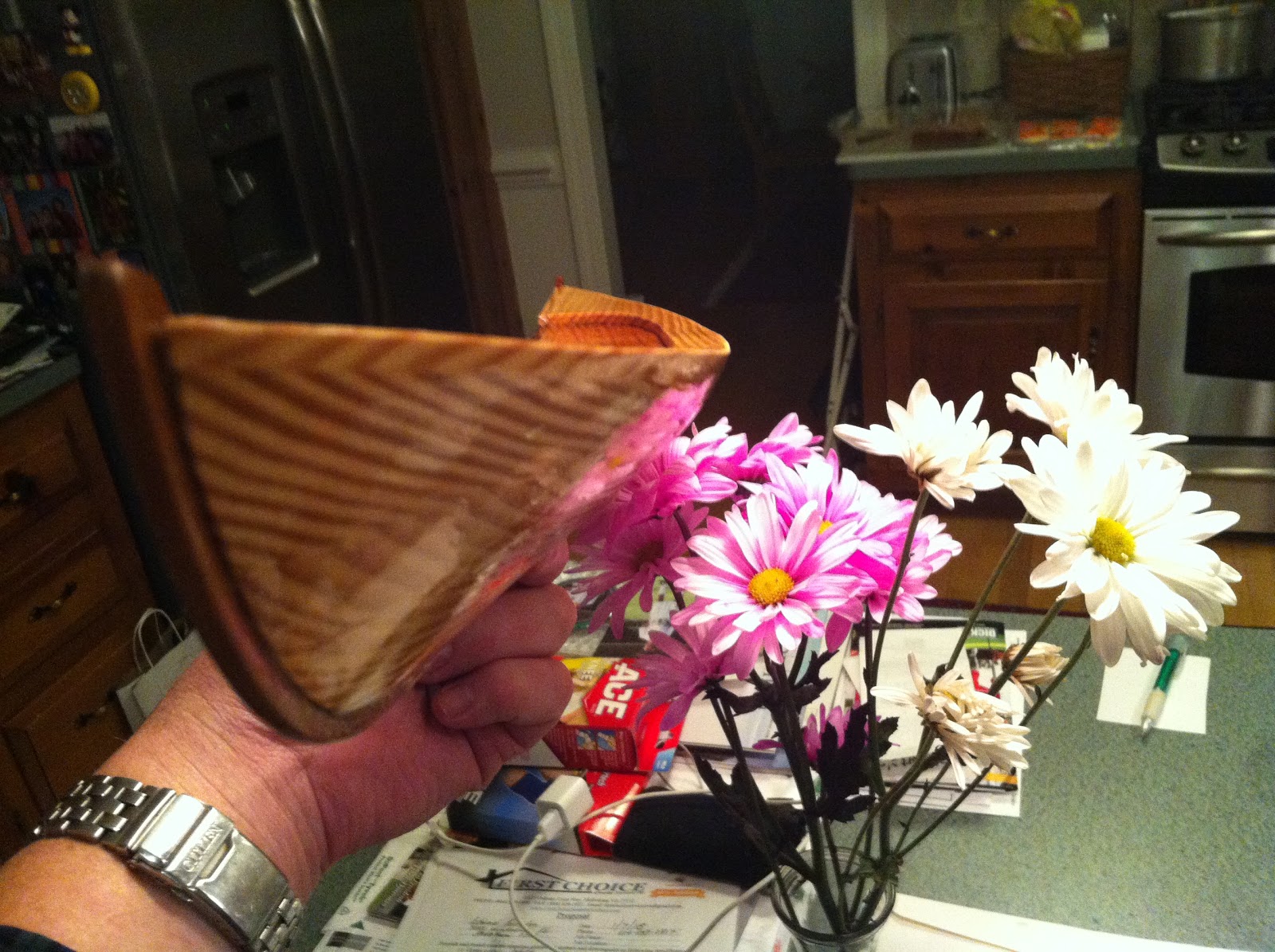
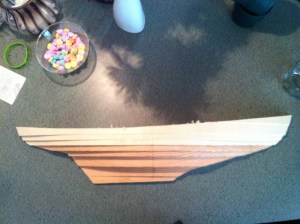
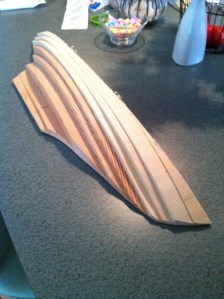
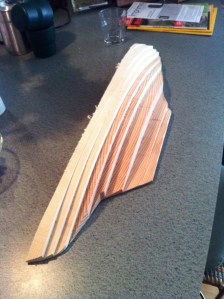
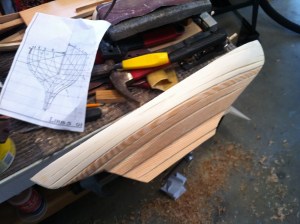
Last week, got the 1/2 hull shellacked.  I decided to add the stems and keel lastly. Stems are cherry. Keel mahogany. Female cardboard station profiles were great for checking for proper lines. Without proper gouges (I’ve since ordered some), the last sneaking up on the lines took some sanding … quite a bit. Anyway, now I’ve a true study model, some inspiration for the real thing and if not, wall art.

Finito! … or is it? I’ve another idea …

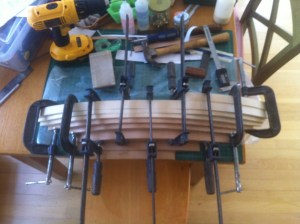
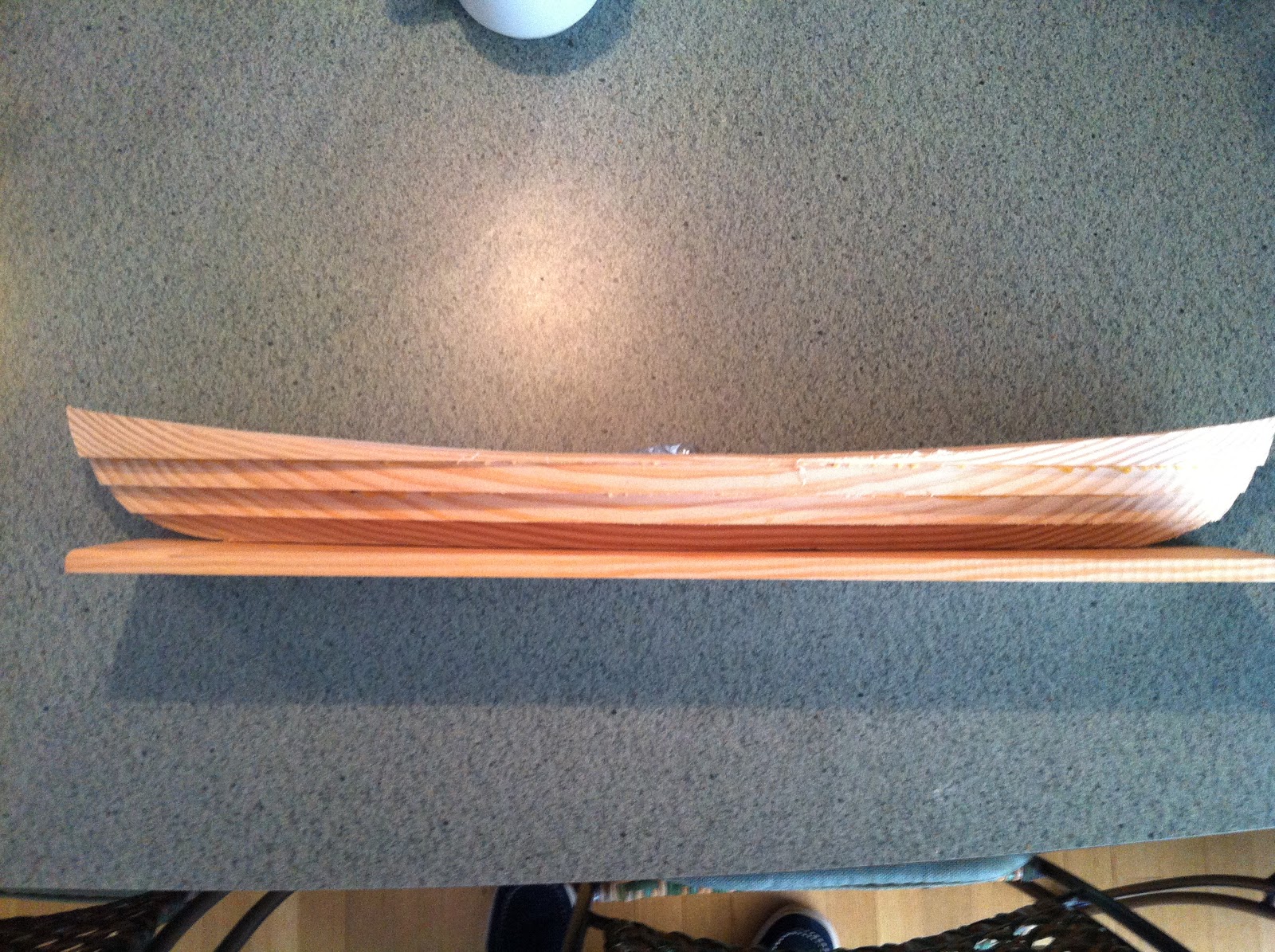
Lifts glued and clamped

Profile cut

Bow

Stern

Shaping begun

More on another day.


The Shape of Things to Come?

Last October I sailed a boat that I’ve admired for some time, the Delaware Ducker.  As a child, my family cruised from Norfolk, VA to St. Michaels, MD nearly every summer. I recall on one visit  following my mother across the lawn of the Chesapeake Bay Maritime Museum. It was a grey day and the swollen Miles River edged up into the outbuilding displays. At 11 or 12 years of age, the smaller boats exhibited fascinated me. You could dream of maybe owning one. A drab green punt version of the Ducker must have caught my attention. I’d almost swear to it. This smart skiff exudes adventure easily enticing a little boy’s wanderlust. Likely developed from canoe traditions, this light clinker built skiff is perfectly symmetrical fore and aft. The bow is identical to the stern. Long ago very common to the shores south of Philadelphia, hunters employed the craft to chase rail birds in the marsh. An understated beauty from the 1800’s , it quickly stuck in my mind when we were reacquainted on a solo cruise maybe 3 years ago. To sail one would be fantastic. The boat looked “right”. The chance did present and I was enthralled with the boat’s lively performance while sailing and rowing. It seemed like a Laser in disguise. Soon after I purchased plans of the two versions documented best. As a “vernacular” skiff, there are undoubtedly many other variations, but the now known “Greenbriar” and “York” are well documented. Save for 2-3 originals in museums on the East Coast, the hundreds of others have likely dissolved. We can be grateful a few people sought to preserve these simple lines and now those who wish can build a replica, can. No one has promoted the Ducker more than Ben Fuller at the Penobscot Marine Museum. He wrote several articles on the vessel for WoodenBoat while curator at the Mystic Seaport Museum. Ben in fact owns a Greenbriar in his gaggle of small boats. I’ve read and reread his articles, stared at my photos of the Greenbriar at the in St. Michaels, MD, and lofted both designs in the computer.  Frankly, I’ve been haunted by the boat for some time. Sailing one may have put me over the edge. Shoot, that may be as good a reason to build one as any.
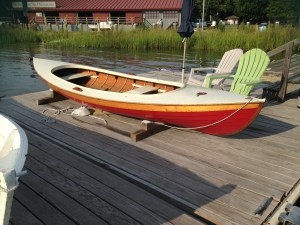
CBMM’s Greenbriar Ducker.

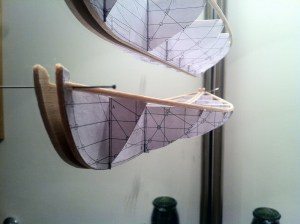
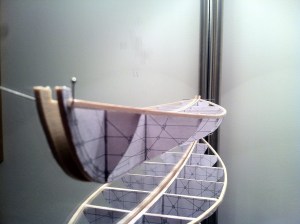
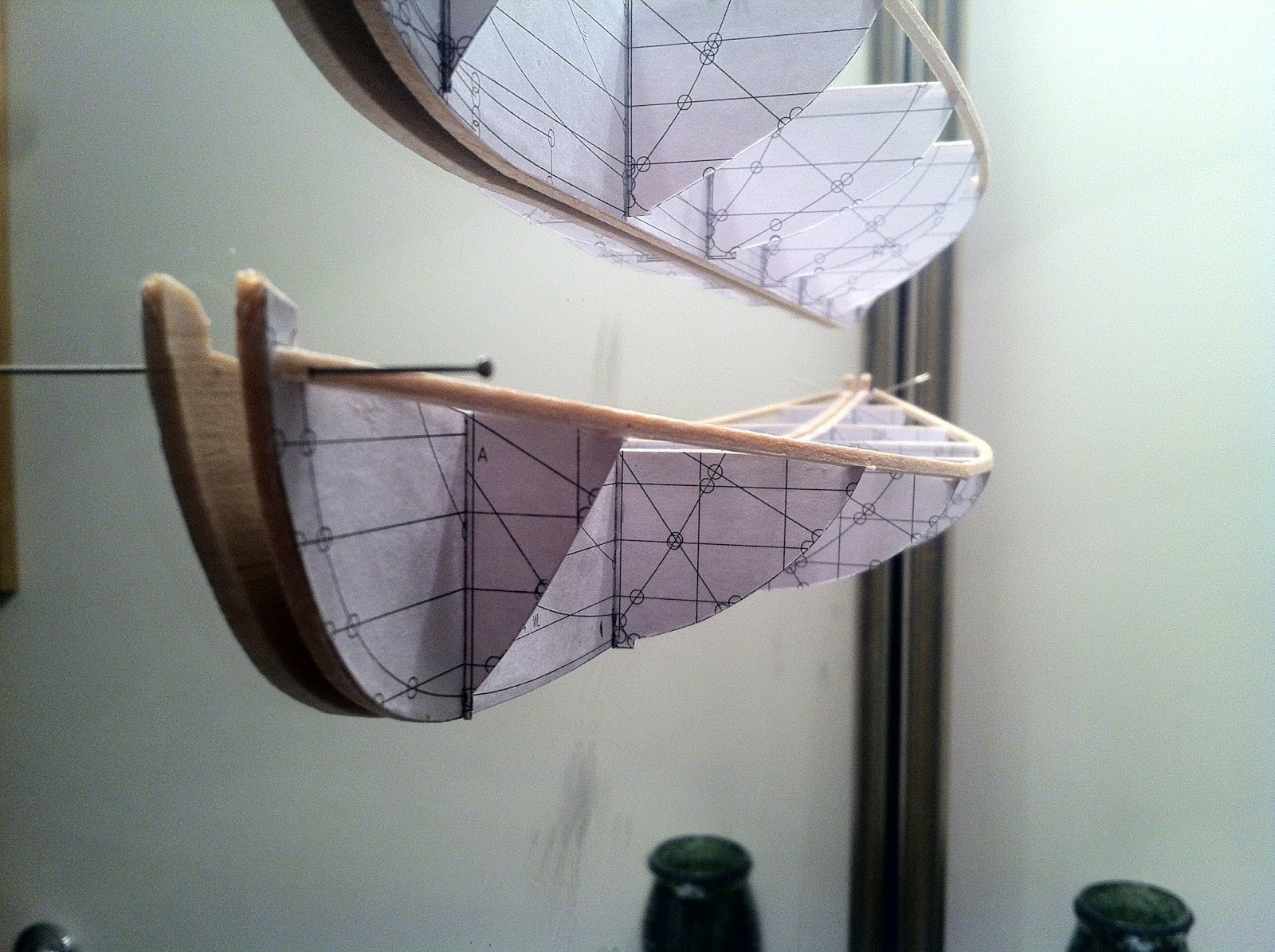
Doing so may make me officially a sucker for double enders. Seeing this one trailing along in the wake of our Rozinante “Luna” is not a stretch. The design may be a descendant from native American canoes. The construction certainly is reminiscent of them. Or, maybe its salty lines were borrowed from old norse faerings ancestors. Like an Inuit kayak, the Ducker’s lines have a strength and beauty derived from practical evolution and the hands of countless builders to present a charm hard to master. Still, there are enough differences in the two plans I possess that I decided to make a study of it. Overlaying the drafts in the computer showed the Greenbriar to be 3″ longer, 2″ thinner in beam, a fuller bow in section, but slacker bilge amidship. The York likely has more initial stability and resistance to heeling, but the Greenbriar should row and slip through the water more easily with her thinner waist. With paper and balsa, I glued quick models using the stations and elevation for further study.
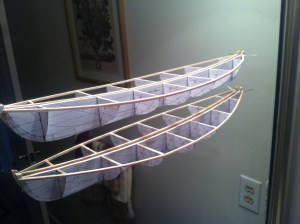
1″ to 1 foot scale models: Greenbriar over York.
Bottom, YORK sections.
Top, GREENBRIAR study.

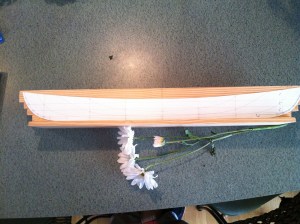
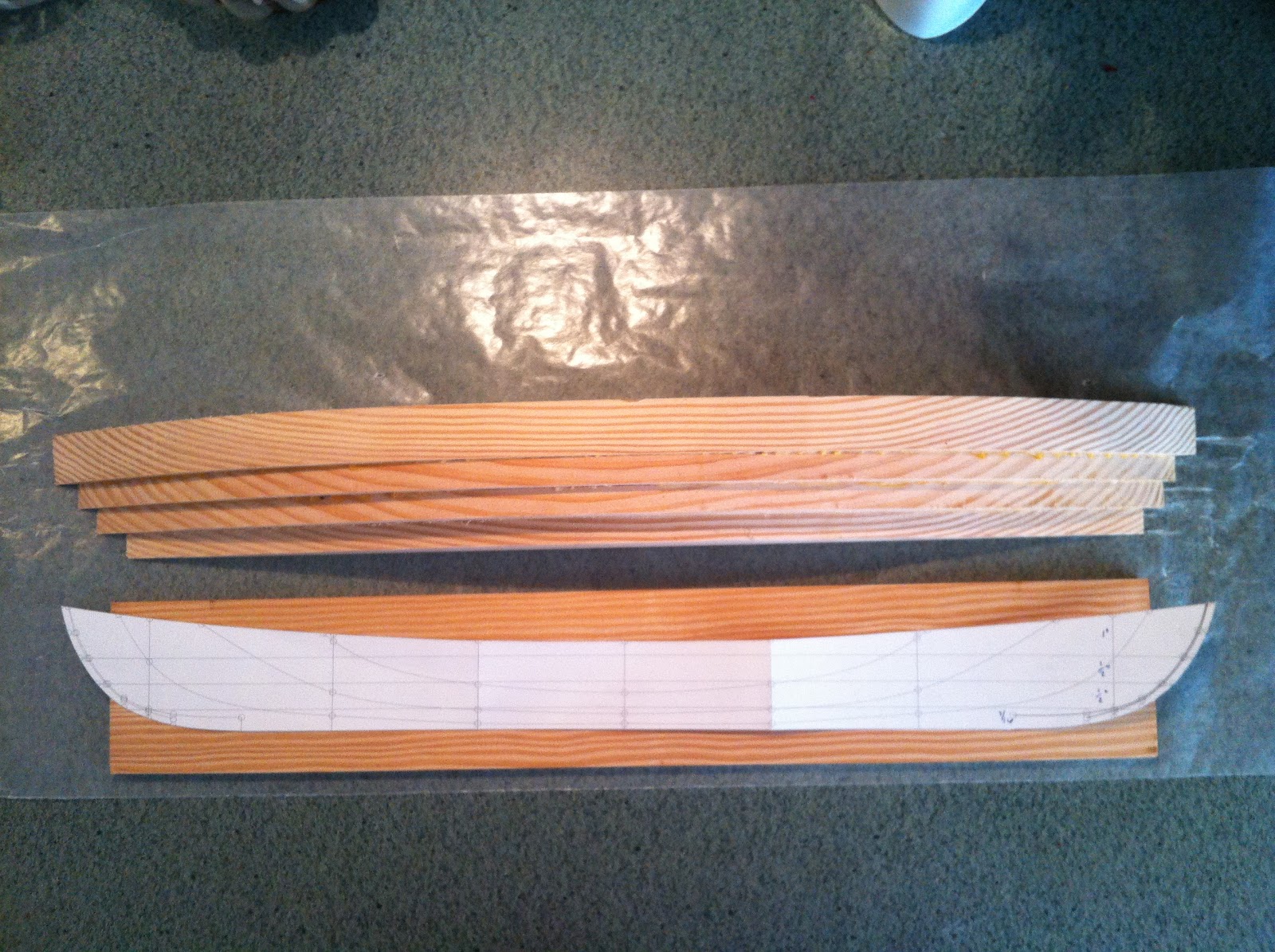
I canvassed the household for their opinions on which boat was favored. It was a tie. No help there. The York appears more elegantly dainty. The Greenbriar seems quietly confident in her beauty, more of a pony than thoroughbred. Is this a decision? Perhaps, but I’ve always admired carved half hull models, have wanted one for my office, and have now begun a 1 1/2″ scale version of the Greenbriar. Its sides will not be clinker, but rounded even though I doubt I’ll build in either carvel or strip.

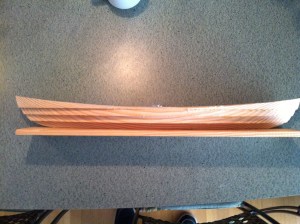
Note if your model is to be 24″ long, make sure the wood or lifts are not 22″! Yeah, now I’ve wood for a second half hull. Dumb. Consider it material for a future opportunity. That, and heed the “measure twice” adage.  I won’t get into the “how to’s” of this form of model building. I’ve proven I may not be reliable there. Many sources are available. Anyway, here are some progress shots of the Greenbriar half hull.
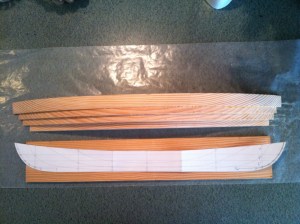
Lifts and elevation (on 22″ wood)


Elevation tacked to back of half hull.
Shear and stems cut.


Looking like a boat.


Seems like errors are par for the course today. Lowering the elevation pattern to avoid cutting the keel (will add later with stems) took too much out of the shear. Tunnel vision run amok here. Well, looks like another opportunity. Adding the wood back as deck allowed for illustrating the cockpit.
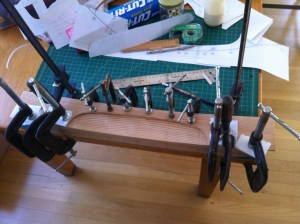
clamped deck layer.

We’ll set this aside for overnight drying. Using carpenters glue. More later-

A Long Winter’s Nap

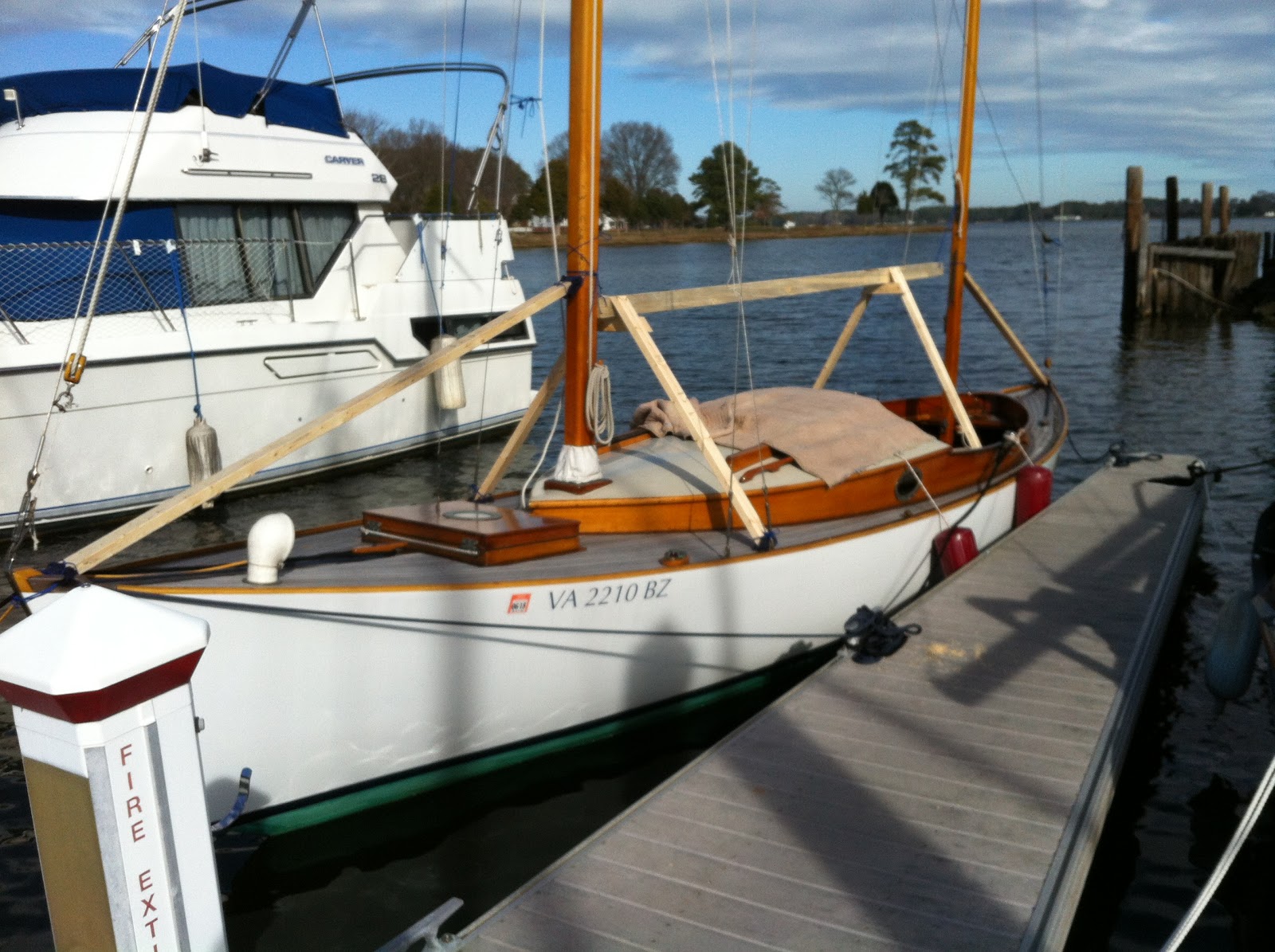
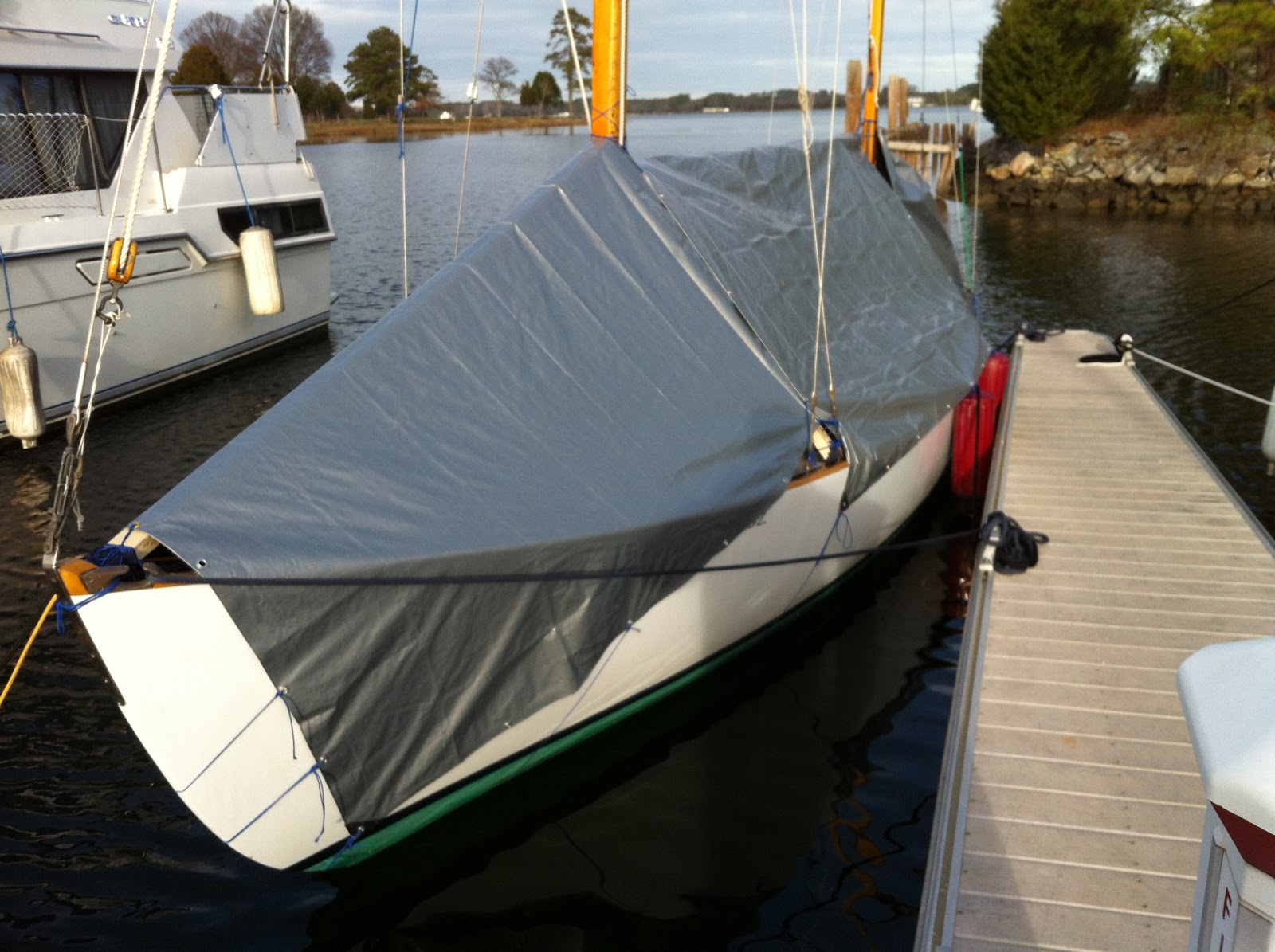
It is official now. Luna is under wraps for the remaining winter. I bought 3 tarps, six 2×3’s and one 2×4 and headed to Mobjack with my big ball of string. The temps started in the teens and warmed to the mid 40’s. There was a good breeze with sun. Had the canvas not been removed, we would have gone sailing. After removing the booms, forward hatch and companionway doors, a sturdy framework was fashioned to support the tarps. Coverage was good save for the aft tarp which got sort of bunched. I’ll rework that one on my next visit.


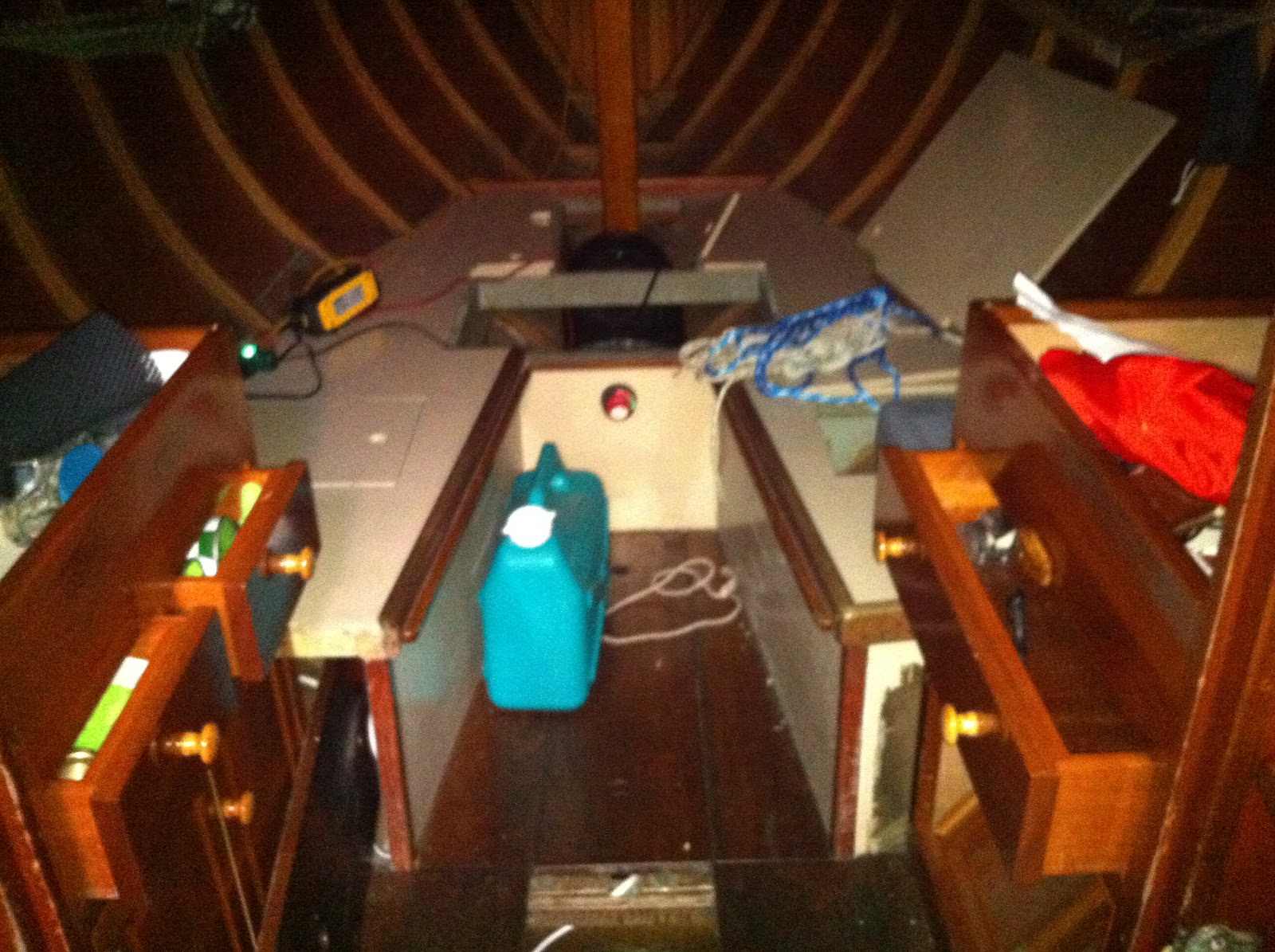
Here are a couple pics of the cabinets and interior I’ve been fixing. Galley is to port with a single burner butane stove. Chart table is to starboard. Two drawers for the galley. One for the chart table.
Both have lift off counters made from a chestnut oak tree we dropped in our yard a couple years ago. The rest is mahogany. This greatly improves the old cabinets for storage and efficiency. I may write up more when that project is complete. Here are the counters tops. Fiddles are on 3 sides. there are storage bins all the way outboard.

With the boat pieces brought home, there will be plenty of varnish work to get a start on before late March for haul out. That will be here before we know it. Good. It is hard to visit Luna and not go. It is going to be a good year.

Swinging Party: the Real Last Sail of 2015

Yesterday I went down to check on Luna and remove her canvass. The temps proved too tempting. T-shirt weather, sun and a stiff breeze. It was awesome. Though now a dream, I hope it sustains until Spring. The scent of water and land, and warmth of the sun are absent here, but you’ll get the drift …


UNA Makes Print Again

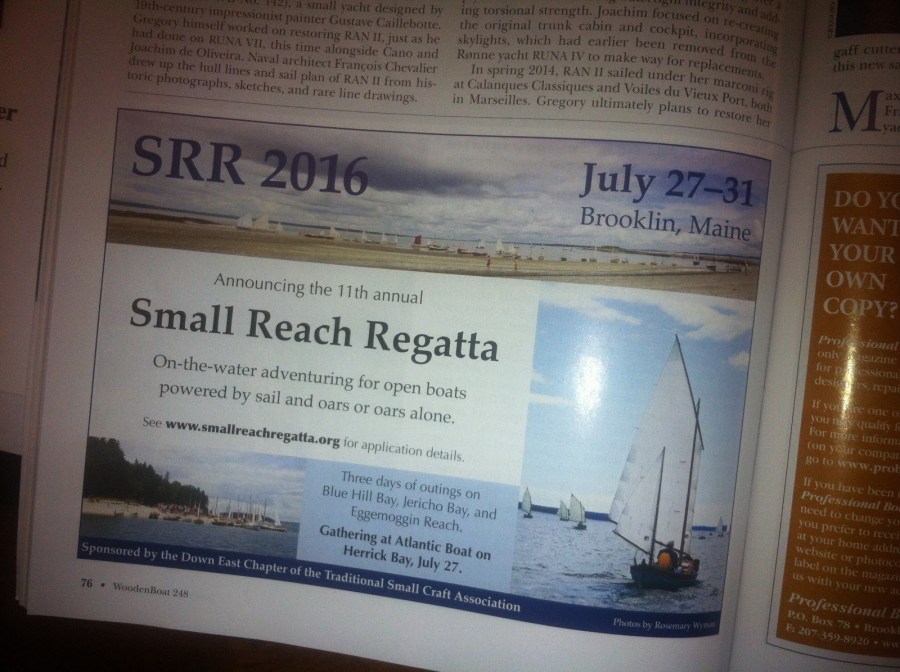
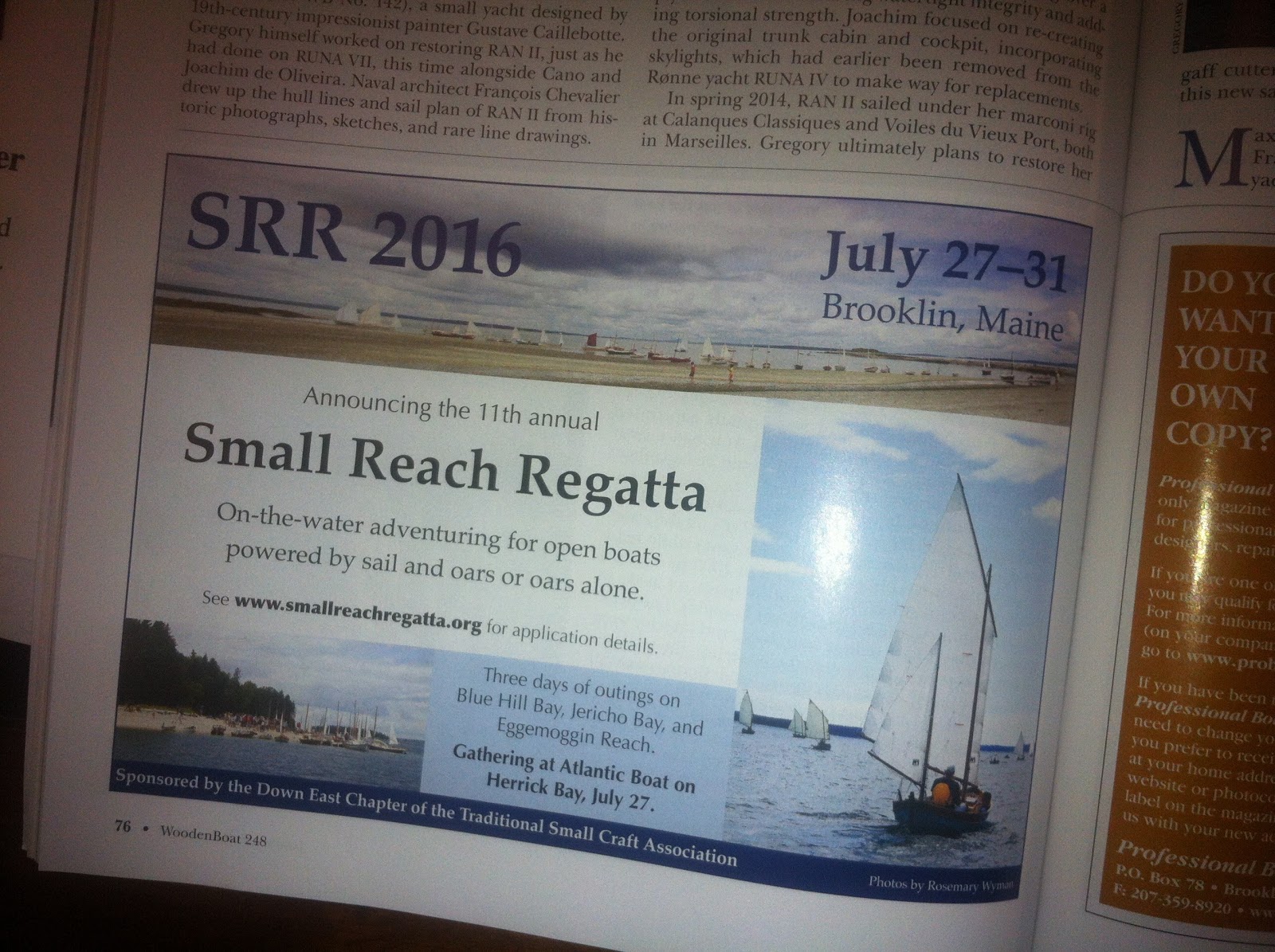
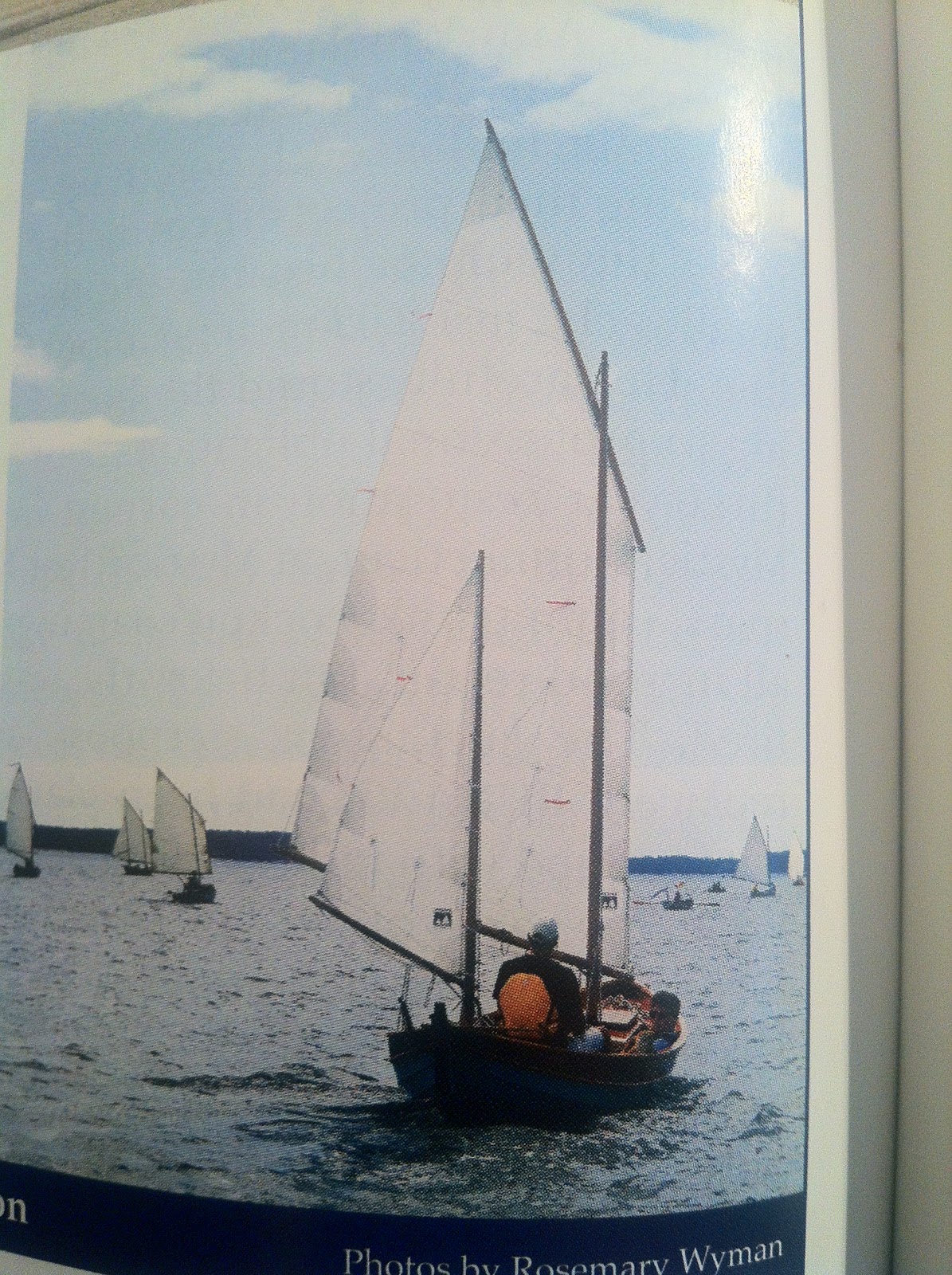
My pal Peter is an avid WoodenBoat reader. I mean from cover to cover. He pointed out an ad in this month’s issue for 2016’s Small Reach Regatta held each year in Maine. A boat featured there on page 76 is a sweetie. It’s UNA, I believe on our first day.We started near last, sailed through the fleet and back and still got to the destination first. Maybe we were the only ones considering it a race. Anyway, I’m glad to see we had proper sail trim. Telltales are streaming aft. Pretty cool. I was told by WB that they would not feature her under their “Launchings” section as she had been in Small Boats Monthly. Well, she snuck in there anyway. Thanks Pogo!


One Reef, One Beautiful Day

I had hoped to sail along Norfolk’s waterfront today, but my father couldn’t make it so, I decided to stay closer to home and headed north to the Yeocomico River. A still somewhat rural area on the south shore of the Potomac River, the river was a fantastic diversion.

I know the season is closing. I know the water is cold. Today’s air temperature however was in the mid 60s. Winds were 10-15 mph, gusting to 20-24. That, a picnic lunch, and one reef served to make it a near perfect day. At 11:00 I launched UNA from Olverson’s Marina ($5). They have two 16′ wide concrete ramps to choose from. Launch was easy. We sailed out past maybe two dozen cruising sailboats at dock and a couple sheds full of powerboats out into Lodge Creek. There were also covered land slips available for boating and camping. Perhaps and Old Bay Club event could be based here?

Olverson’s Marina

Winds were flukey in the creek initially. Lulls and blows. You had to be on your toes. No cleating of the mainsheet. Once out in the Yeocomico, I could see St. Marys River across the Potomac. Had I started earlier, I would have sailed across.

east lip of Yeocomico
west lip
entrance to Parkers Creek

Instead of braving the Potomac, we sailed past the mouth and into Parkers Creek for lunch. We went as far as Una would let us go, stirring up mud with board and rudder up. A bald eagle and great heron took flight at the tail end of the creek. Borrowing a small pier, we tied up, flatten mizzen and dropped the main for lunch. The sun’s warmth and light were perfect.

lunch tie up


Lunch done, we reached back down creek to explore the other fingers of this pretty river. The wind seemed to have moderated as we watched oystermen dredge their harvest.
oystering
This boat was an interesting pram bowed barge.  Further on a group of workboats hugged the shore.


Having explored 4 of the 5 fingers making up the river, we headed back toward home. We passed a  large fishing operation was to starboard.


A couple videos here give some of the flavor. Another glorious day on the water. I almost didn’t go.