Framing Nailer Fun

About a month ago I spent a few days helping a friend resurrect his backyard shed that had burned to the ground. One day we used the tried and true 24 oz hammer to raise 3 of 4 walls. The following day the right “wing” was quite sore. On the next visit, a framing nailer was available for use. I knew it would be more efficient, but experiencing the difference was an enlightenment. The tool moved to the top of the wishlist. I searched for a deal. Got an Hitachi.

IMG_2420

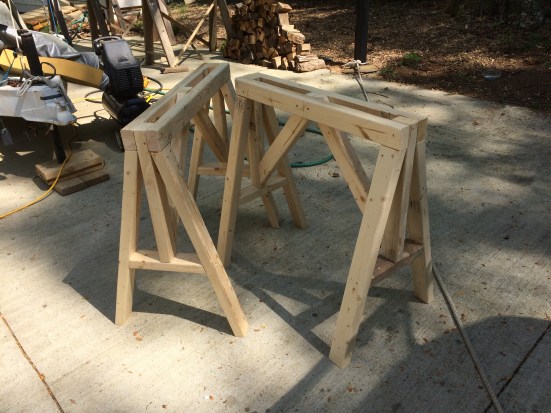
We were quick with Project #1: more sawhorses. Made from 2×3’s, they’re sturdy and relatively light.

IMG_2430
sawhorses

Project #2: Mothers Day Adirondack chairs. Got tired of buying “disposable” plastic ones each year.

IMG_2613
Adirondack chairs. 2×4’s and 1x’s

With galvanized ring shank nails, these projects are darn near impossible to pull apart. How do I know? I measured twice, but should have thrice. Had to pry off one of the curved back horizontals. Tore it up. Wood dough is good. Primed and 2 coats of Rustoleum should keep these in service for years.

I now see all kinds of use for wood cut offs. Awesome tool!

Lugger? Bugger!

There is nothing like self imposed distractions. Winter has a habit of forcing more of them upon me. Is it a restlessness? Perhaps. If so, it seems to have set in early this year.

elev

While motoring LUNA around to the boatyard a few weeks ago, I thought it preferable not to undertake all I was about to go through: the down rigging, packing the trailer, rechecking  that, hauling the boat some 80 miles and then providing cover for the cold season (forget the hassles of a flat trailer tire, old tarps, etc.). Such was my mindset when someone suggested looking again at Paul Gartside’s Design #166: the 6 Metre Centerboard Lugger (above). Shouldn’t have done that. Firstly, Gartside can’t draw ugly lines. His catalog demonstrates that. Secondly, this pretty trailer sailer was all it took to get me dreaming of extended cruises along distant coasts. No offense is intended towards UNA, but this other lugger appeals in many ways also. Some quite differently. A couple days on and LUNA was home under wraps. I paused. The bug struck again. Attempting to be rational about it all, I began a list outlining the pro’s and con’s of not just this design, but several others. A quick spreadsheet of the contenders considered size constraints, construction limits, sail area to displacement ratios and naturally that question, “Is she fast?” Further on, an inordinate amount of time was spent perusing  WoodenBoat Forum and the myriad of suggestions and opinions. Some were valued. To justify my growing library of design books I flipped back through volumes by the likes of Chapelle, Oughtred, Culler, Gardner, etc. Another few days passed. So many beautiful small boats with history. However, undaunted, this little lugger kept popping to the surface.

I had to do something. You’d guess enlisting “moral” support from fellow sailors isn’t helpful (boy, was that putting gas on the fire!). Right, no firehoses were offered. Any critiques were mere droplets, and only objections to small details or did I even hear them?

I ordered study plans from Gartside and crafted a half hull model at 1″ to the foot.

This slideshow requires JavaScript.

I find the study process enjoyable. Maybe that is part of the forever search of the “next” boat. From selecting wood, cutting lifts, laminating, planing, carving, sanding, and finishing, each stage allows meditation. What is the damage anyway?  If you choose a nice boat, at worst,  you’ve some wall art. Yea, but does it end there?

img_1887

But what about the Ducker?! I know. I know. She’s not forgotten. Her molds are still hanging ready to be used in the shed.

img_1889

But then, what have I done? I should have just finished putting the leather ties on the F-1 and stayed out of bigger trouble.

Why has it so far been painless? That’s good, right?  … or is it?

SaveSave

Luna’s Half Hull

I enjoyed carving the Ducker model so much that I wanted to try another. This time of Luna. Here are pics of the early progress. In removing the last bit from the keel I accidentally buzzed off the tail end of the keel. This gave me the “opportunity” to add that corner back as a delineation of what would be the lead ballast per the lines drawing.

IMG_0411
botched trailing keel corner and tick marks for fairing


IMG_0412
added “ballast”


IMG_0505
rudder added. cardboard stations beyond.


IMG_0506
ready for hanging
IMG_0537.JPG
hung

I’m learning as I go. Too late for this one, but I just rediscovered an old Rudder Magazine article on model making by none other than L. Francis himself, I’d like to do one more. In his description I realized there may be a quicker way to remove the waste wood by not gluing the lifts, tracing the lower lift onto the above lift and separating the individual lifts to work on each separately. Once the majority of the waste wood is removed, the lifts can be rejoined and tuned for the final finish. Rewarding projects. What might be a next go?

Boat Hooks to Crochet Hooks

Last Fall my daughter went for her first sail in UNA. She was quick to take note of the 8′ long boat hook I made from oak and red cedar. She suggested that I could cut the hooked end of the pole off for her crocheting use! Alarmed at the idea, I defensively I manufactured for her 3 hooks of various sizes mimicking UNA’s. I had trouble tossing the hardwood scraps from the build and here they got some use. However, apparently the largest hook wasn’t large enough, so a fourth hook made use of what was the bumkin cut off and some oak scraps. I’m now officially out of that business.


Boat Hookie

Sometimes you can get tired of laying on long epoxy parts. The sentiment hit me 2 days ago. As a diversion I picked up the rudder construction again, fiddled with the kick up controls, but didn’t come to a happy resolution yet so, I decided to craft a boat hook.

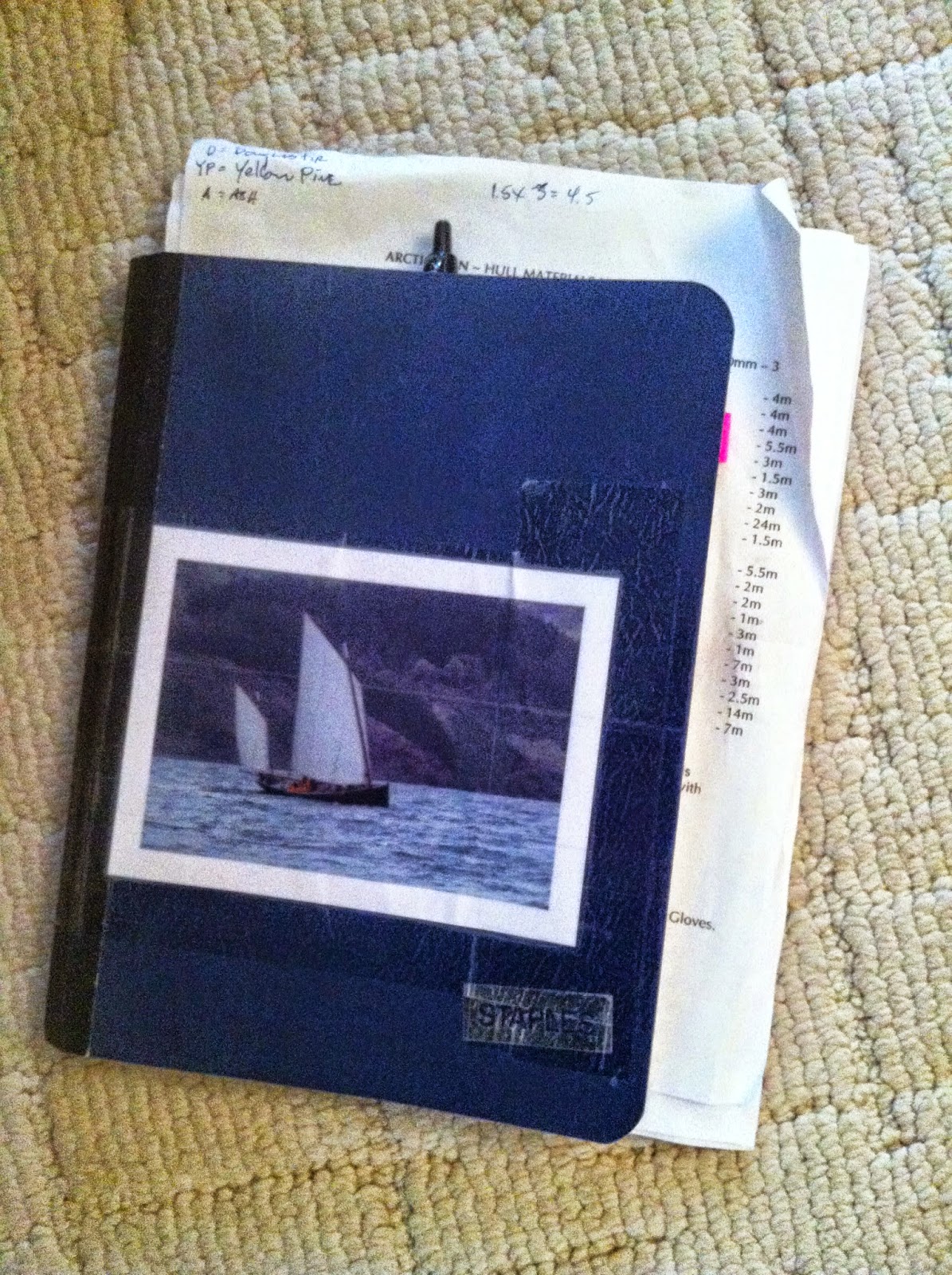
Most of my computations, receipts, notes and drawings for this project have been kept in this notebook.

In it is my rough sketch of a long, light and sturdy boat hook. The hook is a scrap of hard oak and the shaft is of glued cedar. At just over 8′ it should store well in the boat and float handle end up if dropped overboard. We’ll see about that.

I had thought about lashing the parts, but dowelled things instead. I gave it a flat blunt nose for more pushing off surface. Some progress pics:

Rough cut with jig saw.

tapered with jack plane and belt sander

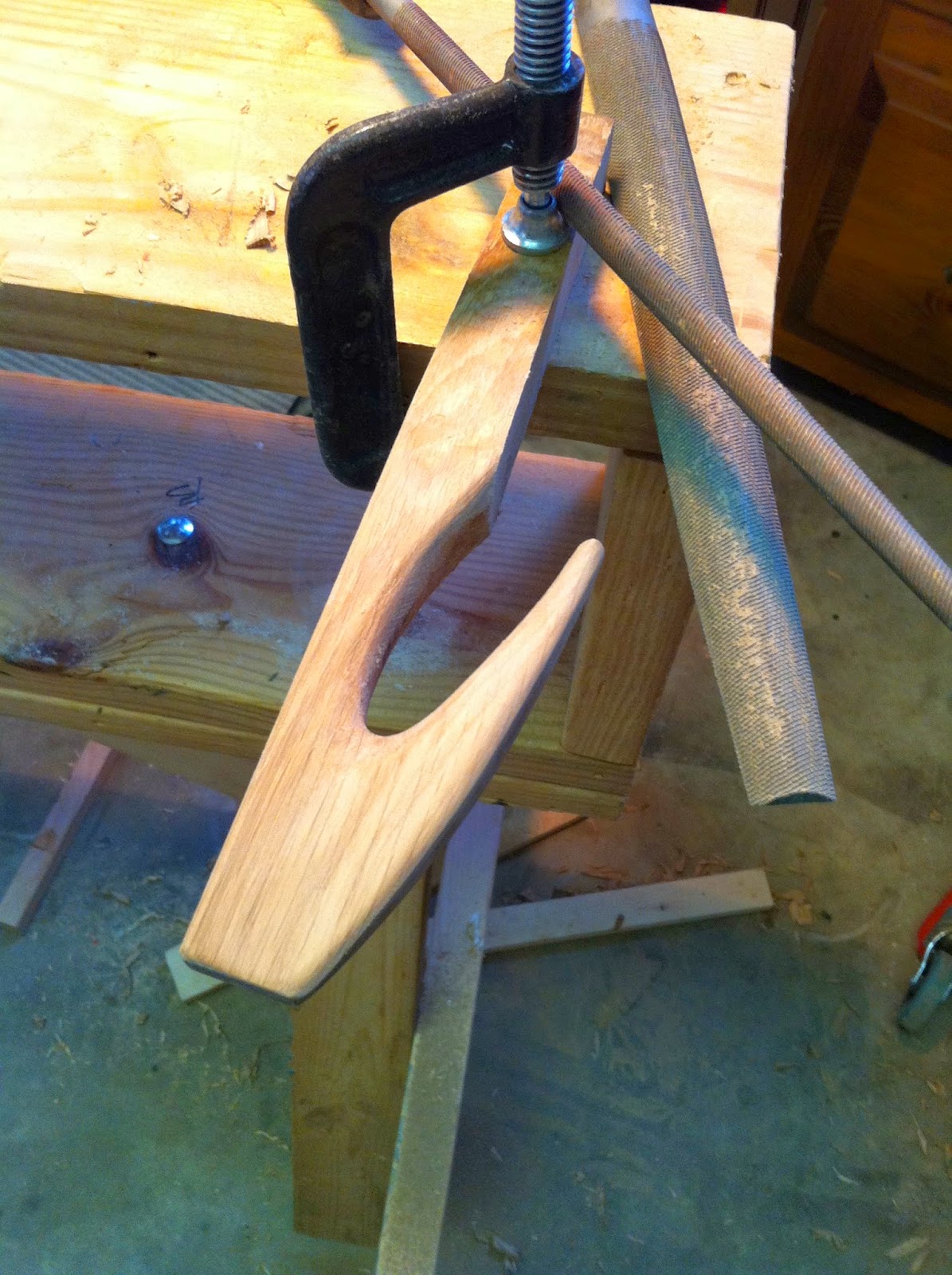
Finessing with files.

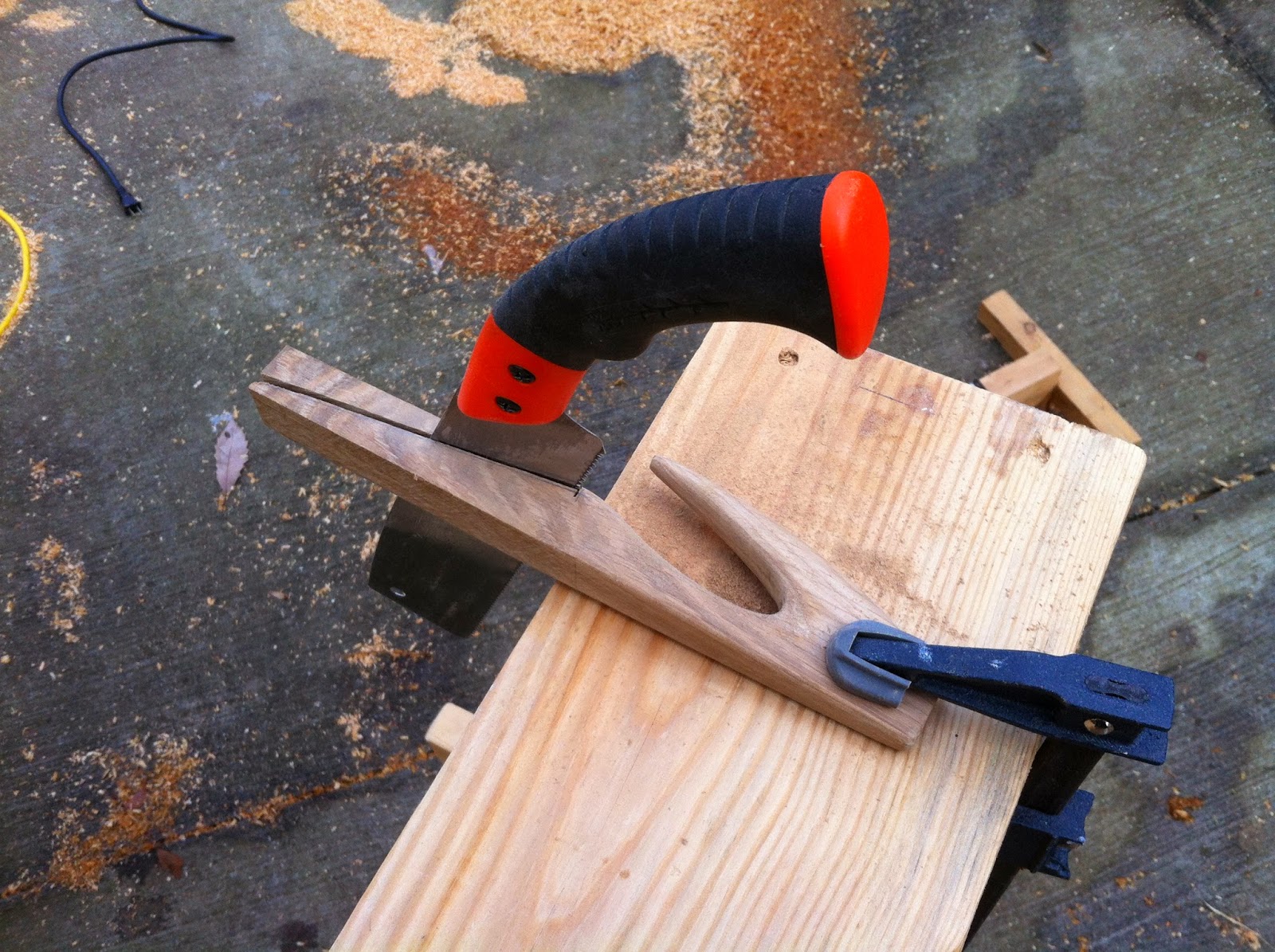
Rough cut for scarf.

Joined, dowelled and coated with “soup”.

Shaped end.

All in all I have maybe 3 hours in this thing. It is handier, lighter and I think prettier than any of the several aluminum and telescopic versions I currently own. With a single coat of the “soup” (equal parts turpentine, tung oil, and pine tar). It is not the best smelling sauce, but it can grow on you. Maybe not for the rest of the family.

The kayak paddles I’ve put it on have worn very well. It also won’t give you blisters like varnish can. Easy to apply, it simply wipes on and buffs off after 20-30 minutes. These pictures show it wet, but after a few coats there is a nice satin sheen developed.

Well, back to the long epoxy parts.