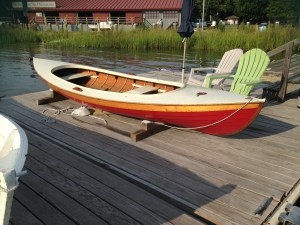
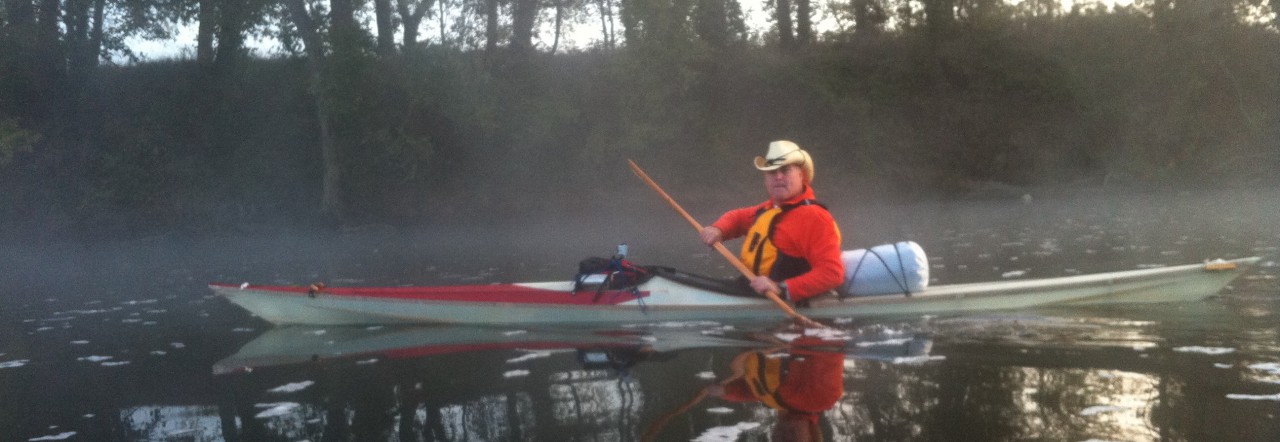
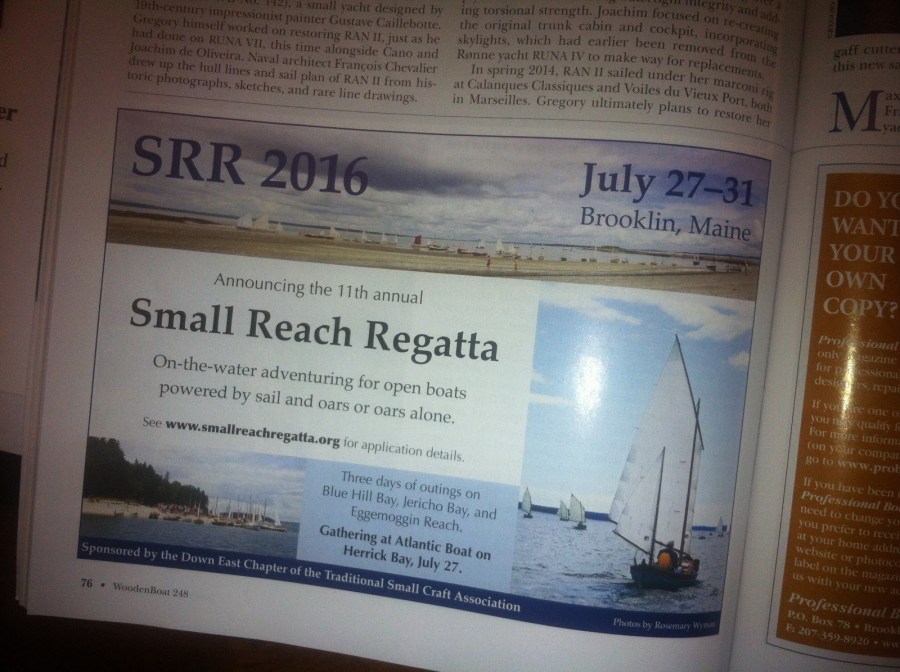
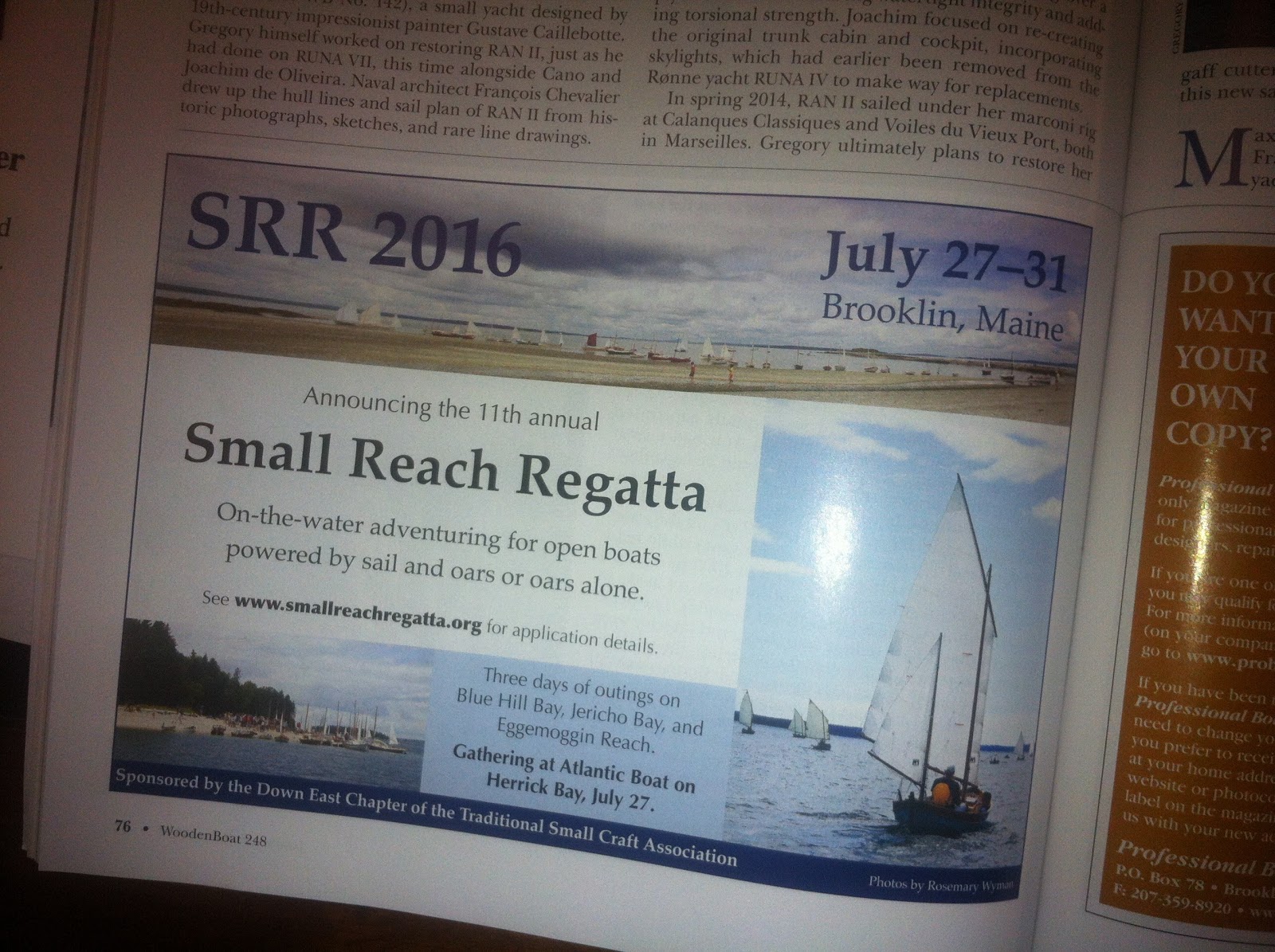
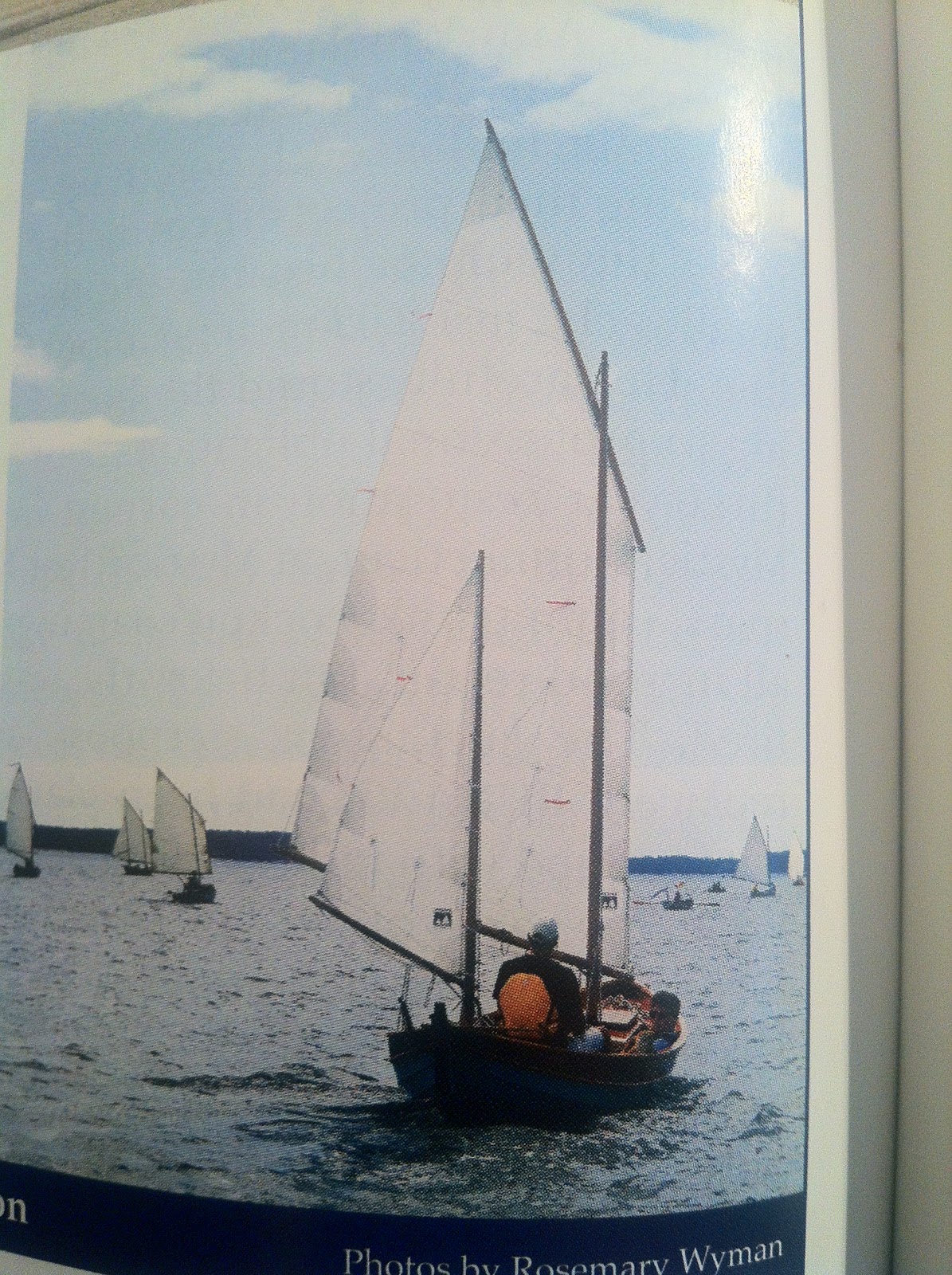
My pal Peter is an avid WoodenBoat reader. I mean from cover to cover. He pointed out an ad in this month’s issue for 2016’s Small Reach Regatta held each year in Maine. A boat featured there on page 76 is a sweetie. It’s UNA, I believe on our first day.We started near last, sailed through the fleet and back and still got to the destination first. Maybe we were the only ones considering it a race. Anyway, I’m glad to see we had proper sail trim. Telltales are streaming aft. Pretty cool. I was told by WB that they would not feature her under their “Launchings” section as she had been in Small Boats Monthly. Well, she snuck in there anyway. Thanks Pogo!
I had hoped to sail along Norfolk’s waterfront today, but my father couldn’t make it so, I decided to stay closer to home and headed north to the Yeocomico River. A still somewhat rural area on the south shore of the Potomac River, the river was a fantastic diversion.
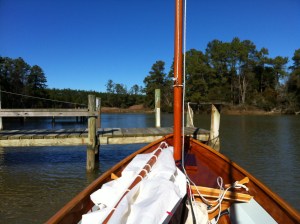
I know the season is closing. I know the water is cold. Today’s air temperature however was in the mid 60s. Winds were 10-15 mph, gusting to 20-24. That, a picnic lunch, and one reef served to make it a near perfect day. At 11:00 I launched UNA from Olverson’s Marina ($5). They have two 16′ wide concrete ramps to choose from. Launch was easy. We sailed out past maybe two dozen cruising sailboats at dock and a couple sheds full of powerboats out into Lodge Creek. There were also covered land slips available for boating and camping. Perhaps and Old Bay Club event could be based here?
Olverson’s Marina
Winds were flukey in the creek initially. Lulls and blows. You had to be on your toes. No cleating of the mainsheet. Once out in the Yeocomico, I could see St. Marys River across the Potomac. Had I started earlier, I would have sailed across.
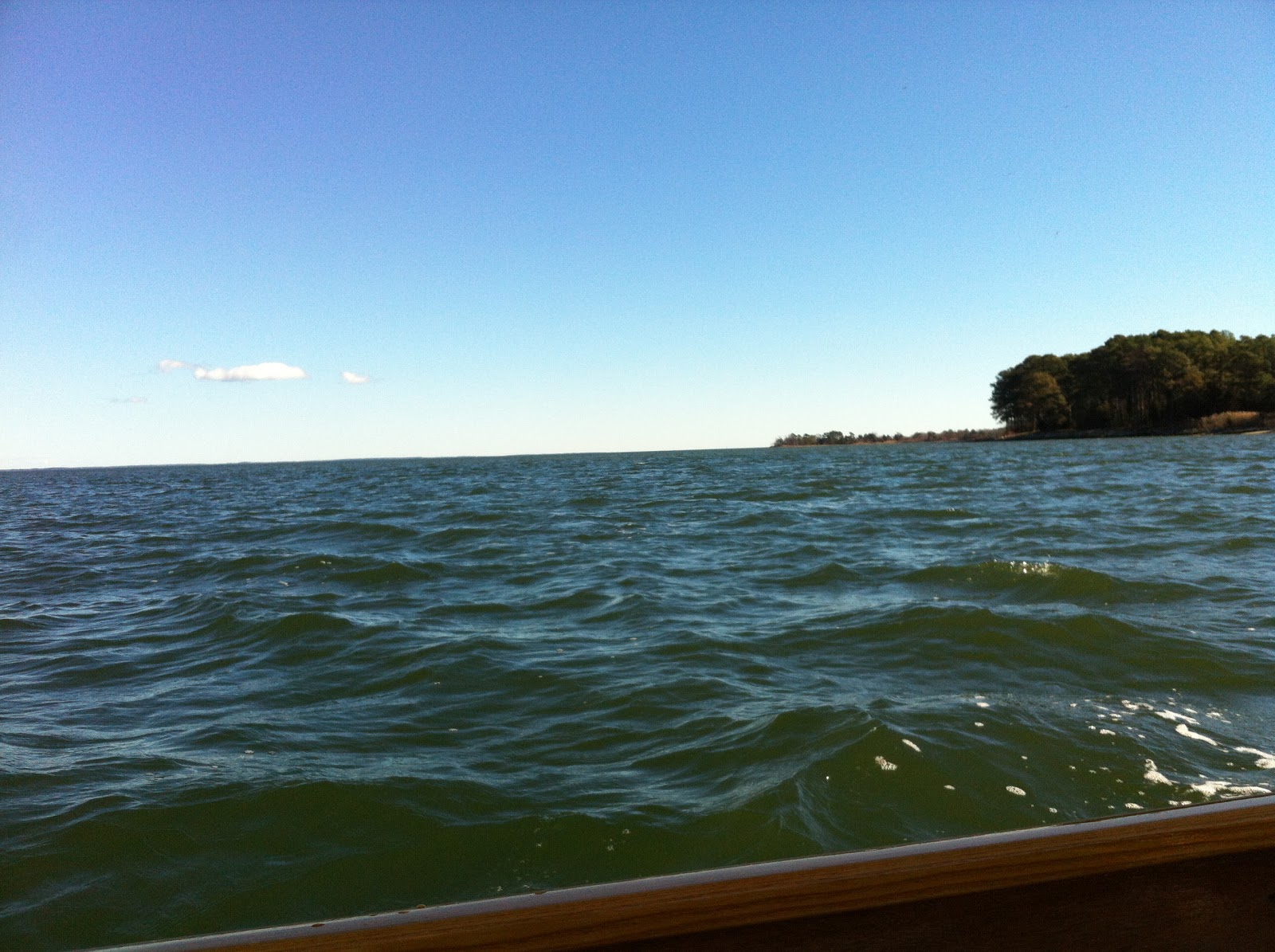
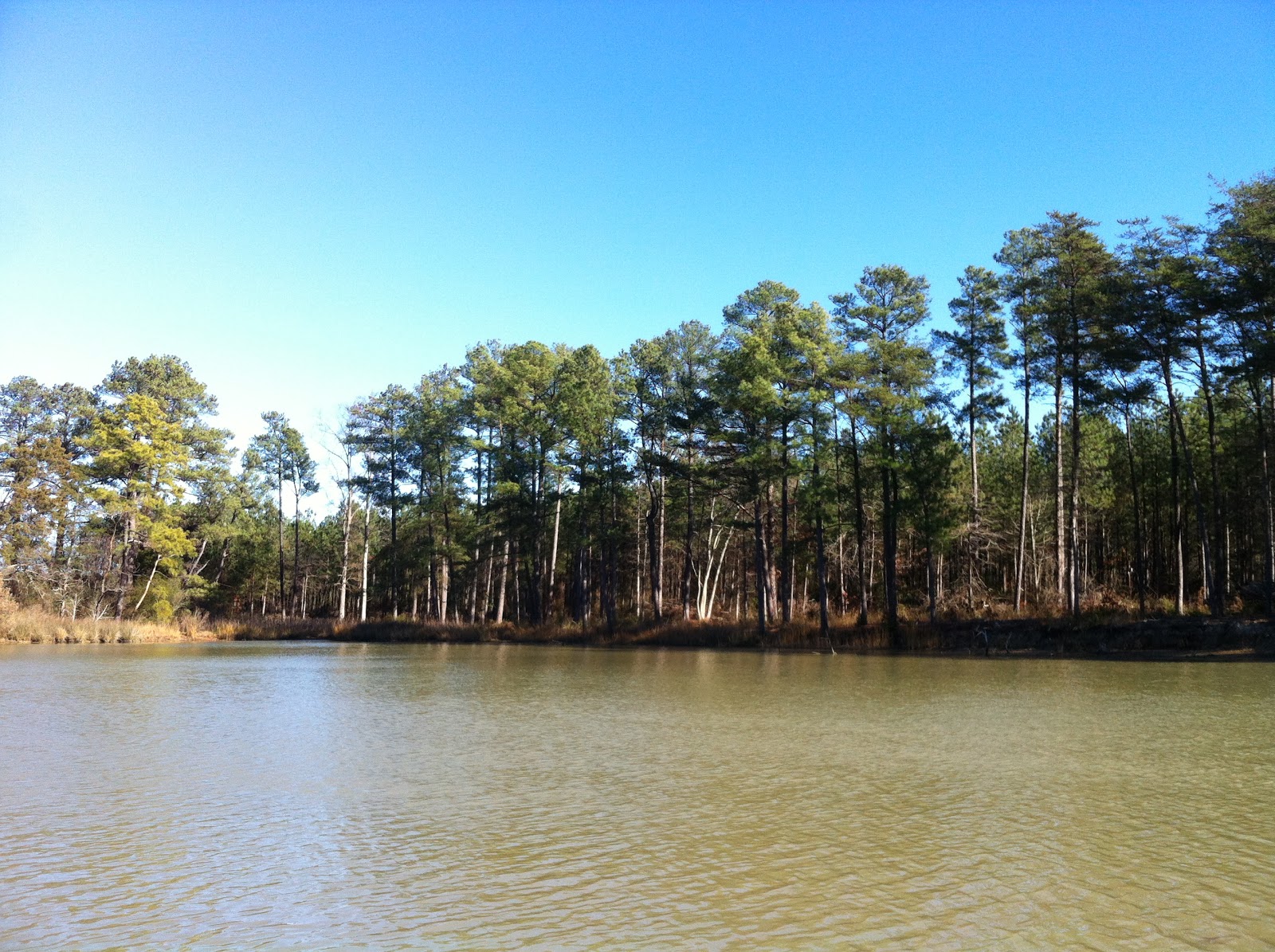
east lip of Yeocomico
west lip
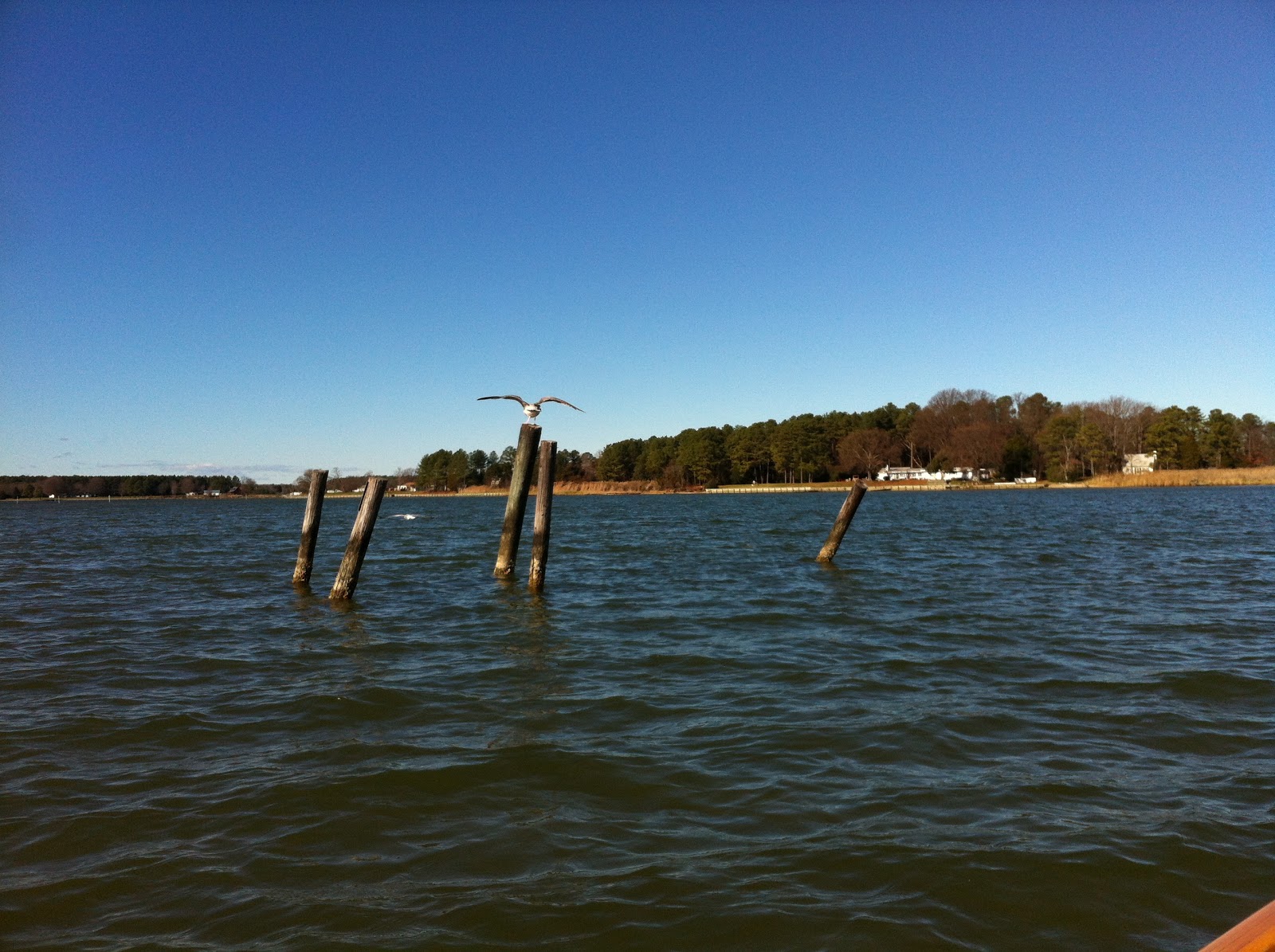
entrance to Parkers Creek
Instead of braving the Potomac, we sailed past the mouth and into Parkers Creek for lunch. We went as far as Una would let us go, stirring up mud with board and rudder up. A bald eagle and great heron took flight at the tail end of the creek. Borrowing a small pier, we tied up, flatten mizzen and dropped the main for lunch. The sun’s warmth and light were perfect.
lunch tie up
Lunch done, we reached back down creek to explore the other fingers of this pretty river. The wind seemed to have moderated as we watched oystermen dredge their harvest.
oystering
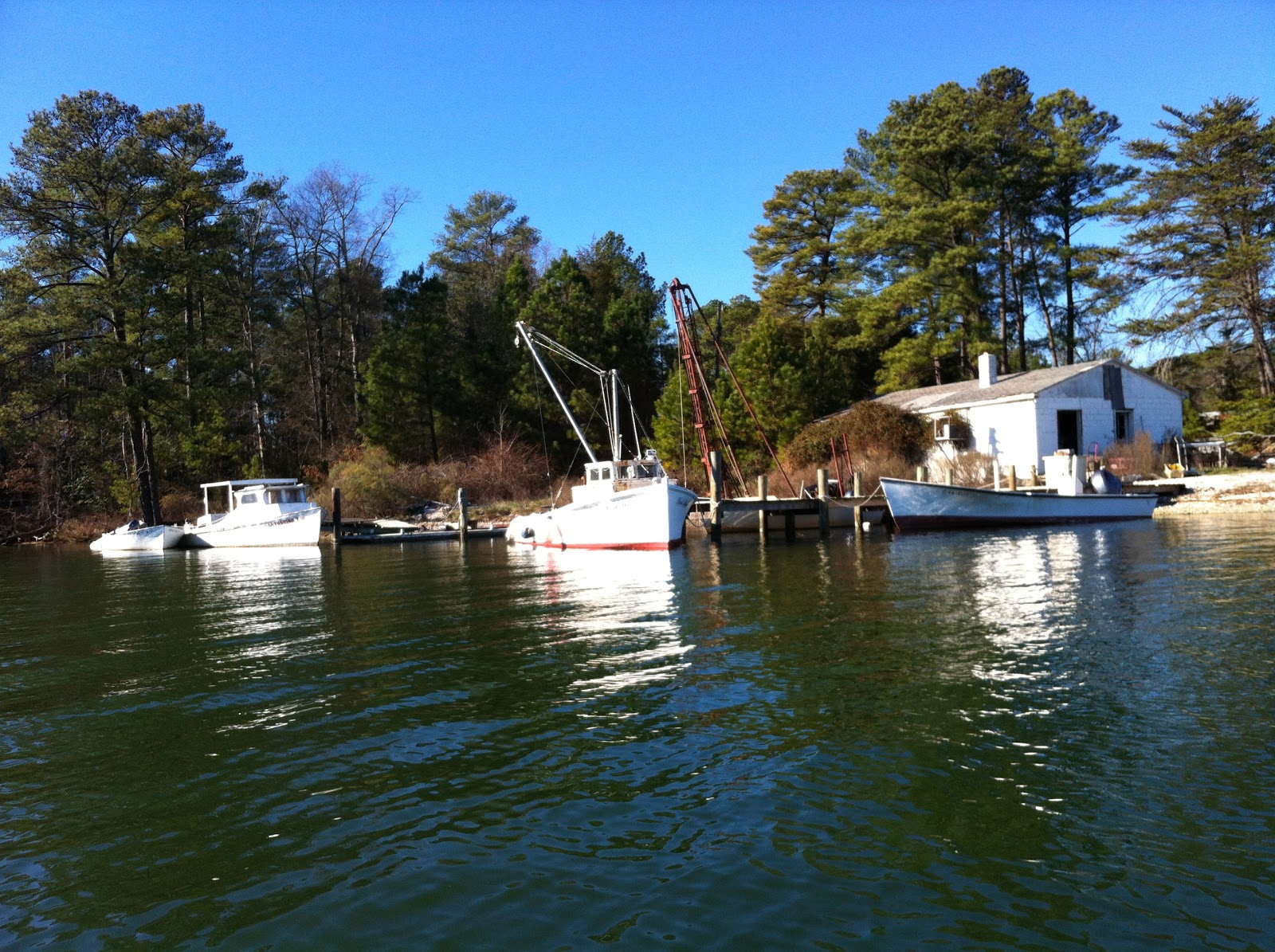
This boat was an interesting pram bowed barge. Further on a group of workboats hugged the shore.
Having explored 4 of the 5 fingers making up the river, we headed back toward home. We passed a large fishing operation was to starboard.
A couple videos here give some of the flavor. Another glorious day on the water. I almost didn’t go.
About a month ago I got an invitation to go sailing. I said, “Yes”. Had I known the conditions would be cold, wet and blowing, I may have reconsidered. I’m glad I had only suspicions as the time. Romping along the Eastern Shore’s Choptank was a blast. We sailed on my buddy Kevin’s Catalina Capri 22 “Big T”, a nice design and good sail-er. We met up meet up with Phil, Doug and his Cornish Shrimper “Tidings”. The sheltered harbor had pleasure and work boats that caught our eye. The mix provides the town with a nice feel.
the schooner “Adventure”
Adventure again
Skipjack
Harbor mural
Outside the breakwater entrance, winds were a steady 20-24 mph with gusts near 30. The sail was lively. Anxioous to see how Big T sailed, I hogged the tiller all the way into the Tred Avon where Tidings tried to overtake us under full motor, but alas Big T turned her head and rolled on ahead and turned the corner past Oxford’s Strand to visit Cutts and Case Boatyard up the creek there. One of the Cutts brothers, Ronnie, loaned us his truck to shop for track slides that had blown out earlier in the day. We took our time studying the many beautiful old wooden boats there.
A Ralph Wiley design
the piers
Fine catboat with inboard rudder
Heading back out the creek, we passed the motorboat Tidings again and sailed up the Tred Avon to Easton. Big T reached along.
motorboat “Tidings”
workboat at speed
We rafted up for a good dinner by Chef Doug. An after dinner snoot warmed us enough to shove off and anchor for the night. It was still blowing good. The next morning we found ourselves aground 100-150 yards downwind. Motoring failed to release the bottom, so we raised sail, hung from the shrouds and with a buff had enough healing moment to slip away. Breakfast was back rafted. Hot coffee was welcomed. A decision was to sail over to the Little Choptank. That was the last we saw of Doug, ship and crew.
Over canvassed with the only reef in the main and a small jib we bashed into the Choptank. Soon we dropped the jib to carry on. With those 30 mph blows, we still had too much sail.
Choptank bashing
After a couple hours of wet and wild, we cracked off to head into San Domingo Creek. Since we never saw Doug and Phil venture out, we figured they had abandoned the plan early. Later Kevin was phoned that the journey had been made. We’ve yet to be given proof. It was a subject that kept Kevin awake throughout the night. I half thought he was ready to raise sail and go verify.
Back of St. Michaels
Workboats there
Good scenes
We touched bottom a couple times before settling on an anchorage. The sunset was quick and the cold dropped on us. I can’t recall what we had for dinner other than pumpkin pie. We retreated to sleeping bags and were likely out by 20:00. We did awake around midnight to have another taste of pie and yacked for maybe an hour. The likelihood of Doug and Phil getting to the Little Choptank without our noticing was of course revisited. Two deserts in one night is a good deal and aided in crashing until sunrise.
Early morn
Hot coffee and biscuits the next morning started us off as we had a wonderful early morning beat back down the creek into the Choptank and rolled home on a reach.
Cap’n Kevin
It was some exhilarating sailing, some fun conversations, and good pie! A great few days. Thanks Kevin!
Born and raised in Norfolk, VA, I watched a recent video of the town’s recent “reinvention” with much interest. One fellow in the film comments that the town has been burned to the ground twice. It is its military and transportation significance that has drawn such attention. Norfolk’s Naval Base and Air Station is reputed to be the world’s largest. The first burning was led by Loyalist Governor Lord Dunmore who, with his three ships, shelled the city, destroying 800 buildings (or 2/3’s of the city). The Patriots then burned the balance of their town (that’s commitment), leaving only the walls of St. Paul’s Episcopal Church standing. A cannonball remains today in one of the church walls. That razing was on New Years of 1776. In 1804 a second destruction resulted from fire breaking out along the waterfront. Some 300 buildings were lost then. One could argue that a third destruction has been ongoing since then as Norfolk is landlocked by the Elizabeth River, Hampton Roads and the Chesapeake Bay. Recent history has forced choosing between what to keep and what to let go. The town is confined to a footprint that cannot expand. However, neighbors Portsmouth and Chesapeake may raise objections to that statement as all three push to grow and prosper in the region.
This black and white film drew nostalgia for my hometown and though I’ve lived away from Norfolk for too many years, I still consider her home. As I viewed familiar sights and heard names with nostalgia, the sails of a small yawl briefly slid across the screen. I immediately recognized them belonging to Steve Early’s “Spartina” and forwarded the video to him for viewing. He posted it with more comments in his blog. Hope you enjoy it as much as I did.
For the two days before Thanksgiving, my daughter and I took what may be the last overnight in Luna as the season is closing. We had intended to start Monday, but weather (freezing temps) and schedules weren’t encouraging.
To make the “log” short, we left the slip under sail on a gentle WSW breeze, slipped down River, crossed Mobjack, and nosed into Browns Bay. Our dinghy Gigi was in tow.
crossing Mobjack
Lunch was a good ale and turkey wraps prepped by “Matey”.
ale
galley work
wrap
The late Fall sun was low and brilliant, coloring the marsh grasses and evergreen pines. Once in Browns Bay, distracted by the view, we nudged Luna onto a mud bank as the ebb tide was 30 minutes from low. Two sailors on the bow and a winding outboard weren’t sufficient to push the long keel towards deeper water. Pulling out the 16# claw, I rowed out 75 yards to set the anchor.
off to kedge an anchor *
laying the rode *
return trip *
Back at the boat, a firm tug on the rode set us free. Shortening the line, we decided to anchor for the evening. We had a good evening listening to music and watching the sun set.
Gigi
patina
I thought leaving the mizzen would allow Luna to follow Gigi, but the wind dropped to nothing and the dinghy began kissing the bigger boat. Therefore, we arrested the dink against the starboard side where it stayed quietly for the night.
dinghy, be still.
The evening was fine. Dinner with the new galley cabinets worked well. Sleep came around 8:00, way too early, but he freezing temps drive one to the warmth of the sleeping bags.
rising moon
Matey
jet trails
silhouette *
a hat in the making *
The next morning after some hot oatmeal and coffee, we motor back across the still bay to check out Pepper Creek. Loons, scoters and coot make their appearance as we slide along.
outside Pepper Creek
Once in the creek we are greeted by a setter on a pier. Somewhat confused by our encouraging voices, he barks out warning while wagging his tail. As we turn around in front of him we stick bottom. Should have listened to Rover. This time the dinghy pulls Luna off by the tail.
Pepper Creek entrance
guard dog *
no wind *
The breeze freshens once we leave the creek. We raise all sails and pass a boat “drudging” for oysters as we begin the beat up into the East River home.
If you hadn’t gathered, we typically sleep either in the bottom of our boats, or in a tent, and are forever rolling over because the sleeping bag has you notted up once again. Therefore, it can be quite disorienting to sail all day, enjoy cocktails, have a marvelous meal prepared for you and find yourself waking up in a queen sized bed. However, it was so for the inaugural cruise of The Old Bay Club. We’re basically a confederation of not so daring sailors who love their comforts and detest rules. Why Harris and Barbara were so gracious to open up their beautiful home to this motley crew, I’ll never know. For 2 1/2 days we were allowed to stay at their “bed and breakfast”. To come home rested after a great weekend of sailing was an unusual pleasure.
Our hosts and fellow club members: Barbara and Harris in their Caledonia Yawl Mabu.
From their place on the James River we 4 boats sailed downriver to see replicas of the three ships that began the settlement of the colony.
The original Susan Constant, Godspeed and Discovery set sail from London on December 20, 1606, bound for Virginia. The ships carried 105 passengers and 39 crew members on the four-month transatlantic voyage. A 17th-century source noted that a total of 71 people were aboard the Susan Constant, 52 aboard the Godspeed and 21 aboard the Discovery. The expedition was sponsored by the Virginia Company of London, a business venture that had been organized to form a colony in Virginia. The fleet reached the Virginia coast in late April and, after two weeks of inland waterway exploration, arrived at the selected settlement site on May 13, 1607.
Our voyage was not so world changing nor daring, but we did complete ours successfully. Winds were westerly for an off wind sail to and an easy 2-3 tacks home to weather. We practically hit the tidal current perfectly coming and going. Fall’s colors were near peak and the winds fairly gentle. Very nice.
UNA pushing the fleet.
skipper
1st mate
The sail downstream was maybe 1 1/2 hrs. We beached just upstream from the Jamestown ferry to stretch and have lunch.
Some of the gang.
Here’s an interesting contrast of boats and technologies. I wonder how the 3 ships stayed together as their sizes are so different.
The second day was spent drifting up the Chickahominy on the incoming tide. Now 5 boats, 4 of us even lost steerage at one point as Barry in his light Melonseed proceeded to sail away.
3 boats all headed for the same destination.
Winds never saw 5 mph, but the day was still a winner on such a beautiful river.
Barry before …
And Barry after. Way up ahead is Caesura’s red sail dead center in this pic.
We had a short lunch on a short beach among the cypress stumps. It was all other worldly.
The return faced the current and challenged the sailor. It demanded staying in the shallows and chasing stripes of wind on the water. The following day was grey with a drizzle. Some sailed. Some packed and went home. Great weekend. Thank you Barbara and Harris!
About two weeks ago, my daughter and I finally coordinated schedules to sail Luna together. She was there last spring to help survey and haul Luna home, but hadn’t seen her in the water, much less take a sail. Well, with a perfect 8-10 kt breeze, a camera and picnic lunch, we shoved off across Mobjack and into the Severn and back. Simple. Just right. I’ll let the photos tell the rest.
a bow
the tack
lazy afternoon
lazy skipper
raising the pennant
a girl
watching the bow wake
All photos but the last 2 are hers. Lastly, a short video of mine.
Two weeks ago a B-17 Flying Fortress, B-24 Liberator and a P-51 Mustang visited Chesterfield County airport for the weekend. My youngest boy and I went out that Friday to tour the planes. He has been playing the video game War Thunder and recently had achieved a level that allowed him to fly a B-17. The look on his face as he climbed in and out of the real thing was priceless. He also was a walking encyclopedia of B-17 specs. We took loads of photos. The Nine-O-Nine was built at the end of the war in Europe, 1945. She flew 140 missions and was credited with shooting down 3 German planes.
Nose art and victories.
Regretfully, the B-24 was absent after a necessary landing in Stafford to attend to an engine problem. However, we found out that the aircraft were to depart that Monday morning, so we grabbed a thermos of hot chocolate and headed back to the airfield that morning. By luck a simple request got my son a tour of the late arriving B-24.
B-24
P-51
17, 24 and 51
We finished the morning on the observation deck waiting for some action. Patience paid off as we got to see and hear the B-17 start up, taxi and take off. What a memory. What a living piece of history.
I’m sure as UNA ages her owner will favor more paint over varnish, but for now, he can’t “let her go”. One area of constant wear on the finish has been between the tiller extension and gunwale. Though the extension has a pronounced “hump” to clear the gunwale and smooth edges, it has regularly sawed off the rail’s finish. Just over an hour’s worth of work and $7 of scrap leather hopefully fixes the problem. For oar leathers, diamond hole chisels were purchased. Reused here, a long 30″ strip of suede was punched to be sewn onto the tiller.
chisel and scrap demo.
The strip width is 1/8″ shy of wrapping around the tiller. This allows one to draw the leather tight around the stick. Once punched, the leather was soaked in warm water for 10 minutes. Then the strip was dabbed dry and stitched with a double strand of waxed twine onto the tiller. Initially the stitches were on top of the stick. I moved them to the side before the leather dried too much. Looks better I think.
tiller extension with leather
close up
This should solve that problem. Now on to solving the slick floors with some anti-skid.
Hi! my name is Sebastian (You can call me Seb!) ...welcome to my Blog. I'm a photographer from Worcester, Worcestershire, England. Thanks for dropping by! I hope you enjoy my work.
Gavin Atkin's weblog for the sort of people who like looking inside boat sheds. It's about old boats, traditional boats, boat building, restoration, the sea and the North Kent Coast